
Facebook Twitter Email Instagram YouTube linkedin WhatsApp WhatsApp VK Telegram
info@BanuMusaGr.com
Facebook Twitter Email Instagram YouTube linkedin WhatsApp WhatsApp VK Telegram
FEA & CFD Consultancy | BanuMusa R&D FEA & CFD Consultancy | BanuMusa R&D
  • Industries/Services
  • Projects
  • Shop
  • Blog
  • About Us
    • Contact Us
    • Our Team
    • Our Partners
    • Careers
Login / Register
0 Wishlist
0 Compare
0 items / € 0.00
Menu
FEA & CFD Consultancy | BanuMusa R&D
0 items / € 0.00
HomeShopAbaqusAbaqus Tips and Tricks Mastering Concrete Modeling in Abaqus: A Comprehensive Course
Previous product
VUMAT JHB JH-2 ceramic model- Implementing Johnson-Holmquist model in Abaqus - JH-2 damage model VUMAT
Abaqus VUMAT JHB and JH-2 Ceramic Model € 199.00
Back to products
Next product
Low-Velocity Impact FRP Laminate damage finite element (fea) analysis on frp composite plate validation - lsdyna tutorial video
LS-Dyna Tutorial: 3D modeling techniques for low-velocity impact analysis of FRP composite laminate € 239.00
concrete modeling in abaqus tutorial video
Watch video
Click to enlarge

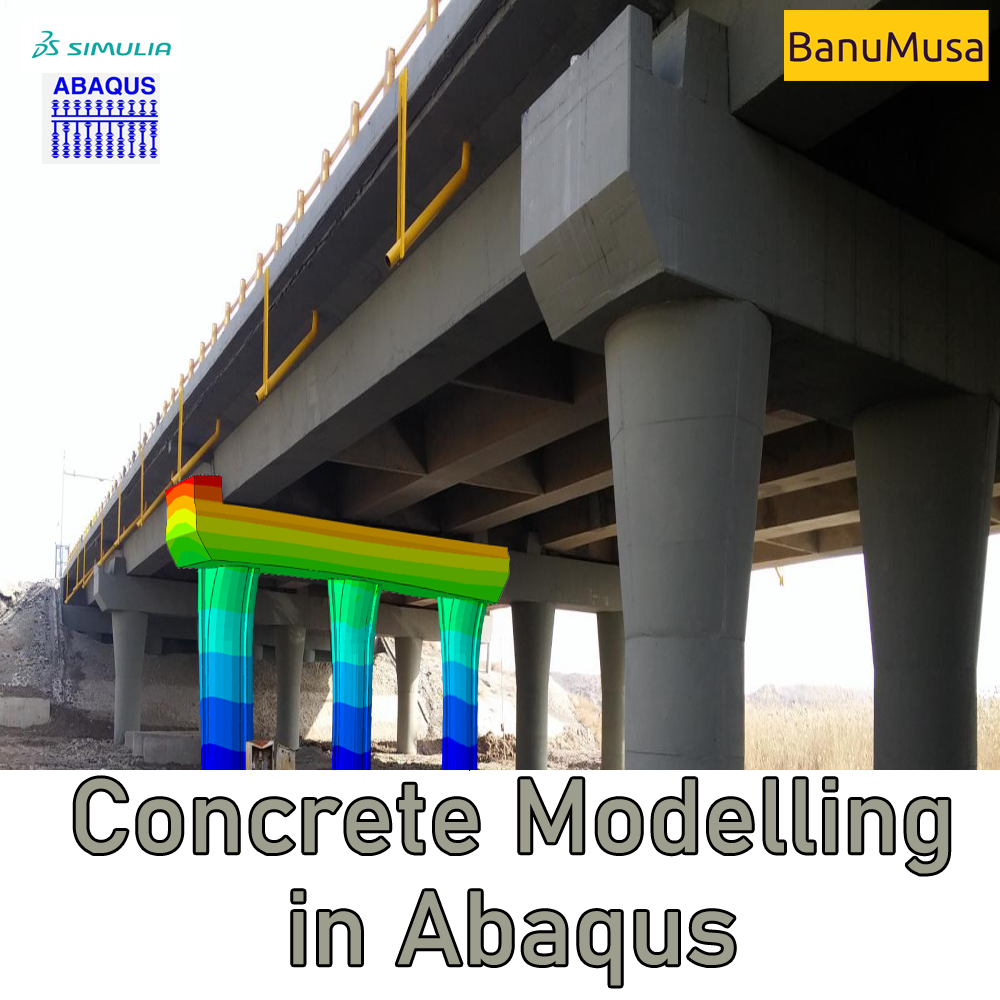
Mastering Concrete Modeling in Abaqus: A Comprehensive Course

€ 425.00

In the “Concrete Modeling in Abaqus” tutorial video course, we have tried to cover all the tips and tricks the user requires when modeling concrete structures. Material models are available in the Abaqus and their parameters are described. Also, the modeling methods of rebars and reinforcements are expressed one by one and the strengths and weaknesses of each are examined. Finally, in 3 comprehensive examples in the field of explosion, fire, and connections, these cases are used in practice.

Abaqus tutorial video (*.mp4)
Lecture notes (PDF)
Abaqus workshop files (*.cae, *.inp, *.jnl, *.odb)
Concrete Damage Plasticity Calculator Tool (*.xls)
15-day money-back guarantee
  Free 24/7 online mentoring

If you want to pay in a way other than Tether/Tron, contact us.
somdn_product_page
Compare
Add to wishlist
SKU: 012 Categories: Abaqus Tips and Tricks, Abaqus, Training courses, Tutorial
Share
Facebook Twitter Email Pinterest linkedin Odnoklassniki WhatsApp WhatsApp VK Telegram
close
You may also like…
  • VUMAT JHB JH-2 ceramic model- Implementing Johnson-Holmquist model in Abaqus - JH-2 damage model VUMAT
    Abaqus VUMAT JHB and JH-2 Ceramic Model € 199.00
  • Fortran for Abaqus Subroutine - writing user subroutines udhard umat film uload
    Fortran for Abaqus Subroutine € 255.00
  • Multiple Step Analysis in Abaqus -tutorial- banumusa-
    ABAQUS Tutorial: Multiple Step Analysis € 65.00
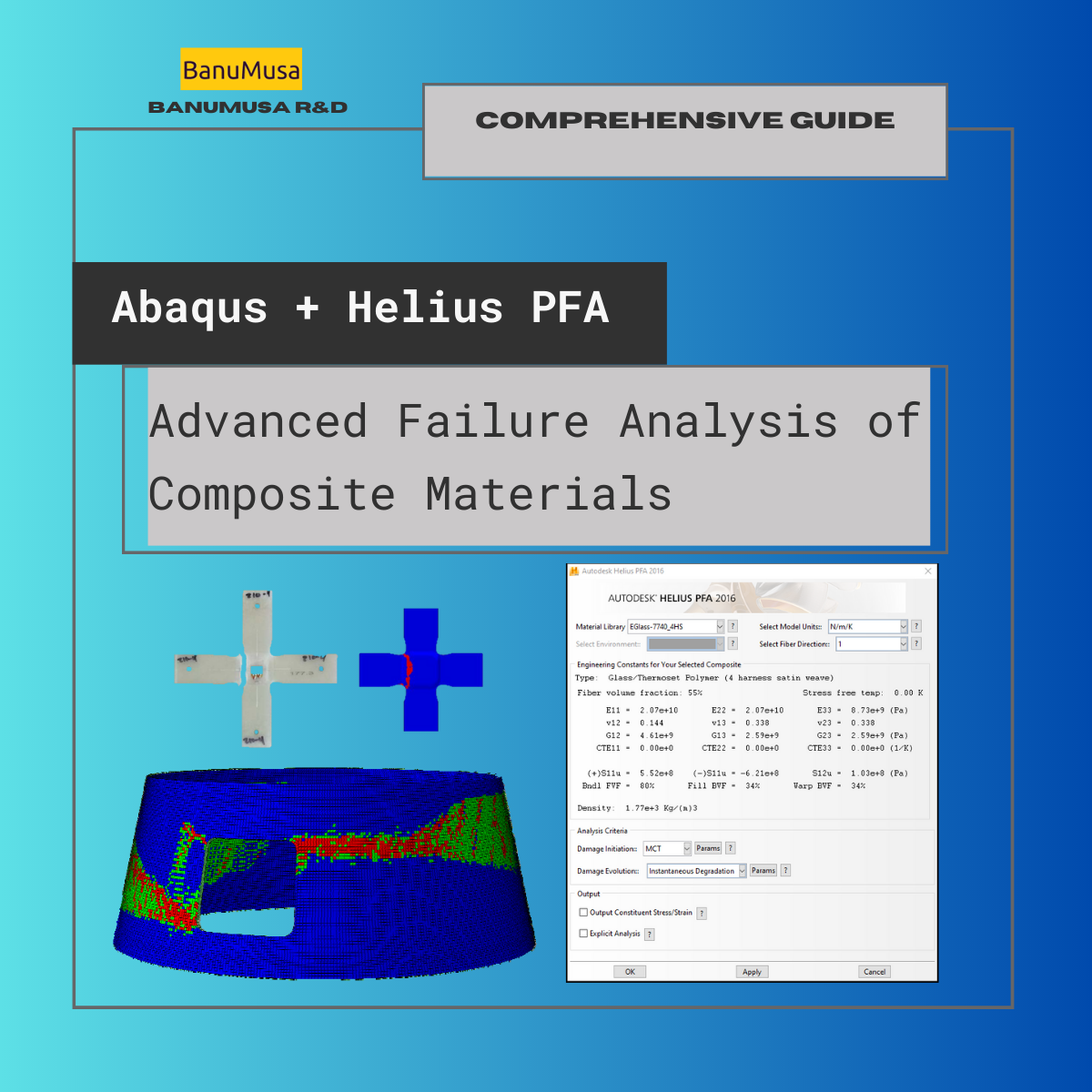
  • Advanced Failure Analysis of Composite Materials Abaqus -helius
    Advanced Failure Analysis of Composite Materials with Abaqus and Autodesk Helius PFA: A Comprehensive Guide € 550.00 Original price was: € 550.00.€ 499.00Current price is: € 499.00.
  • abaqus material library
    MatLib Abaqus Material Library € 315.00
Products
  • Numerical Simulation of Nonlinear Engineering Problems Using LS-DYNA book by Hamid Rokhi Banumusa LS-DYNA Book: Numerical Simulation of Nonlinear Engineering Problems Using LS-DYNA € 410.00
  • anisotropy calculator abaqus plugin - abaqus material models Anisotropy Calculator Abaqus Plugin € 190.00
  • awi plugin - abaqus welding interface plugin - welding fea simulation - cae - simulia -qustomapps Abaqus Welding Interface Plugin € 55.00
  • Calibrate Nitinol Material Behavior Abaqus Plugin free download Calibrate Nitinol Material Behavior Abaqus Plugin € 0.00
  • Machining Simulation with Abaqus - chip formation with water jet -coupled eulerian lagrangian model cel - turning drilling milling adaptive meshing abaqus tutorial Machining Simulation with Abaqus € 280.00
Recent Posts
  • Importance of hand calculations in FEA verifying FEA results with analytical methods, finite element analysis sanity checks, FEA vs hand calculations, how to validate FEA models, structural analysis engineering best practices, CAE engineering job requirements, analytical validation of numerical simulations, structural fatigue analysis calculation, non-linear FEA vs linear analytical methods.
    The Critical Role of Analytical Hand Calculations in Modern FEA Validation
    1 August 2026 No Comments
  • abaqus 2025 steo cycling fatigue analysis Understanding Step Cycling in Abaqus 2025
    Understanding Step Cycling in Abaqus 2025
    7 May 2025 No Comments
  • Uncertainty Quantification in abaqus finite element analysis - verification & validation
    Uncertainty Quantification in Finite Element Analysis (FEA)
    27 August 2024 No Comments
  • Composite Progressive Failure Analysis - finite element analysis - fea -abaqus - ansys - autodesk helius pfa
    Composite Progressive Failure Analysis
    10 June 2024 No Comments
  • Ansys or Abaqus failure analysis
    Ansys or Abaqus; A Personal Experience
    9 May 2024 No Comments
  • Description
  • Additional information
  • Payment & Delivery
  • Content
Description

Concrete Modeling in Abaqus

The “Concrete Modeling in Abaqus” course is a specialized training program that focuses on modeling and simulating concrete structures using the Abaqus finite element analysis software. It is designed to give participants a comprehensive understanding of concrete material behavior, modeling techniques, and analysis methodologies within the Abaqus environment.

Concrete is one of the primary materials used in the civil industry. This composite material, the main component of which is cement, has properties such as low price, availability of raw materials, and relatively high durability.
To ensure adequate strength and safety of concrete structures, it is necessary to use valid codes and standards. Some of them recommend the use of finite element analysis (FEA) for better reliability. This is because the nonlinear behavior of concrete is not always predictable using simple standard formulations.

Concrete material models

In Abaqus, there are several material models for predicting the mechanical behavior and failure of concrete and reinforcement. Proper modeling of concrete structures depends not only on its material properties, but also on the interaction of concrete and reinforcement, the type of elements and loads, and so on.

The Concrete Damaged Plasticity (CDP) model is widely used for simulating concrete behavior under both compressive and tensile loading. It accounts for concrete’s nonlinear behavior, including tensile cracking, compression, and plastic deformation. The CDP material model is available both in Abaqus/Standard, which is an implicit analysis code, and in Abaqus/Explicit, which is an explicit dynamics analysis code.

Concrete Damage Plasticity Calculator

One of the tools needed for the design of concrete structures for Abaqus application engineers is the Concrete Damage Plasticity Calculator to calculate the coefficients and parameters of the Concrete Damage Plasticity (CDP) material model. For the convenience of Abaqus application engineers, BanuMusa R&D has developed an Excel file (*.xls) to calculate these parameters. By entering only 2 parameters, all the necessary parameters to enter the CDP material model are generated and it can be easily imported into Abaqus. The good news is that this tool is included in this tutorial for free.

In addition, the powerful MatLib plugin can be used for this job. It is a library of mechanical properties of materials for Abaqus application engineers.

What you’ll learn

In this Abaqus tutorial video, you will get acquainted with concrete material models in Abaqus and determine their material parameters. How to model the damage in the concrete, its damage modes, selecting the appropriate element in accordance with the analysis, modeling, and its various methods are part of the things that you will learn in concrete modeling in Abaqus.

Overview of the course

  1. Concrete behavior
  2. Concrete material models in Abaqus
    1. Brittle cracking model
    2. Concrete damage plasticity (CDP)
    3. Holmquist-Johnson-Cook (HJC) concrete model (built-in material model)
    4. Concrete smeared cracking
  3. Modeling crack growth and damage in concrete
    1. Define concrete damage parameters
    2. Mechanical and damage properties of concrete
    3. Concrete damage modes
  4. Concrete element types
    Explore different element types suitable for modeling concrete structures, such as continuum elements, shell elements, or beam elements. Understand their advantages, limitations, and appropriate applications.
  5. Concrete reinforcement methods
  6. Embedded element
  7. Rebar layer
  8. Pre-stress in rebars
  9. Meshing techniques
    Learn effective meshing strategies for concrete structures, including considerations for element size, refinement, and capturing localized nonlinear behavior.
  10. Boundary conditions and loading
    Understand how to apply appropriate boundary conditions and loading scenarios to simulate the realistic behavior of concrete structures.
  11. Analysis types and methodologies
    Gain insights into different analysis types, including static, dynamic, and nonlinear analyses, and learn how to select the appropriate methodologies for concrete structures.
  12. Post-processing and result interpretation
    Acquire skills in post-processing and interpreting simulation results, such as stress distribution, displacement, crack propagation, and failure mechanisms.

Concrete modeling in Abaqus examples & workshops

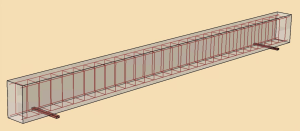
Workshop 1: Reinforced concrete beam with uniformly distributed load 

In this workshop, we subject a reinforced concrete beam of length 6.0 m and having a rectangular cross-section of 0.5 m x 0.3 m to a uniformly distributed load of 33 kN/m. The beam is a simply-supported beam with overhangs as shown in Figure. The supports are placed 0.5 m from the ends of the beam. The design of the beam, reinforcement configuration, and loading conditions are for illustration purposes only.

In this workshop, analysis is performed with two static and dynamic explicit solvers, and the results are compared with each other. Also, the requirements of performing a quasi-static analysis with an explicit dynamic solver are introduced and tested in this workshop.
Concrete modeling in abaqus example - concrete beam static & explicit analysis Workshop 2: Reinforced concrete slab subjected to blast loading

Building structures typically need to withstand conventional loads such as dead loads (like gravity) and live loads (such as wind or snow) as suggested in building design codes and recommended practices. However, in extraordinary situations, structures can undergo unusual loadings such as those from
explosions or blasts. In some cases, the structure itself needs to be designed to act as a protective barrier to resist blast loads. In these instances, it is important to predict the way the structure may fail, break apart, or collapse. In this workshop, we subject a reinforced concrete slab to a blast load and
simulate its cracking and deformation behavior.

Abaqus/Explicit is used to predict the deformation and collapse of the slab due to the blast. The concrete damaged plasticity material model in Abaqus is used for this analysis, and reinforcement is defined using embedded element constraints. The slab undergoes severe deformation due to the blast, and several
concrete elements in the slab get damaged and fail. The failed elements are automatically removed during the analysis by using the concrete failure option in Abaqus.
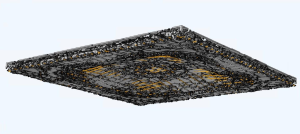
workshop Reinforced concrete slab subjected to blast loading explicit analysis abaqus - Concrete modeling in abaqus exampleWorkshop 3: Concrete bridge under blast loading and investigation of the effect of FRP composite jackets

In this workshop, the foundation of a concrete bridge is subjected to explosive load, and the effect of the FRP composite jacket on the strength of the structure and its damage is investigated. The explosive load is placed at different angles and distances from the bridge base to measure its greatest impact on the structure’s resistance.

The composite jacket with two types of graphite epoxy and glass epoxy is under investigation. Also, the effect of car traffic load on the resistance of the structure during the explosion in different modes is investigated.

For the verification and validation (V&V) of this project, the model presented in the paper of Silva and Lu (2007) was built and its results were compared with the results of the paper. The results were confirmed with good accuracy. Results such as displacement value and damage mode have been compared with the results of the Silva & Lu paper.
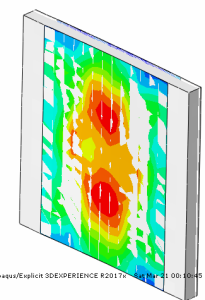
Abaqus blast loading on reinforced concrete slab verification and validation with silva and lu paperWorkshop 4: Thermal and mechanical Analysis of composite floors exposed to standard fire

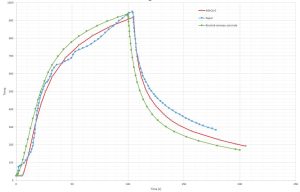
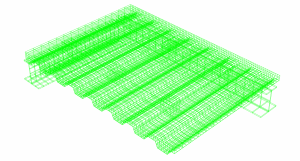
In this workshop, the temperature and mechanical behavior of the composite floor under ISO 834 standard fire load were evaluated using Abaqus. To ensure the correctness of the results, the paper of Li, Zhang, and Jiang (2017) was used. The amount of temperature increase in different parts of the concrete floor and the amount of displacement due to static loads were compared and validated with the results of this paper. In this workshop, you will be familiar with the challenges of concrete roof fire modeling and analysis, and the tricks needed to solve them are suggested.
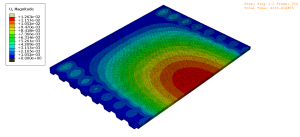
temp mechanical couple fire abaqus analysistemprature fire analysis of concrete slab floor validation abaqus - iso834composite floor system geometry

Demo

We are ready to help you in CFD & FEA simulations.

Need help? Get a consultation from our experts.

Abaqus E-learning technical FEA & CFD consulting by banumusa FEA & CFD Consultancy Services Abaqus Ansys LS-Dyna user subroutine plugin
Email us: info@banumusagr.com
Telegram: +98-915-55-20-388
WhatsApp: +98-915-55-20-388

Find Us on WeChat

wechat banumusa company ویچت

Money-Back Guarantee

15-Day

Money back gold guarantee - BanuMusaWe’re fully confident in the value and reliability of the product. If for any reason you are not completely satisfied, email us at info@BanuMusaGr.com within 48 hours of your purchase for a full refund.
Additional information
Software

Abaqus FEA

Type

Abaqus Training Course

Level

Elementary

Files

Abaqus files: *.cae, *.jnl, *.inp, *.odb
Video: *.mp4
Lecture notes: *.pdf

Language

English

Category

Failure & Damage Analysis
Material Modelling
Civil industry

Solver

Explicit, Implicit

Material

Concrete Materials

Payment & Delivery
All products available on the website come with a guarantee of customer satisfaction. The products can be used immediately after purchase through the download link. There is also online consulting/mentoring for all customer reassurance products.
Before buying, you can also talk to our experts in BanuMusa R&D and buy from the Shop according to your needs.

Note:

Please pay attention to the following points when you pay.

1. Tether / Tron The easiest way to pay is through the Tether portal in the BanuMusa shop. You can easily pay with your wallet.

• How to pay for a product using USDT TRC-20 with ADVCash https://www.youtube.com/watch?v=DYyHsdcLxhk

• Tron TRC20 Wallet for USDT Tutorial (Send USDT for Lowest Fees!!) https://www.youtube.com/watch?v=lBQMkEBf7W4

For other wallets just search on YouTube!

The download link automatically will be sent to you.

2. Payoneer:

If you have Payoneer, you can pay simply through the following ID.

fro458nk@gmail.com

After your payment is processed, you will receive the download links.

Let me know if you need any further adjustments!

3. PAYEER

Send us a message/ email to help you how to pay for this method, please. (info@banumusagr.com)

4. WebMoney

We will send you the wallet if you request this method. Email us.

5. PayPal Payment Instructions:

Please email us to send your PayPal Account.

After your payment is processed, you will receive the download links.

Let me know if you need any further adjustments!

6. SWIFT/IBAN

Another way is to pay via SWIFT or IBAN, contact us to learn more.

We will do our best to make sure you have a good shopping experience.


If it is not possible for you to buy through the Tether gateway, send us the link to the product using email (info@banumusagr.com) or social networks (WhatsApp, WeChat, Telegram). After that, the PayPal account will be sent to you.

Another way is to pay via SWIFT, contact us to learn more.


Ways to Contact Us:

WhatsApp / Telegram / WeChat: +98-915-5520-388
E-mail: info[at]banumusagr.com
Phone: +98-51-35424520

Payment Methods:

You can buy the product through Tether, Tron, Payoneer, PAYEER, WebMoney, PayPal, and SWIFT.

Content

Contents

  • Abaqus tutorial video (*.mp4)
  • Lecture notes (PDF)
  • Abaqus workshop files (*.cae, *.inp, *.jnl, *.odb)
  • Concrete Damage Plasticity Calculator Tool (*.xls)
  • 15-day money-back guarantee
  •   Free 24/7 online mentoring

Reviews

There are no reviews yet.

Be the first to review “Mastering Concrete Modeling in Abaqus: A Comprehensive Course” Cancel reply

You must be logged in to post a review.

Related products

Introduction to umat subroutine
Introduction to umat subroutie abaqus tutorial video writing umat subroutine

Introduction to UMAT Subroutine

€ 210.00
Add to cart
Compare
Quick view
Add to wishlist
Close
online Technical Abaqus Mentoring by Skype and anydesk - banumusa - fea consulting

Technical Abaqus Mentoring by Skype

€ 75.00
Add to cart
Compare
Quick view
Add to wishlist
Close
-4%
USDFLD Subroutine 3D Hashin

3D Hashin USDFLD Subroutine Failure Criteria for Abaqus

€ 124.00 Original price was: € 124.00.€ 119.00Current price is: € 119.00.
Add to cart
Compare
Quick view
Add to wishlist
Close
Porous Elastomers Abaqus UHYPER Subroutine

Porous Elastomers Abaqus UHYPER Subroutine

€ 55.00
Add to cart
Compare
Quick view
Add to wishlist
Close
-10%
larc05-abaqus-failure-criteria-composite-analysis
damage-larc05-abaqus4

Abaqus Tutorial: LaRC05 Failure Criterion For Fiber-Reinforced Composites

Rated 5.00 out of 5
€ 110.00 Original price was: € 110.00.€ 99.00Current price is: € 99.00.
Add to cart
Compare
Quick view
Add to wishlist
Close
Modeling Rubber and Viscoelasticity with Abaqus tutorial course
Modeling Rubber and Viscoelasticity with Abaqus course - abaqus tutorial

Modeling Rubber and Viscoelasticity with Abaqus

€ 550.00
Add to cart
Compare
Quick view
Add to wishlist
Close
Plastic Curve Generator Plugin for Abaqus

Plastic Curve Generator Plugin for Abaqus

€ 163.05
Add to cart
Compare
Quick view
Add to wishlist
Close
Design and Analysis of Composite Overwrapped Pressure Vessels Course banumusa wcm plugin
Design and Analysis of Composite Overwrapped Pressure Vessels Course banumusa wound composite modeler plugin abaqus

Design and Analysis of Composite Overwrapped Pressure Vessels Course

€ 425.00
Add to cart
Compare
Quick view
Add to wishlist
Close
University of Warwick
NBJX
MultiFat
kitech
kims
EnginSoft
Techinco
NIGC
Mobarakeh Steel Co.
Lincoln University
ISOICO Shipbuilding Company
IRISL Company
Ferdows Marine Tech
AQR Company

Founded in 2016, BanuMusa R&D is an established engineering consultancy specializing in advanced Finite Element Analysis (FEA), Computational Fluid Dynamics (CFD), and simulation-driven product development.

Facebook Youtube Linkedin Instagram

Products

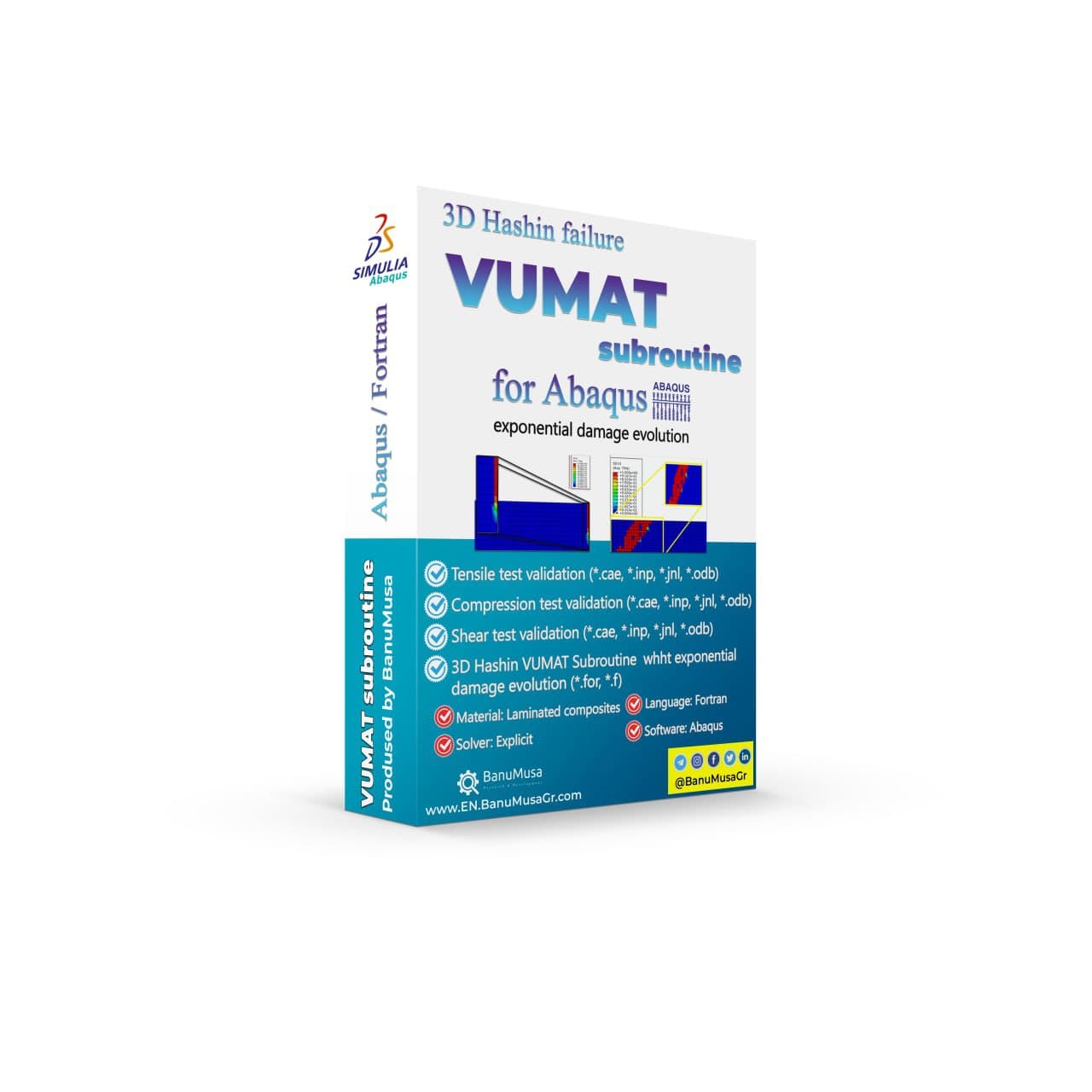
  • 3D Hashin VUMAT Subroutine for Abaqus with Exponential Damage Evolution
  • VUMAT Subroutine: Shear Anisotropic Modified GTN Damage Model
  • MatLib Abaqus Material Library

Company

  • Contact us
  • Our team
  • Our partners
  • Careers
Start Project

Our WeChat 

Copyright BanuMusa 2026
payments

Shopping cart

close
Manage Cookie Consent
To provide the best experiences, we use technologies like cookies to store and/or access device information. Consenting to these technologies will allow us to process data such as browsing behavior or unique IDs on this site. Not consenting or withdrawing consent, may adversely affect certain features and functions.
Functional Always active
The technical storage or access is strictly necessary for the legitimate purpose of enabling the use of a specific service explicitly requested by the subscriber or user, or for the sole purpose of carrying out the transmission of a communication over an electronic communications network.
Preferences
The technical storage or access is necessary for the legitimate purpose of storing preferences that are not requested by the subscriber or user.
Statistics
The technical storage or access that is used exclusively for statistical purposes. The technical storage or access that is used exclusively for anonymous statistical purposes. Without a subpoena, voluntary compliance on the part of your Internet Service Provider, or additional records from a third party, information stored or retrieved for this purpose alone cannot usually be used to identify you.
Marketing
The technical storage or access is required to create user profiles to send advertising, or to track the user on a website or across several websites for similar marketing purposes.
  • Manage options
  • Manage services
  • Manage {vendor_count} vendors
  • Read more about these purposes
View preferences
  • {title}
  • {title}
  • {title}

Powered by WhatsApp Chat

  • Menu
  • Categories
  • Industries/Services
  • Projects
  • Shop
  • Blog
  • About Us
    • Contact Us
    • Our Team
    • Our Partners
    • Careers
  • Industries/Services
  • Projects
  • Shop
  • Blog
  • About Us
    • Contact Us
    • Our Team
    • Our Partners
    • Careers

Sign in

close

Lost your password?
No account yet? Create an Account
Sidebar