
Facebook Twitter Email Instagram YouTube linkedin WhatsApp WhatsApp VK Telegram
info@BanuMusaGr.com
Login / Register
0 Wishlist
0 Compare
0 items / € 0.00
Facebook Twitter Email Instagram YouTube linkedin WhatsApp WhatsApp VK Telegram
FEA & CFD Consultancy | BanuMusa R&D FEA & CFD Consultancy | BanuMusa R&D
  • Consulting Services
  • Products
  • Resources
    • Blog
    • Projects
  • About Us
    • Contact Us
    • Our Team
    • Our Partners
    • Careers
    • Payment Methods
    • Support & FAQ
Free Mentoring
Menu
FEA & CFD Consultancy | BanuMusa R&D
0 items / € 0.00
HomeShopTraining courses LS-Dyna Tutorial: 3D modeling techniques for low-velocity impact analysis of FRP composite laminate
Previous product
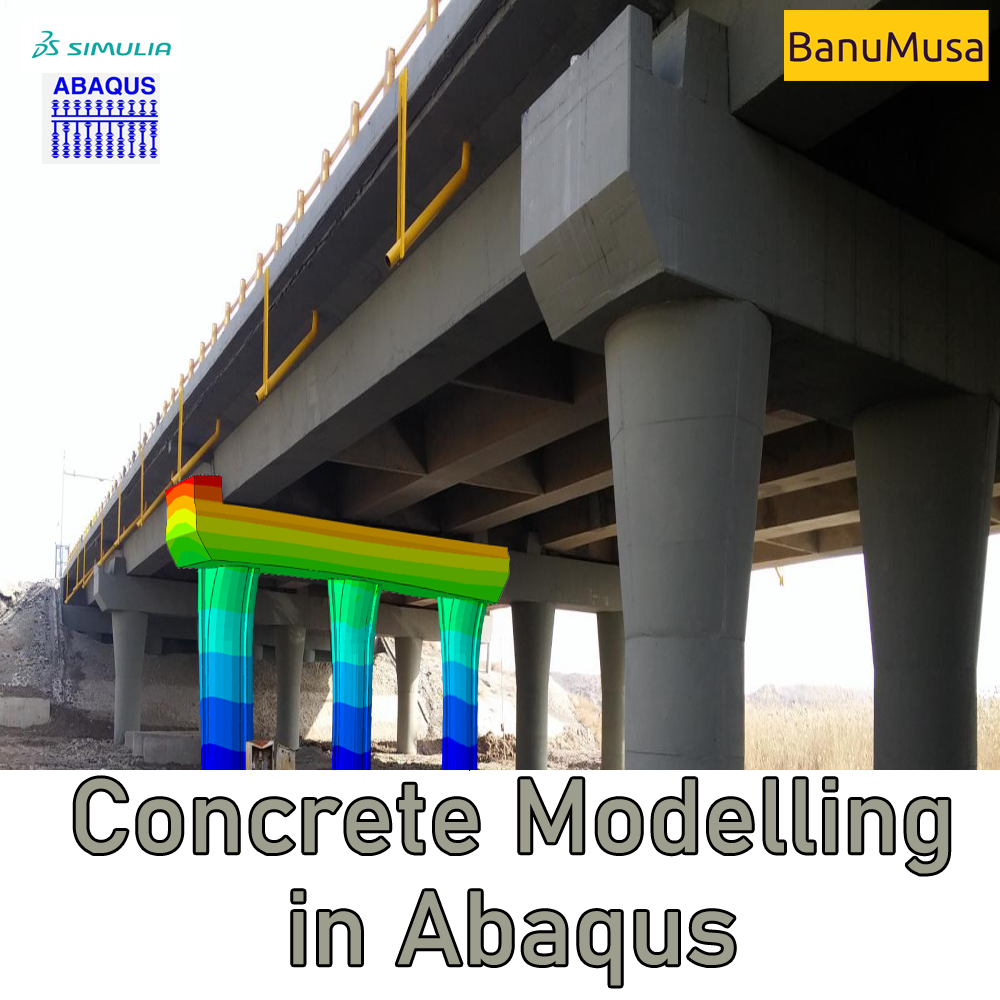
concrete modeling in abaqus tutorial video
Mastering Concrete Modeling in Abaqus: A Comprehensive Course € 425.00
Back to products
Next product
Fortran for Abaqus Subroutine - writing user subroutines udhard umat film uload
Fortran for Abaqus Subroutine € 255.00
Low-Velocity Impact FRP Laminate damage finite element (fea) analysis on frp composite plate validation - lsdyna tutorial video
low velocity impact damage finite element fea analysis on frp composite plate validation - lsdyna tutorial video
low velocity impact damage fea analysis on frp composite plate validation - lsdyna tutorial video
low velocity impact fea analysis on frp composite plate validation - lsdyna tutorial video
Watch video
Click to enlarge

LS-Dyna Tutorial: 3D modeling techniques for low-velocity impact analysis of FRP composite laminate

€ 239.00

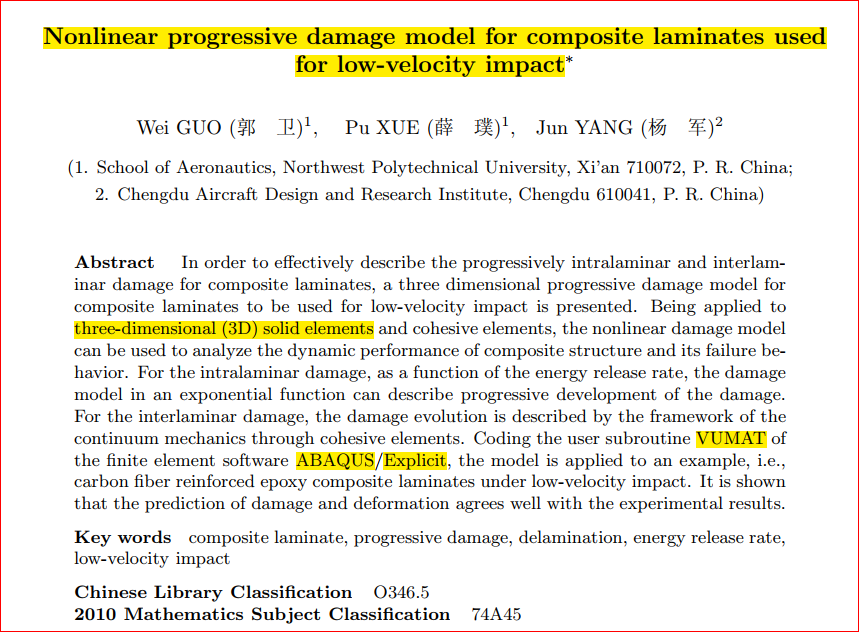
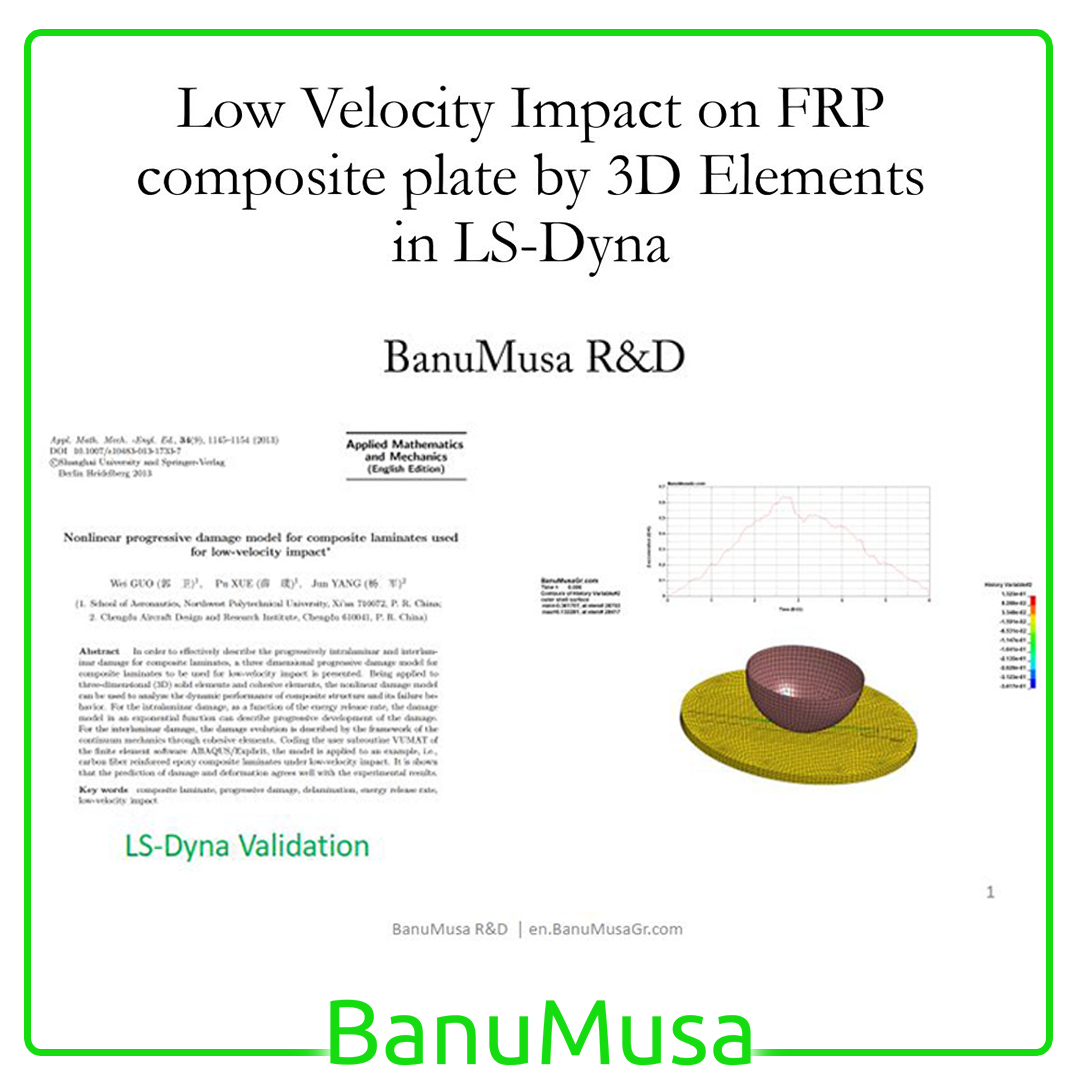
In this LS-Dyna tutorial video, we have tried to cover all the tips and tricks that are required by the user when modeling low-velocity impact FRP laminates FEA analysis with LS-Dyna. Material models for FRP composite & cohesive materials are available in the LS-Dyna and its parameters are described. Also, the modeling methods of geometry, FRP material, cohesive, contacts &, etc. are explained one by one. Finally, in a comprehensive example, the LS-Dyna finite element model is validated by Guo et al. (2013) paper. All the modeling & results files, as well as the LS-Dyna tutorial video, are included in this package.

LS-Dyna tutorial video (*.mp4)
Lecture notes (PDF)
LS-Dyna workshop files (*.k, d3plot)
15-day money-back guarantee
  Free 24/7 online mentoring

If you want to pay in a way other than Tether/Tron, contact us.
somdn_product_page
Compare
Add to wishlist
SKU: 011 Categories: LS-Dyna, FEM Validation, Training courses, Tutorial
Share
Facebook Twitter Email Pinterest linkedin Odnoklassniki WhatsApp WhatsApp VK Telegram
close
You may also like…
  • VUMAT JHB JH-2 ceramic model- Implementing Johnson-Holmquist model in Abaqus - JH-2 damage model VUMAT
    Abaqus VUMAT JHB and JH-2 Ceramic Model € 199.00
  • abaqus explicit - 3d hashin
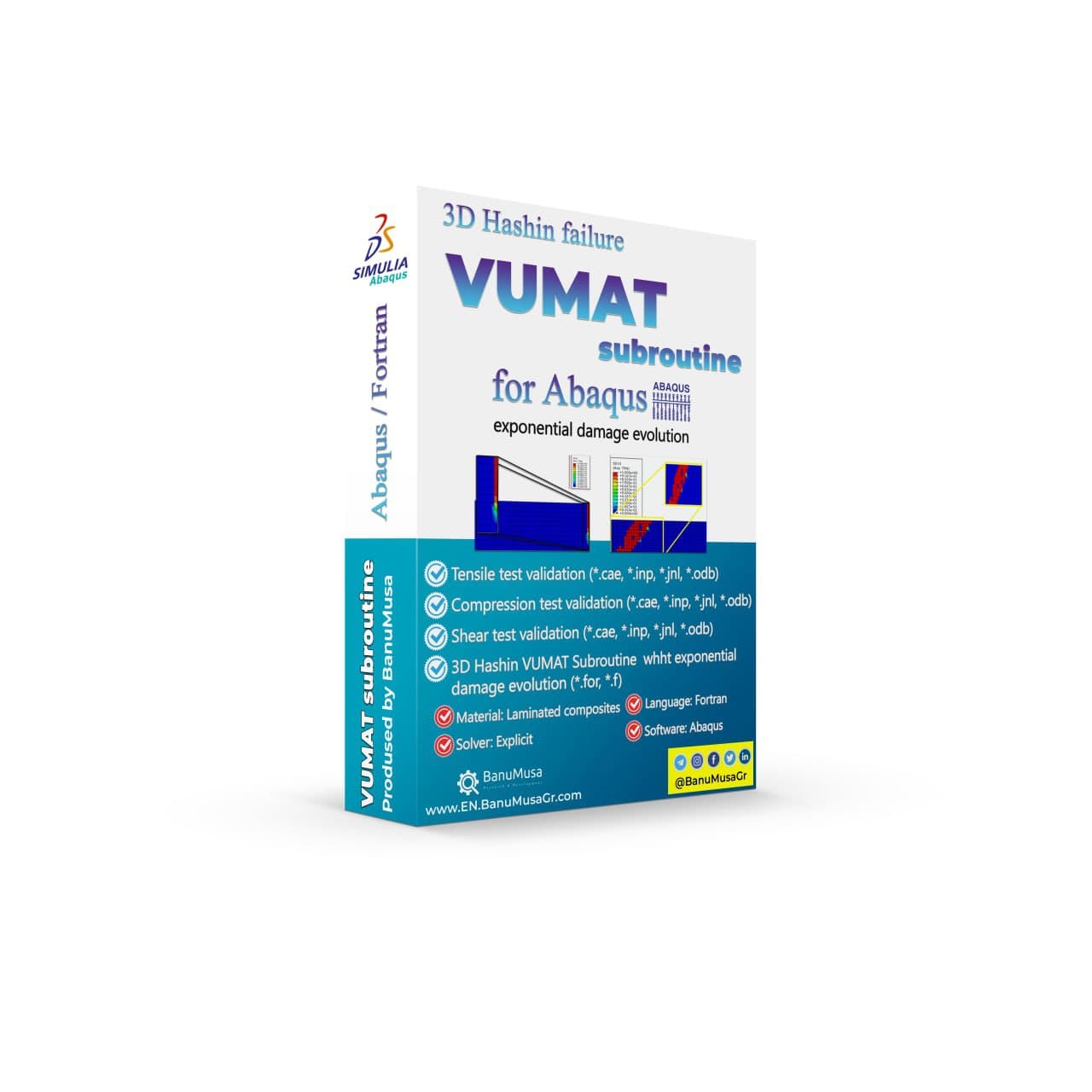
    3D Hashin VUMAT Subroutine for Abaqus with Exponential Damage Evolution € 455.00
  • abaqus material library
    MatLib: The Ultimate Abaqus Material Library Plugin € 315.00
  • Shot Peening Induced Residual Stresses - Abaqus Validation
    Shot Peening Induced Residual Stresses Simulation & Validation in Abaqus FEA Software € 85.00
Products
  • Advanced Failure Analysis of Composite Materials Abaqus -helius Advanced Failure Analysis of Composite Materials with Abaqus and Autodesk Helius PFA: A Comprehensive Guide € 550.00 Original price was: € 550.00.€ 499.00Current price is: € 499.00.
  • Plastic Curve Generator plugin converting stress-strain data in Abaqus Plastic Curve Generator Plugin for Abaqus € 163.05
  • Description
  • Additional information
  • Payment & Delivery
  • Content
Description
How to model FRP composites in LS-Dyna with 3D Elements?

Low Velocity Impact on FRP composite plate in LS-Dyna

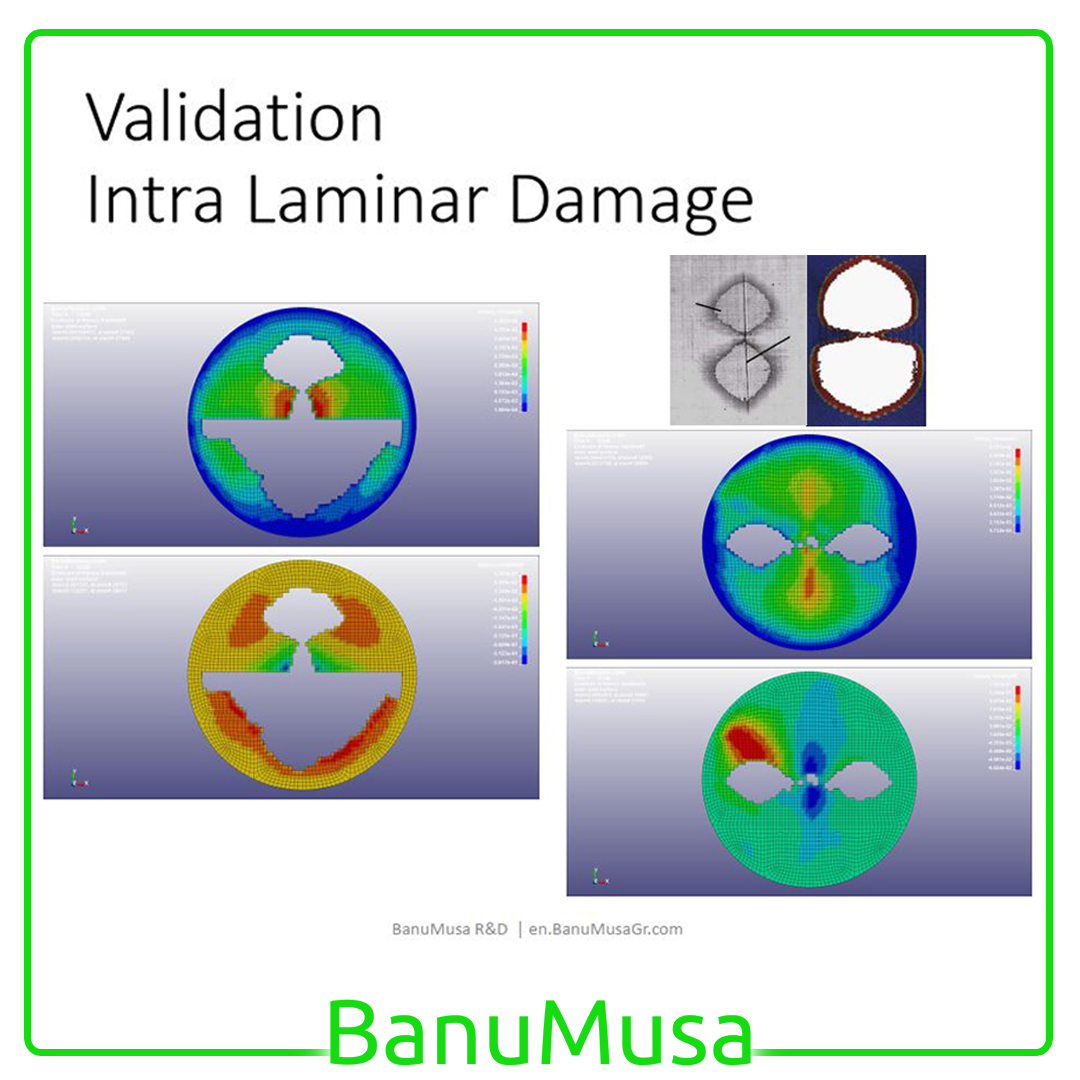
LS-Dyna Validation

3D modeling techniques for low-velocity impact FRP laminate with LS-DYNA

The LS-DYNA Tutorial: 3D Modeling Techniques for Low-Velocity Impact Analysis of FRP Composite Laminate course offers a detailed exploration of the fundamental concepts and practical methodologies involved in simulating low-velocity impact on FRP composite laminates. Participants will learn the step-by-step process of creating accurate 3D models using LS-DYNA, a powerful finite element analysis software. The course covers topics such as material modeling, meshing techniques, boundary conditions, and impact loading scenarios specific to low-velocity impacts.

Participants will gain insights into interpreting and analyzing the simulation results to evaluate the laminate’s response to impact, including damage initiation, propagation, and energy absorption characteristics. Practical examples and case studies will be utilized to reinforce the concepts and enhance the learning experience. By the end of this tutorial, participants will have the necessary skills to perform reliable and effective low-velocity impact analysis of FRP composite laminates using LS-DYNA.

Progressive damage model

In order to effectively describe the progressively intralaminar and interlaminar (delamination) damage for FRP composite laminates, a three-dimensional progressive damage model for composite laminates is defined. It is used for low-velocity impact analysis of FRP composite laminates in LS-Dyna FEA software.

Progressive damage in FRP (Fiber-Reinforced Polymer) composites refers to the gradual development and propagation of damage within the material under various loading conditions. FRP composites are composed of reinforcing fibers, such as carbon or glass, embedded in a polymer matrix, typically epoxy resin. Progressive damage occurs when these materials undergo mechanical loading, leading to the initiation and growth of various forms of damage, including matrix cracking, fiber breakage, delamination, and fiber-matrix debonding.

The progressive nature of damage means that it starts as localized micro-scale damage, which then extends and interacts with neighboring regions, eventually affecting the overall structural integrity of the composite. This damage progression can occur due to factors such as cyclic loading, impact events, or long-term exposure to environmental conditions.

Understanding and predicting progressive damage in FRP composites is crucial for ensuring the structural reliability and safety of composite components. Advanced modeling and analysis techniques, such as finite element analysis (FEA) and cohesive zone modeling, are employed to simulate and predict the initiation, propagation, and interaction of damage mechanisms in FRP composites. By studying progressive damage, engineers can optimize composite designs, develop mitigation strategies, and assess the remaining strength and life of FRP composite structures.

Chang-Chang failure criteria

The three-dimensional progressive damage model is based on continuum damage mechanics (CDM) and is implemented in the LS-Dyna with Chang-Chang failure criteria (*MAT_054). The nonlinear damage model can be used to analyze the dynamic performance of the composite structure and its failure behavior.

For the interlaminar damage, 3D cohesive elements with *MAT_138 material keyword are used.  The FEA model is validated by a well-known paper (Guo et al. 2013) and can be used in any simulation.

What you’ll learn

In this LSDyna tutorial video, you will learn how to use the *MAT_054 composite material keyword & *MAT_138 cohesive material keyword in LS-Dyna and determine their parameters. How to model the damage in the FRP composite laminates, its damage modes, selecting the appropriate element in accordance with the analysis, orientation of composite modeling, contacts, and many other techniques.

Overview

  1. Geometry and Meshing
    Techniques for creating accurate 3D models of FRP composite laminates, including proper meshing strategies for impact analysis.
  2. Material Modeling
    Understanding the material properties and behavior of FRP composite laminates under low-velocity impact conditions.

    • *MAT_COHESIVE_MIXED_MODE  material keyword(*MAT_138)
    • Define cohesive damage parameters
    • Mechanical and damage properties of Composites
    • Composite damage modes
    • Cohesive damage modes
    • Defining Fibre Orientation (Material Direction) using LS-PrePost
  3. Element selection
    • Rigid Elements
    • FRP composite laminate elements
  4. Boundary conditions (BC)
    Setting up appropriate boundary conditions to simulate realistic loading and constraints during low-velocity impact.
  5. Impact Loading 
    Different types of impact loading scenarios and their effects on FRP composite laminates.
  6. Damage Modeling
    Techniques for modeling and predicting damage initiation, propagation, and energy absorption in the laminate.
  7. Visualization Techniques
    Image, Movie, Plots, &, etc.
  8. Analysis and Interpretation of Results
    Evaluating and interpreting the simulation results to gain insights into the laminate’s response to low-velocity impact.
  9. Case Studies and Practical Examples
    Real-world examples and case studies demonstrating the application of LS-DYNA for low-velocity impact analysis of FRP composite laminates.

    • Simulation of low-velocity impact on FRP composite laminate
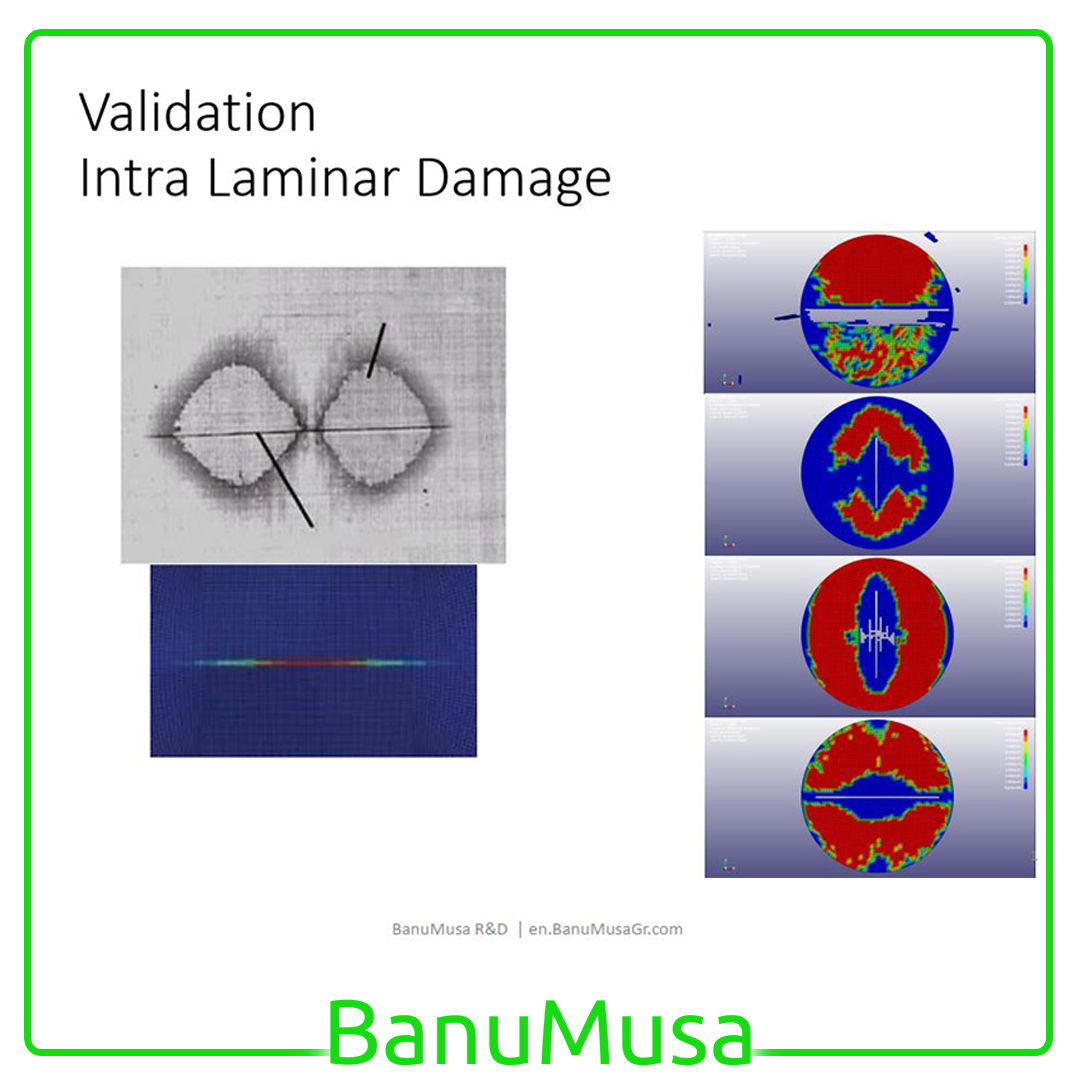
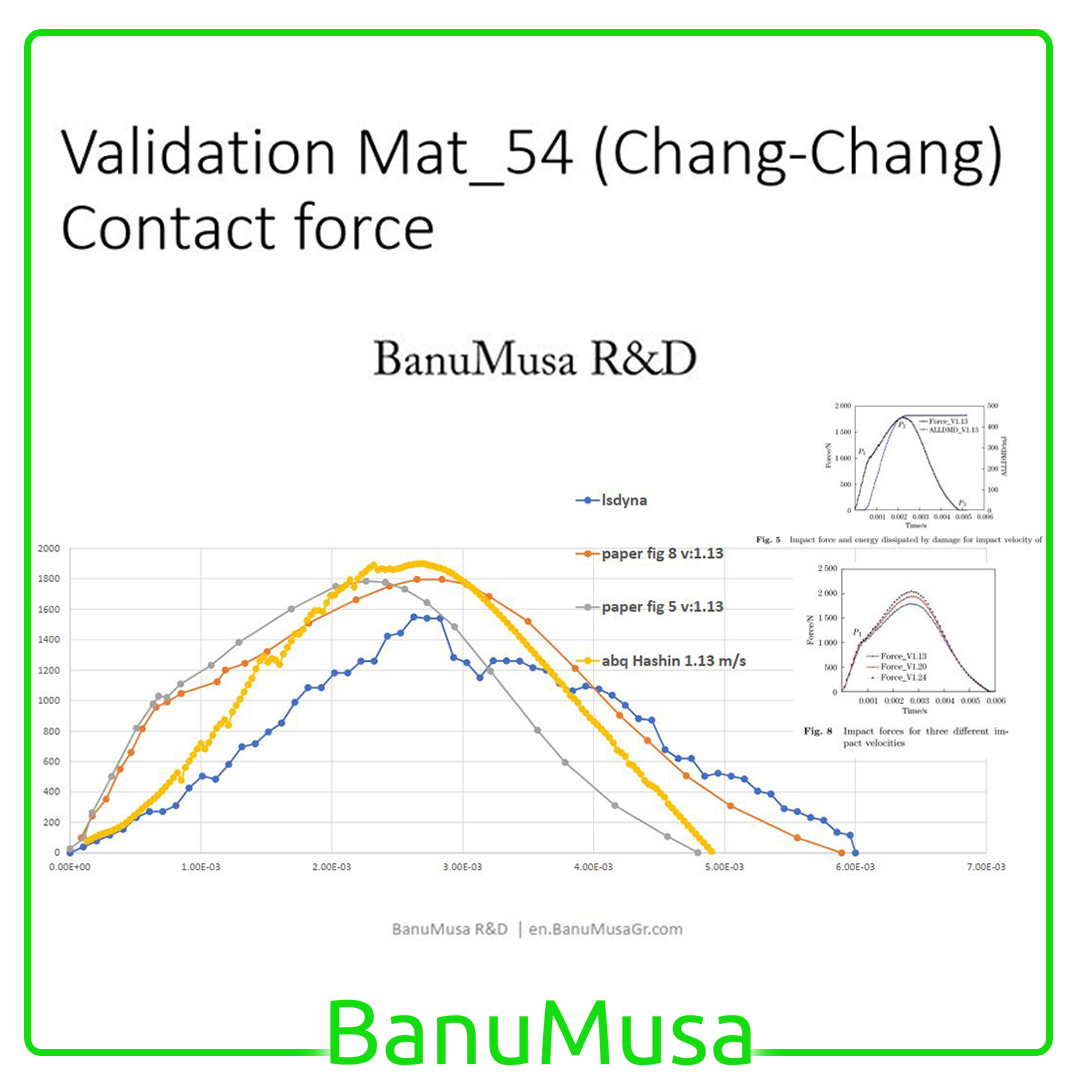
    • FEA validation By Guo et al. paper (Contact force, delamination & cracking damage modes)
low velocity impact fea analysis on frp composite plate validation - lsdyna tutorial video
We are ready to help you in CFD & FEA simulations.

Need help? Get a consultation from our experts.

Abaqus E-learning technical FEA & CFD consulting by banumusa FEA & CFD Consultancy Services Abaqus Ansys LS-Dyna user subroutine plugin FEA and CFD consultancy Abaqus consultancy services Technical Abaqus mentoring fluent cfd services ls-dyna consultancy services ansys consultancy services comsol consultancy services
Email us: info@banumusagr.com
Telegram: +98-915-55-20-388
WhatsApp: +98-915-55-20-388

Find Us on WeChat

wechat banumusa company ویچت

Demo

Money-Back Guarantee

15-Day

Money back gold guarantee - BanuMusaWe’re fully confident in the value and reliability of the product. If for any reason you are not completely satisfied, email us at info@BanuMusaGr.com within 48 hours of your purchase for a full refund.

LS-DYNA tutorial video

An LS-DYNA tutorial video is a video resource that provides step-by-step instructions and demonstrations on how to use LS-DYNA software for finite element analysis. These videos typically cover various topics, such as the software’s user interface, model setup, material definition, boundary conditions, solver settings, and result interpretation.

In addition, in these types of videos, we do validation with a well-known paper to be sure of the model setup. Also, all software files are provided to the customer.

Who this course is for

  • Civil and mechanical engineers who need to perform low-velocity impact analysis
  • Advanced students, Ph.D. students, or researchers for their LS-Dyna FEA projects
  • Any LS-Dyna Application Engineer who is involved with various simulation projects on a daily basis
  • Design, research, and development (R&D) offices of military and parts manufacturing companies
  • LS-Dyna FEA simulation consultancies

What you’ll gain

  • You will be able to conduct low-velocity impact analysis by LS-Dyna
  • You will be able to develop your own LS-Dyna FRP composite laminate damage model
Additional information
Software

Ansys LS-Dyna, Ansys simulation software

Type

LS-Dyna training course
LS-Dyna validation
LS-Dyna tutorial video

Level

Elementary

Files

LS-Dyna files: *.k, d3plot
Video: *.mp4
Lecture notes: *.pdf

Language

English

Category

Failure & Damage Analysis
Material Modelling

Solver

Explicit,

Material

FRP Composite Materials
Cohesive Materials

Payment & Delivery
All products available on the website come with a guarantee of customer satisfaction. The products can be used immediately after purchase through the download link. There is also online consulting/mentoring for all customer reassurance products.
Before buying, you can also talk to our experts in BanuMusa R&D and buy from the Shop according to your needs.

Note:

Please pay attention to the following points when you pay.

1. Tether / Tron The easiest way to pay is through the Tether portal in the BanuMusa shop. You can easily pay with your wallet.

• How to pay for a product using USDT TRC-20 with ADVCash https://www.youtube.com/watch?v=DYyHsdcLxhk

• Tron TRC20 Wallet for USDT Tutorial (Send USDT for Lowest Fees!!) https://www.youtube.com/watch?v=lBQMkEBf7W4

For other wallets just search on YouTube!

The download link automatically will be sent to you.

2. Payoneer:

If you have Payoneer, you can pay simply through the following ID.

fro458nk@gmail.com

After your payment is processed, you will receive the download links.

Let me know if you need any further adjustments!

3. PAYEER

Send us a message/ email to help you how to pay for this method, please. (info@banumusagr.com)

4. WebMoney

We will send you the wallet if you request this method. Email us.

5. PayPal Payment Instructions:

Please email us to send your PayPal Account.

After your payment is processed, you will receive the download links.

Let me know if you need any further adjustments!

6. SWIFT/IBAN

Another way is to pay via SWIFT or IBAN, contact us to learn more.

We will do our best to make sure you have a good shopping experience.


If it is not possible for you to buy through the Tether gateway, send us the link to the product using email (info@banumusagr.com) or social networks (WhatsApp, WeChat, Telegram). After that, the PayPal account will be sent to you.

Another way is to pay via SWIFT, contact us to learn more.


Ways to Contact Us:

WhatsApp / Telegram / WeChat: +98-915-5520-388
E-mail: info[at]banumusagr.com
Phone: +98-51-35424520

Payment Methods:

You can buy the product through Tether, Tron, Payoneer, PAYEER, WebMoney, PayPal, and SWIFT.

Content

Contents

  • LS-Dyna tutorial video (*.mp4)
  • Lecture notes (PDF)
  • LS-Dyna workshop files (*.k, d3plot)
  • 15-day money-back guarantee
  •   Free 24/7 online mentoring

Reviews

There are no reviews yet.

Be the first to review “LS-Dyna Tutorial: 3D modeling techniques for low-velocity impact analysis of FRP composite laminate” Cancel reply

You must be logged in to post a review.

Related products

Numerical Simulation of Nonlinear Engineering Problems Using LS-DYNA book by Hamid Rokhi Banumusa
Compare
Close

LS-DYNA Book: Numerical Simulation of Nonlinear Engineering Problems Using LS-DYNA

€ 410.00
This LS-Dyna book provides advanced training in LS-DYNA, focusing on the accurate simulation of nonlinear engineering problems. It covers eight experimental case studies, validating simulation results with real-world data to ensure reliability. Engineers and researchers can apply these methods to tackle complex challenges in fields like automotive, aerospace, and heavy industry. Book (Hard Copy) LS-Dyna files (*.k) LS-Dyna workshop files
Add to wishlist
Add to cart
Quick view
Multiple Step Analysis in Abaqus -tutorial- banumusa-
Compare
Close

ABAQUS Tutorial: Multiple Step Analysis

Rated 5.00 out of 5
€ 65.00
In this training video, you will learn how to transfer the results of heat transfer analysis, such as thermal stress, from the Abaqus/standard to impact analysis in Abaqus/explicit as an initial condition. You will learn the limitations, and technical tips in modeling, as well as a practical example of low-velocity impact analysis on a composite plate. Lecture notes (PDF) Abaqus tutorial video (*.mp4) 15-day money-back guarantee   Free 24/7 online mentoring
Add to wishlist
Add to cart
Quick view
Step-By-Step Ansys Fluent Non Dimensional Laminar Flow Simulation Guide
Compare
Close

Step-By-Step Ansys Fluent Non Dimensional Laminar Flow Simulation Guide

€ 55.00
Step-By-Step Ansys Fluent Non Dimensional Laminar Flow Simulation Guide, will provide a detailed, step-by-step guide for performing non dimensional laminar flow simulations in Ansys Fluent. It covers all the necessary steps to set up and solve the model, as well as analyze and interpret the results.   Tutorial video (*.mp4)  Ansys Fluent files (in ANSYS workbench) Fluent lecture notes (*.pdf) 15-day money-back guarantee   Free 24/7 online mentoring
Add to wishlist
Add to cart
Quick view
-9%
Advanced Failure Analysis of Composite Materials Abaqus -helius
Compare
Close

Advanced Failure Analysis of Composite Materials with Abaqus and Autodesk Helius PFA: A Comprehensive Guide

€ 550.00 Original price was: € 550.00.€ 499.00Current price is: € 499.00.
The "Advanced Failure Analysis of Composite Materials with Abaqus and Autodesk Helius PFA: A Comprehensive Guide" online course is designed to teach engineers, technicians, and researchers advanced analysis techniques for composite materials. The course covers a range of topics, including material modeling, failure criteria, damage mechanics, progressive failure analysis of composites, and fatigue. Participants will learn how to use Abaqus and Autodesk Helius PFA software to model, simulate, and analyze composite materials under different loading conditions. The course is divided into several modules, each covering a different aspect of composite material analysis. The course provides an excellent opportunity for engineers and researchers to expand their knowledge of advanced analysis techniques for composite materials and gain hands-on experience with industry-standard software tools. Abaqus tutorial video (*.mp4) Lecture notes (PDF) Abaqus workshop files (*.k, d3plot) 15-day money-back guarantee   Free 24/7 online mentoring
Add to wishlist
Add to cart
Quick view
Introduction to Abaqus course
Introduction to Abaqus Training Course - abaqus for students. abaqus for beginners
Compare
Close

Introduction to Abaqus Training Course

€ 410.00
The Introduction to Abaqus Training Course provides a thorough and cohesive overview of Abaqus' modeling and analysis capabilities. Participants will learn how to address linear and nonlinear problems, manage analysis tasks, and examine simulation outcomes within Abaqus' interactive interface. The course will encompass instruction on the following products: Abaqus/CAE, Abaqus Standard, and Abaqus Explicit. Abaqus tutorial video (*.mp4) Lecture notes (PDF) Abaqus workshop files (*.cae, *.inp, *.jnl, *.odb) 15-day money-back guarantee   Free 24/7 online mentoring
Add to wishlist
Add to cart
Quick view
Design and Analysis of Composite Overwrapped Pressure Vessels Course banumusa wcm plugin
Design and Analysis of Composite Overwrapped Pressure Vessels Course banumusa wound composite modeler plugin abaqus
Compare
Close

Design and Analysis of Composite Overwrapped Pressure Vessels Course

€ 425.00
The "Design and Analysis of Composite Overwrapped Pressure Vessels (COPV)" course provides a comprehensive overview of the principles, processes, and considerations involved in designing and analyzing COPVs. Participants will delve into topics such as material models, structural design, manufacturing modeling, and FEA analysis guidelines specific to COPVs. The course aims to equip attendees with the knowledge and skills necessary to understand the complexities of COPV design, ensuring safety, reliability, and efficiency in aerospace and other industries. Abaqus tutorial video (mp4) Lecture notes (PDF) Abaqus workshop files (cae, jnl, inp, odb) API 579 / BPVC ASME section X standard (PDF) 15-day money-back guarantee   Free 24/7 online mentoring
Add to wishlist
Add to cart
Quick view
-4%
USDFLD Subroutine 3D Hashin
Compare
Close

3D Hashin USDFLD Subroutine Failure Criteria for Abaqus

€ 124.00 Original price was: € 124.00.€ 119.00Current price is: € 119.00.
The 3D Hashin USDFLD subroutine is used in Abaqus to define failure criteria for composite materials based on the Hashin failure criteria and field variables (FV) for softening behavior. It allows you to specify the failure criteria for each ply of composite material in three dimensions (3D). This subroutine is particularly useful for analyzing the failure behavior of composite structures under various loading conditions in Abaqus simulations. It is a functionally validated USDFLD subroutine that compares results with the Chang & Lessard failure criterion available in Abaqus documentation. This code identifies four damage modes including matrix tension, matrix compression, fiber tension, and fiber compression using the elastic constants. Abaqus tutorial video (*.mp4) Lecture notes (PDF) Abaqus workshop files (*.cae, *.inp, *.jnl, *.odb) Fortran Abaqus subroutines run on Windows or Linux 15-day money-back guarantee   Free 24/7 online mentoring
Add to wishlist
Add to cart
Quick view
Coupled thermal stress analysis
Hongqi-CA7220-AE_abaqus-Coupled Thermal Stress Analysis of Automotive Disc Brake Validation Tutorial
Compare
Close

Coupled Thermal Stress Analysis of Automotive Disc Brake: A Complete Validation Tutorial

€ 175.00
In Coupled Thermal Stress Analysis of Automotive Disc Brake: A Complete Validation Tutorial, a solid disk brake of a CA7220 car with initial rotational velocity will contact a disk pad. The effects of friction will be an increase in disk temperature due to heat generated by energy dissipation and the reduction of rotational velocity. The numerical results were validated by the Gao & Lin, (2002) paper. Abaqus tutorial video (*.mp4)  Abaqus files (*.cae, *.inp, *.jnl, *.odb) 15-day money-back guarantee   Free 24/7 online mentoring
Add to wishlist
Add to cart
Quick view
University of Warwick
NBJX
MultiFat
kitech
kims
EnginSoft
Techinco
NIGC
Mobarakeh Steel Co.
Lincoln University
ISOICO Shipbuilding Company
IRISL Company
Ferdows Marine Tech
AQR Company

Founded in 2016, BanuMusa R&D is an established engineering consultancy specializing in advanced Finite Element Analysis (FEA), Computational Fluid Dynamics (CFD), and simulation-driven product development.

Facebook Youtube Linkedin Instagram

Products

  • 3D Hashin VUMAT Subroutine for Abaqus with Exponential Damage Evolution
  • VUMAT Subroutine: Shear Anisotropic Modified GTN Damage Model
  • MatLib Abaqus Material Library

Company

  • Contact us
  • Our team
  • Our partners
  • Careers
Start Project

Our WeChat 

abaqus ansys lsdyna banumusa wechat

Copyright BanuMusa 2026
payments

Shopping cart

close

Powered by WhatsApp Chat

  • Menu
  • Categories
  • Consulting Services
  • Products
  • Resources
    • Blog
    • Projects
  • About Us
    • Contact Us
    • Our Team
    • Our Partners
    • Careers
    • Payment Methods
    • Support & FAQ
  • Consulting Services
  • Products
  • Resources
    • Blog
    • Projects
  • About Us
    • Contact Us
    • Our Team
    • Our Partners
    • Careers
    • Payment Methods
    • Support & FAQ

Sign in

close


Lost your password?
No account yet? Create an Account
Sidebar