
Facebook Twitter Email Instagram YouTube linkedin WhatsApp WhatsApp VK Telegram
info@BanuMusaGr.com
Login / Register
0 Wishlist
0 Compare
0 items / € 0.00
Facebook Twitter Email Instagram YouTube linkedin WhatsApp WhatsApp VK Telegram
FEA & CFD Consultancy | BanuMusa R&D FEA & CFD Consultancy | BanuMusa R&D
  • Consulting Services
  • Products
  • Resources
    • Blog
    • Projects
  • About Us
    • Contact Us
    • Our Team
    • Our Partners
    • Careers
Free Mentoring
Menu
FEA & CFD Consultancy | BanuMusa R&D
0 items / € 0.00
HomeShopAbaqusAbaqus Tips and Tricks Coupled Thermal Stress Analysis of Automotive Disc Brake: A Complete Validation Tutorial
Previous product
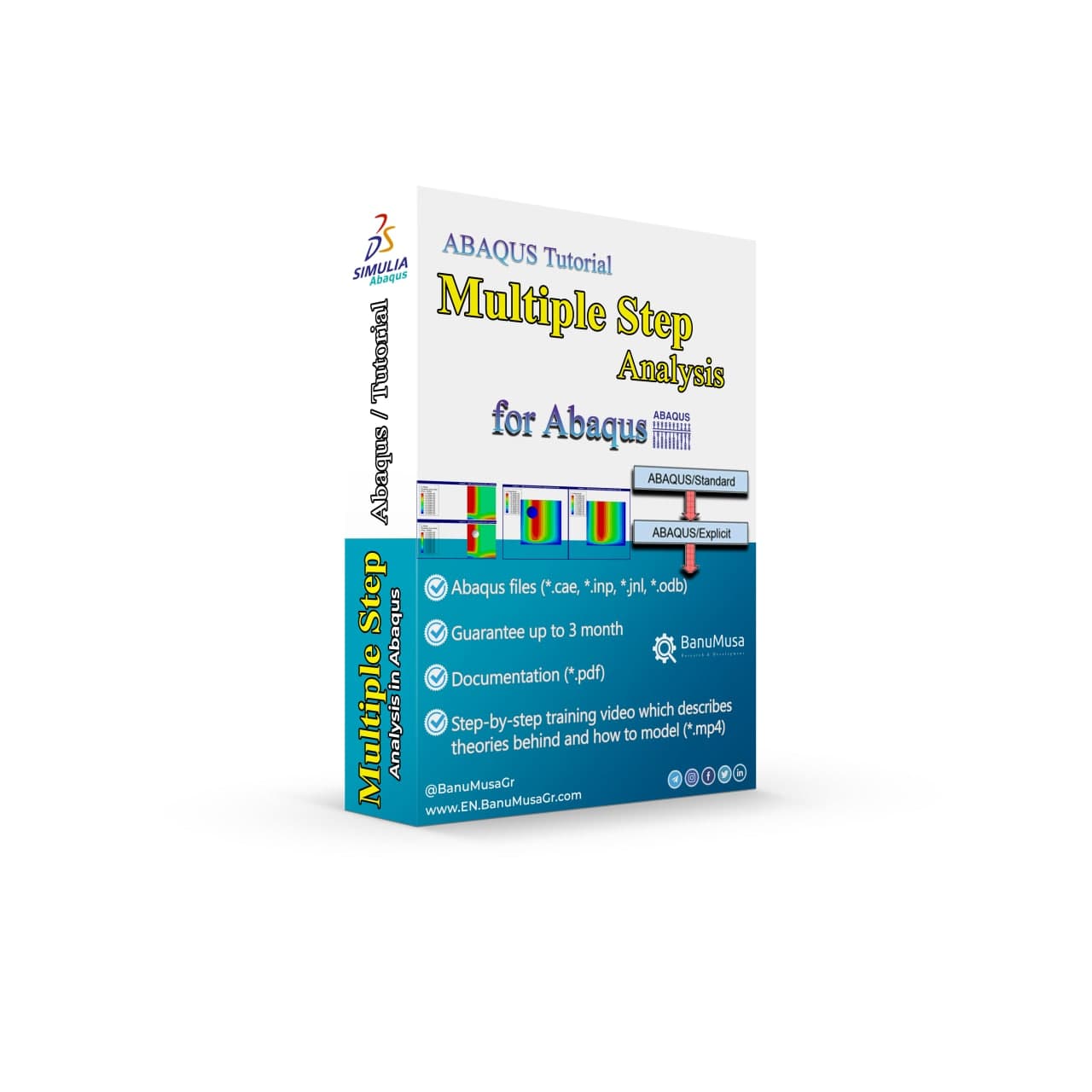
Multiple Step Analysis in Abaqus -tutorial- banumusa-
ABAQUS Tutorial: Multiple Step Analysis € 65.00
Back to products
Next product
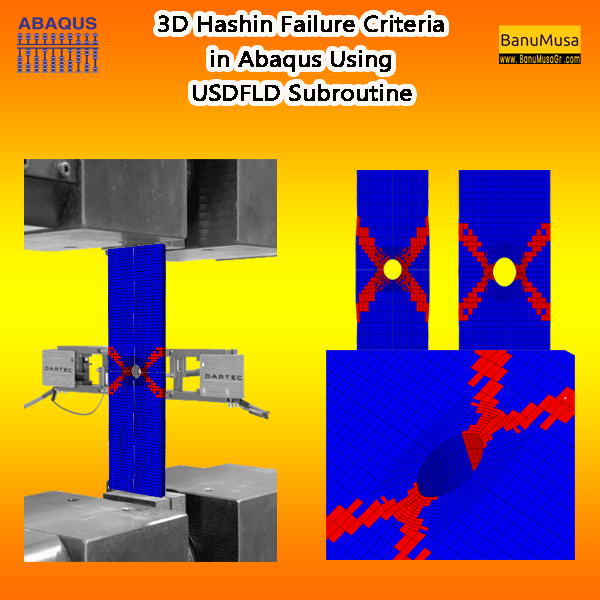
USDFLD Subroutine 3D Hashin
3D Hashin USDFLD Subroutine Failure Criteria for Abaqus € 124.00 Original price was: € 124.00.€ 119.00Current price is: € 119.00.
Coupled thermal stress analysis
Hongqi-CA7220-AE_abaqus-Coupled Thermal Stress Analysis of Automotive Disc Brake Validation Tutorial
Watch video
Click to enlarge

Coupled Thermal Stress Analysis of Automotive Disc Brake: A Complete Validation Tutorial

€ 175.00

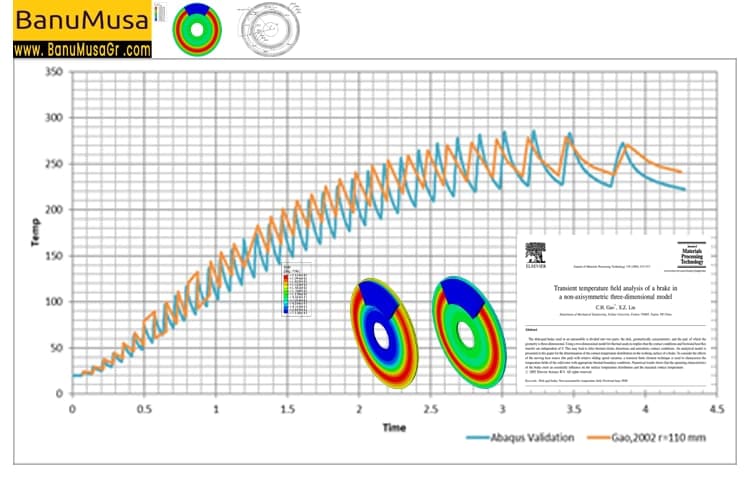
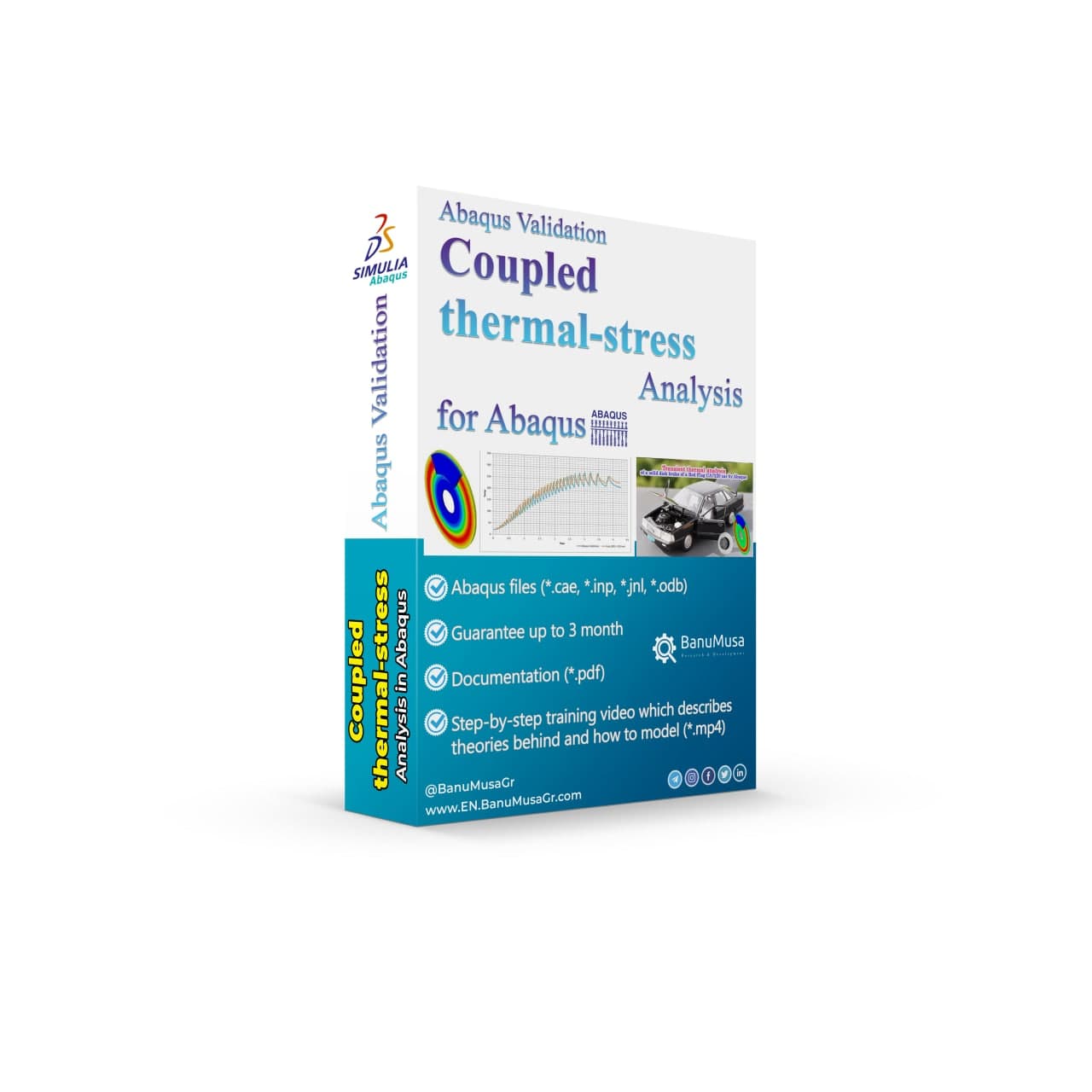
In Coupled Thermal Stress Analysis of Automotive Disc Brake: A Complete Validation Tutorial, a solid disk brake of a CA7220 car with initial rotational velocity will contact a disk pad. The effects of friction will be an increase in disk temperature due to heat generated by energy dissipation and the reduction of rotational velocity. The numerical results were validated by the Gao & Lin, (2002) paper.

Abaqus tutorial video (*.mp4)
 Abaqus files (*.cae, *.inp, *.jnl, *.odb)
15-day money-back guarantee
  Free 24/7 online mentoring

If you want to pay in a way other than Tether/Tron, contact us.
somdn_product_page
Compare
Add to wishlist
SKU: 002 Categories: Abaqus, Abaqus Tips and Tricks, FEM Validation, Tutorial Tags: Abaqus, Automotive, heat transfer analysis, simulia, stress analysis, thermal-stress analysis, training video, tutorial video
Share
Facebook Twitter Email Pinterest linkedin Odnoklassniki WhatsApp WhatsApp VK Telegram
close
You may also like…
  • abaqus material library
    MatLib: The Ultimate Abaqus Material Library Plugin € 315.00
  • larc05-abaqus-failure-criteria-composite-analysis
    Abaqus Tutorial: LaRC05 Failure Criterion For Fiber-Reinforced Composites € 110.00 Original price was: € 110.00.€ 99.00Current price is: € 99.00.
  • umat-vumat-subroutine-gtn-damage-model-abaqus GTN damage model Abaqus Shear-Modified GTN VUMAT Gurson-Tvergaard-Needleman plasticity ductile failure simulation void coalescence Abaqus
    VUMAT Subroutine: Shear Anisotropic Modified GTN Damage Model € 535.00 Original price was: € 535.00.€ 490.00Current price is: € 490.00.
  • Shot Peening Induced Residual Stresses - Abaqus Validation
    Shot Peening Induced Residual Stresses Simulation & Validation in Abaqus FEA Software € 85.00
  • rolling contact fatigue rail
    Rolling Contact Fatigue Analysis of UIC60 Rail Wheels € 99.00
  • Multiple Step Analysis in Abaqus -tutorial- banumusa-
    ABAQUS Tutorial: Multiple Step Analysis € 65.00
Products
  • Coupled thermal stress analysis Coupled Thermal Stress Analysis of Automotive Disc Brake: A Complete Validation Tutorial € 175.00
  • Placeholder ASME Sec. VIII, Div. 1 Pressure Vessel Design Course € 1,100.00
  • Description
  • Additional information
  • Payment & Delivery
  • Content
Description

Coupled Thermal Stress Analysis of Automotive Disc Brake

A coupled thermal-stress analysis considers the interaction between temperature, stresses, and deformation in the disc brake. This provides a more accurate prediction of brake behavior compared to separate thermal and stress analyses. The high temperatures generated during braking induce thermal stresses and strains in the brake components. A coupled analysis can accurately determine these thermal stresses.

The thermal stresses cause warpage and distortion of the brake disc and caliper, affecting brake performance. A coupled analysis can predict the extent of distortion under different braking conditions. Thermal stresses subject the disc brake materials to cyclic loading, reducing fatigue life. A coupled analysis provides a better estimate of brake durability.

The high temperatures accelerate material degradation in the brake pads and discs. A coupled stress analysis considering temperature-dependent material properties can model this effect. Residual stresses remain in the disc brake after cooling due to non-uniform thermal strains. A coupled analysis can predict these residual stresses.

Experimental validation of the disc brake model requires coupled thermal and stress measurements. A coupled analysis enables direct comparison with validation test data.

a coupled thermal stress analysis captures the interaction between temperature, stresses, and deformation in disc brakes more accurately. It provides valuable insight into factors like stresses, distortion, fatigue life, wear, and material degradation which influence brake performance and durability. The results from a coupled thermal stress analysis can then be used to optimize disc brake design for improved heat dissipation, lower stresses, and longer service life.

Verification & Validation (V&V)

In this Abaqus tutorial validation, a 3D dimensional coupled thermal stress analysis of the CA7220 automobile disc brake has been done using the Abaqus finite element analysis (FEA) software. The results of this FEA simulation have been validated with a known paper (Gao & Lin, 2002). For this analysis, the pressure from the pad to the brake disc is modeled and the heat generated by the friction between the pad and the disc brake is investigated. The final temperature distribution of the disc and brake pad is used to optimize the brake system.
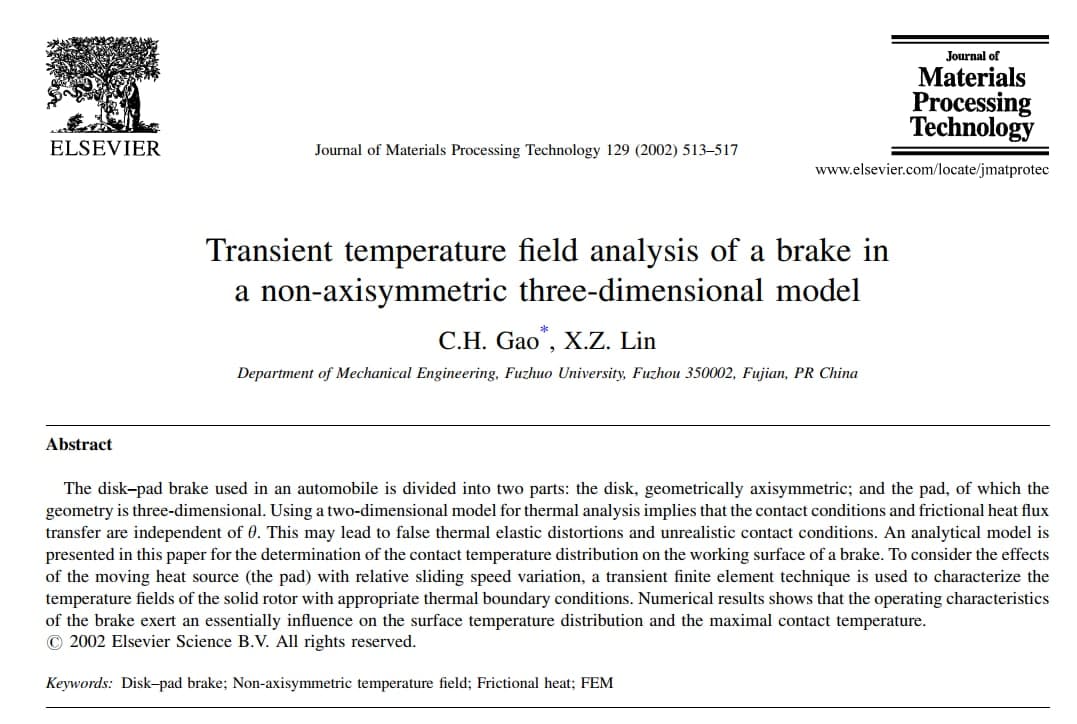
gao-lin-2002-abaqus-brake-pad-disk- verification validation-banumusa-FEA simulation-consulting

Gao & Lin, (2002) paper used for validation in this project

What you’ll learn

  • How to model automotive solid disk brake and pad
  • What material properties are used in transient thermal analysis
  • How to use coupled temp-displacement step in Abaqus
  • How to model the interaction between automotive solid disk brake and pad
  • What interaction properties are needed for transient coupled thermal analysis
  • What constraint must be used in this type of FEA simulation
  • How to rotate a deformable part in Abaqus
  • How to import and use graphs from paper as Amplitude in Abaqus
  • What load and boundary conditions should be used?
  • How to define the initial temperature for parts
  • Practical points for mesh generation
  • What is a mesh sensitivity study in FEA and how to do it in Abaqus?
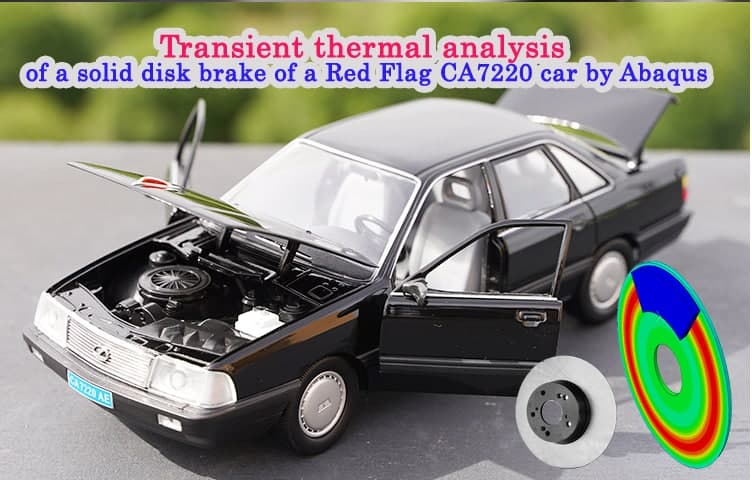
Hongqi-CA7220-AE_abaqus-Coupled Thermal Stress Analysis of Automotive Disc Brake Validation Tutorial

Abaqus E-learning technical FEA & CFD consulting by banumusa FEA & CFD Consultancy Services Abaqus Ansys LS-Dyna user subroutine plugin FEA and CFD consultancy Abaqus consultancy services Technical Abaqus mentoring fluent cfd services ls-dyna consultancy services ansys consultancy services comsol consultancy services
We are ready to help you in FEA & CFD simulations.

Need help? Get a consultation from our experts.

Email us: info@banumusagr.com
Telegram: +98-915-55-20-388
WhatsApp: +98-915-55-20-388

Money-Back Guarantee

15-Day

Money back gold guarantee - BanuMusaWe’re fully confident in the value and reliability of the product. If for any reason you are not completely satisfied, email us at info@BanuMusaGr.com within 48 hours of your purchase for a full refund.

Demo

Disc brake failures

Disc brake failures due to thermal issues are some of the most common. Here are a few examples:

  1. Warped discs – As the discs get overheated during repeated heavy braking, the material can expand unevenly and warp the disc surface out of shape. This causes vibrations and uneven braking performance.
  2. Glazed discs – The disc material can actually melt from extreme heat and re-harden in a glossy, smooth film on the surface. This severely reduces friction and braking performance.
  3. Cracked discs – Thermal shock from excessive heat can cause the discs to develop cracks, either radially across the disc surface or circumferential around the disc. Cracked discs need to be replaced.
  4. Frosted discs – When discs cool down very quickly after being overheated, water vapor in the air can condense on the hot disc surface, leaving a white ‘frost’ layer. This reduces the friction coefficient and braking power.
  5. Damaged piston seals and boots – The extreme temperatures in the caliper assembly can cause the piston seals and boots to degrade prematurely, leading to fluid leaks and loss of pressure.
  6. Reduced pad life – Pads wear out much faster when they are exposed to excessive heat. The friction material breaks down and loses its effectiveness.

The main factors that contribute to thermal issues are:

  • Repeated hard braking from high speeds or down long grades
  • Extreme ambient temperatures (both hot and cold)
  • Inadequate ventilation of the discs
  • Improper pad selection for the application

Course Content

  1. Introduction
    • Purpose of validation
    • Factors considered in disc brake analysis
    • Overview of the validation approach
  2. Abaqus FEA Model Development
    • Disc and pad geometry creation
    • Material properties
    • Assemble the parts
    • Interactions
    • Meshing
    • Boundary conditions and loads
    • Analysis steps
  3. Temperature Validation
    • Experimental temperature measurement techniques
    • Infrared thermography
    • Embedded thermocouples
    • Comparing Abaqus and experimental temperatures
    • Sources of error
  4. Conclusions and Recommendations
    • Summary of validation results
    • Limitations of the model
    • Suggestions for future improvements

How thermal stress analysis helps?

Thermal analysis of disc brakes can help engineers in a few key ways:

  1. Determine disc temperature rise
  2. Optimize disc design
  3. Select the appropriate pad material
  4. Determine cooling requirements
  5. Improve pad friction stability
  6. Test design limits
  7. Predict component life


In summary, thermal analysis and modeling give engineers valuable insights into the thermal performance and limitations of the disc brake design. It can help optimize the design for maximum cooling, temperature stability, and component life.

Abaqus-tutorial Validation-Thermal-stress-analysis-of-automotive disc brake thermal analysis

Who this course is for

  • Automotive and mechanical engineers who need to perform thermal stress analysis
  • Advanced students, Ph.D. students, or researchers for their Abaqus FEA projects
  • Any Abaqus Application Engineer who is involved with various simulation projects on a daily basis
  • Design and research and development (R&D) offices of automotive and parts manufacturing companies
  • FEA simulation consultancies

What you’ll gain

  • You will be able to conduct thermal stress analysis by Abaqus
  • You can use the FEA results of this simulation for low-cycle fatigue analysis
What is validation?

Validation is the process of ensuring that a product or system meets the requirements and specifications that it was designed for. It involves testing and evaluating to determine if the product actually works as intended.

Additional information
Software

Abaqus FEA

Type

Abaqus Tutorial + Validation

Level

Introduction

Files

Abaqus files: *.cae, *.jnl, *.inp, *.odb
Video: *.mp4, *.srt
Documents: *.pdf

Language

English/Persian

Category

Coupled Thermal Stress Analysis of Automotive Disc Brake

Solver

Coupled, Temp-Disp, Thermal stress analysis

Material

Casting Material Stainless Steel CA15 (SS410)

Payment & Delivery
All products available on the website come with a guarantee of customer satisfaction. The products can be used immediately after purchase through the download link. There is also online consulting/mentoring for all customer reassurance products.
Before buying, you can also talk to our experts in BanuMusa R&D and buy from the Shop according to your needs.

Note:

Please pay attention to the following points when you pay.

1. Tether / Tron The easiest way to pay is through the Tether portal in the BanuMusa shop. You can easily pay with your wallet.

• How to pay for a product using USDT TRC-20 with ADVCash https://www.youtube.com/watch?v=DYyHsdcLxhk

• Tron TRC20 Wallet for USDT Tutorial (Send USDT for Lowest Fees!!) https://www.youtube.com/watch?v=lBQMkEBf7W4

For other wallets just search on YouTube!

The download link automatically will be sent to you.

2. Payoneer:

If you have Payoneer, you can pay simply through the following ID.

fro458nk@gmail.com

After your payment is processed, you will receive the download links.

Let me know if you need any further adjustments!

3. PAYEER

Send us a message/ email to help you how to pay for this method, please. (info@banumusagr.com)

4. WebMoney

We will send you the wallet if you request this method. Email us.

5. PayPal Payment Instructions:

Please email us to send your PayPal Account.

After your payment is processed, you will receive the download links.

Let me know if you need any further adjustments!

6. SWIFT/IBAN

Another way is to pay via SWIFT or IBAN, contact us to learn more.

We will do our best to make sure you have a good shopping experience.


If it is not possible for you to buy through the Tether gateway, send us the link to the product using email (info@banumusagr.com) or social networks (WhatsApp, WeChat, Telegram). After that, the PayPal account will be sent to you.

Another way is to pay via SWIFT, contact us to learn more.


Ways to Contact Us:

WhatsApp / Telegram / WeChat: +98-915-5520-388
E-mail: info[at]banumusagr.com
Phone: +98-51-35424520

Payment Methods:

You can buy the product through Tether, Tron, Payoneer, PAYEER, WebMoney, PayPal, and SWIFT.

Content
  • Abaqus tutorial video (*.mp4)
  • Abaqus files (*.cae, *.inp, *.jnl, *.odb)
  • 15-day money-back guarantee
  •   Free 24/7 online mentoring

Overview

  1. Introduction
  2. Geometry and model
  3. Material properties
  4. Loading
  5. Solution controls
  6. Mesh sensitivity study
  7. Results and discussion
  8. Verification and validation
  9.  Additional Import Modeling Issues
  10. Limitations

Reviews

There are no reviews yet.

Be the first to review “Coupled Thermal Stress Analysis of Automotive Disc Brake: A Complete Validation Tutorial” Cancel reply

You must be logged in to post a review.

Related products

online Technical Abaqus Mentoring by Skype and anydesk - banumusa - fea consulting
Compare
Close

Technical Abaqus Mentoring by Skype

€ 75.00
Our Technical Abaqus Mentoring by Skype service offers you the opportunity to engage in personalized one-on-one mentoring sessions via Skype and AnyDesk with our team of certified Abaqus specialists. This unique platform allows you to delve into your engineering challenges, providing you with expert guidance and support to navigate through any obstacles you may encounter. Our specialists are dedicated to steering you in the right direction, ensuring that you receive the assistance needed to overcome your technical hurdles effectively and efficiently.
Add to wishlist
Add to cart
Quick view
-4%
USDFLD Subroutine 3D Hashin
Compare
Close

3D Hashin USDFLD Subroutine Failure Criteria for Abaqus

€ 124.00 Original price was: € 124.00.€ 119.00Current price is: € 119.00.
The 3D Hashin USDFLD subroutine is used in Abaqus to define failure criteria for composite materials based on the Hashin failure criteria and field variables (FV) for softening behavior. It allows you to specify the failure criteria for each ply of composite material in three dimensions (3D). This subroutine is particularly useful for analyzing the failure behavior of composite structures under various loading conditions in Abaqus simulations. It is a functionally validated USDFLD subroutine that compares results with the Chang & Lessard failure criterion available in Abaqus documentation. This code identifies four damage modes including matrix tension, matrix compression, fiber tension, and fiber compression using the elastic constants. Abaqus tutorial video (*.mp4) Lecture notes (PDF) Abaqus workshop files (*.cae, *.inp, *.jnl, *.odb) Fortran Abaqus subroutines run on Windows or Linux 15-day money-back guarantee   Free 24/7 online mentoring
Add to wishlist
Add to cart
Quick view
Micromechanics Plugin for Abaqus
Compare
Close

Micromechanics Plugin for Abaqus

€ 0.00
Download the Abaqus Micromechanics plugin for advanced composite failure analysis. Automate FE-RVE modeling from micro to macro scales in Abaqus/CAE.
Add to wishlist
View
Quick view
Pelamis Fatigue Damage Calculator plugin for marine Abaqus simulations abaqus fatigue analysis offshore structure design fe safe fatigue failure analysis
Compare
Close

Pelamis Fatigue Damage Calculator Plugin for Abaqus

€ 0.00
The Pelamis fatigue damage calculator plugin with a user-friendly GUI that makes it easy to perform fatigue analysis of offshore steel structures. The plugin is developed by Dr. Richard Craven. After performing a load time history analysis for a set of nodes, the fatigue damage or life of that set can be calculated. For this purpose, the stress time history for the set using the ASTM rainflow cycle counting method is used, and then the S-N curves available in DNV-RP-C203 are used to calculate the damage.
Add to wishlist
View
Quick view
SlopeSR plugin for geotechnical Shear Strength Reduction and slope stability in Abaqus
Compare
Close

SlopeSR Plugin for Abaqus

€ 55.00
The SlopeSR Plugin for Abaqus is a GUI plug-in that uses the strength reduction method (SRM) to calculate the factor of safety (FoS) and critical slip surfaces for 2D and 3D slopes. It is designed for slope stability analysis in geomechanics and geotechnical engineering. The plugin allows users to solve a series of elastic-perfectly plastic problems with the strength parameters and the Mohr-Coulomb criterion in ABAQUS/CAE. Documentation (PDF ) Abaqus plugin files (*.RAR) Abaqus workshop files 15-day money-back guarantee   Free 24/7 online mentoring
Add to wishlist
Add to cart
Quick view
asme design by analysis course - banumusa - abaqus fea
PRESSURE VESSEL DESIGN asme design by analysis course - banumusa - abaqus
Compare
Close

ASME Design By Analysis Course

€ 1,100.00
The ASME Design By Analysis Course provides a comprehensive overview of advanced engineering design techniques and analysis methods as per the ASME Section VIII, Division 2, Part 5. This course equips participants with the knowledge and skills needed to effectively apply FEA method in designing and evaluating mechanical components and systems. Through practical examples and case studies, participants will gain a deeper understanding of the principles behind design analysis and how to implement them in real-world engineering projects. Course video (mp4) Lecture notes (PDF) API 579 / ASME Sec. VIII, Div. 2 code (PDF) 15-day money-back guarantee   Free 24/7 online mentoring
Add to wishlist
Add to cart
Quick view
metal forming with abaqus cae fea workshop course nafems
Compare
Close

Metal Forming with Abaqus

€ 380.00
The "Metal Forming with Abaqus" course provides a comprehensive understanding of using the Abaqus finite element analysis software for modeling and simulating metal forming processes. The course is designed for engineers, researchers, and professionals working in the field of metal forming and manufacturing. It provides a solid foundation in the application of Abaqus for simulating and optimizing metal forming processes, enabling participants to enhance their modeling and analysis capabilities. Course video (mp4) Lecture notes (PDF) Abaqus workshop files (CAE, INP, ODB) 15-day money-back guarantee   Free 24/7 online mentoring
Add to wishlist
Add to cart
Quick view
Wound Composite Modeler Plugin for Abaqus
Compare
Close

Wound Composite Modeler Plugin for Abaqus

Rated 5.00 out of 5
€ 210.00
Engineering experts at SIMULIA have developed the Wound Composite Modeler plugin for Abaqus FEA software that enables the modeling of spatial variation of fiber orientation in a practical way. Because of the development of the use of composite materials and its widespread use in the manufacturing of pressure vessels by the filament winding method, the complexity of the design and analysis of these vessels prompted engineers to develop a tool for this purpose to increase the speed and accuracy of the design. Now, the WCM plugin (Ver. 2016) with extensive features is available. Documentation (PDF + HTML) Abaqus plugin files (*.RAR) Abaqus workshop files 15-day money-back guarantee   Free 24/7 online mentoring
Add to wishlist
Add to cart
Quick view

BanuMusa R&D Simulation Consultancy

Bridging the gap between theoretical engineering and manufacturing reality. We provide high-fidelity FEA, CFD, and specialized Abaqus plugins to eliminate trial-and-error in critical industrial sectors.

Capabilities

  • FEA Consultancy
  • CFD Simulation
  • API 579 FFS Assessment
  • ASME Design by Analysis
  • Composite & COPV

Flagship Utilities

  • MatLib Material Database
  • WCM Plugin (COPV)
  • 3D Hashin VUMAT
  • Autokeeler (Metal Forming)
  • Johnson-Cook Plugin

Support & Resources

  • 40% Academic Discount
  • 1-on-1 Abaqus Mentoring
  • Advanced CAE Courses
info@banumusagr.com
06-02 Park View condo, Changkat perak, off Lorong Perak, 50250, Kuala Lumpur, Selangor, Malaysia
Accepted Payments
© 2026 BanuMusa R&D. Engineering Simulation & Automation. All rights reserved.
Support & FAQ Payment Methods Privacy Policy Terms of Service

© 2026 FEA & CFD Consultancy | BanuMusa R&D. All rights reserved

Shopping cart

close

Powered by WhatsApp Chat

  • Menu
  • Categories
  • Consulting Services
  • Products
  • Resources
    • Blog
    • Projects
  • About Us
    • Contact Us
    • Our Team
    • Our Partners
    • Careers
  • Consulting Services
  • Products
  • Resources
    • Blog
    • Projects
  • About Us
    • Contact Us
    • Our Team
    • Our Partners
    • Careers

Sign in

close


Lost your password?
No account yet? Create an Account
Sidebar