


Fitness-For-Service Evaluation Course (API 579-1/ASME FFS-1)
Aging industrial infrastructure—including pressure vessels, storage tanks, and piping systems—constantly degrades due to corrosion, fatigue, and extreme operational temperatures. When inspectors discover a flaw, plant managers face a critical financial and safety decision: Should the equipment be repaired, retired, or safely returned to service?
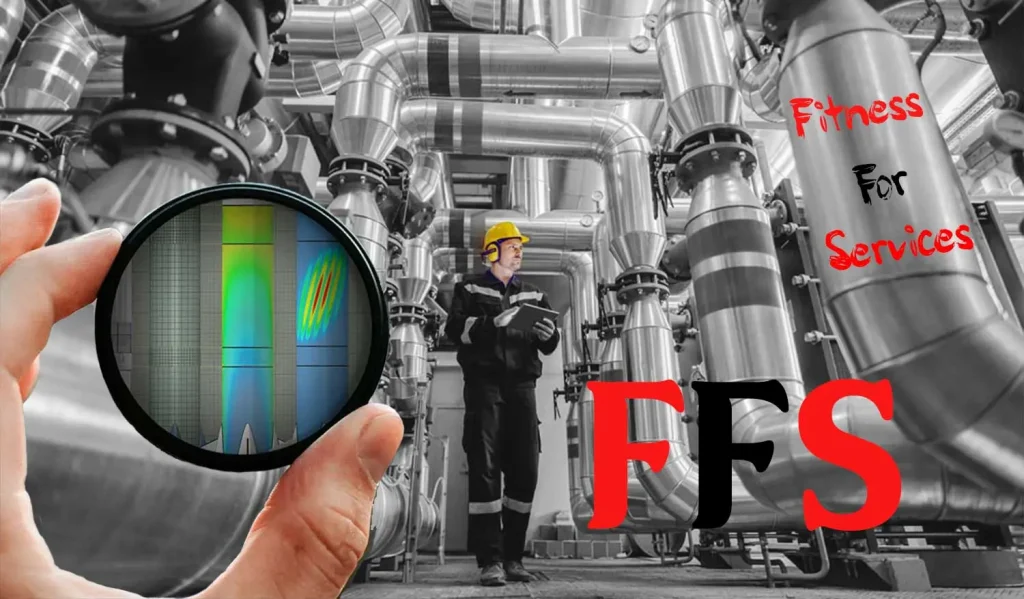
What is a Fitness-for-Service (API 579-1) Assessment?
A Fitness-for-Service (FFS) assessment is a quantitative engineering evaluation performed to demonstrate the structural integrity of an in-service component containing a flaw or damage. Governed primarily by the API 579-1 / ASME FFS-1 standard, these assessments provide a rigorous mathematical and structural framework to determine the remaining safe operational life of pressure assets.
By applying these standardized procedures, engineering teams avoid unnecessary downtime, prevent catastrophic structural failures, and eliminate the massive capital expenditures associated with premature equipment replacement. At BanuMusa R&D, our comprehensive training program equips reliability engineers and NDT inspectors with the exact methodologies required to perform these evaluations accurately.
 Level 1, 2, and 3 FFS: When Do You Need Finite Element Analysis (FEA)?
The API 579/ASME FFS-1 Fitness-For-Service standard categorizes assessments into three distinct levels of complexity. Understanding when to apply each level is the core focus of this course.
-
Level 1 Assessment: The most conservative approach. It requires minimum inspection data and relies on simple formulas and charts. It is typically performed by plant inspectors for basic metal loss.
-
Level 2 Assessment: Requires detailed inspection data (like precise thickness grids) and calculates a more accurate remaining strength using advanced analytical formulas.
-
Level 3 Assessment: The highest level of evaluation, utilizing advanced numerical techniques such as Finite Element Analysis (FEA). When flaws are located near complex structural discontinuities (e.g., nozzles), or when dealing with severe thermal-mechanical fatigue, Level 1 and 2 rules become overly conservative or invalid. In this course, we bridge the gap between code requirements and advanced simulation tools.
(For engineers specifically looking to master numerical techniques for Level 3 assessments, we highly recommend our specialized Fitness-for-Service Analysis with Abaqus Course.)
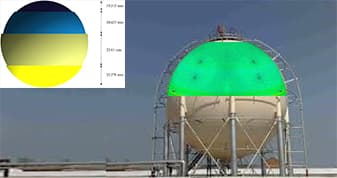
Signal FFS vs. Abaqus: Which Tool Should You Use?
Throughout the course, we demonstrate practical problem-solving using industry-standard tools. Signal FFS software is utilized for rapid, code-compliant Level 1 and Level 2 screening. It automates the complex algebraic equations and FAD plotting required by the API 579 standard.
However, for Level 3 analysis involving complex stress redistribution, non-linear material plasticity, or crack growth simulations (XFEM/CZM), we transition the workflow into SIMULIA Abaqus. You will learn exactly where software limitations exist and how to validate your analytical findings using numerical models.
Who Should Take This Training Program?
This program is heavily tailored for industrial professionals and researchers, including:
-
Reliability and Maintenance Engineers
-
API 510, 570, and 653 Certified Inspectors
-
NDT Technicians analyzing phased array or ultrasonic thickness data
-
FEA Analysts transitioning into the oil and gas structural integrity sector
Expand Your Career with BanuMusa R&D
Do you have a complex pressure vessel currently operating beyond its design life? If you require an urgent, third-party Level 3 evaluation, our senior engineering team provides complete Fitness-for-Service Consulting and Staff Augmentation. We deliver code-compliant reports ready for regulatory submission.
🎓 Attention Academic Researchers: Are you writing your thesis on fracture mechanics, high-temperature creep, or hydrogen embrittlement? Verify your university status today and receive a 40% Academic Discount on this FFS course and all related Abaqus simulation packages. 👉 Apply for Your Academic Discount Here
Need help? Get a consultation from our experts.

Telegram: +98-915-55-20-388
WhatsApp: +98-915-55-20-388
Virtual Mentoring Platform:
Skype+AnyDesk is BanuMusa’s interactive online mentoring solution with the most reliable features to help you before, during, and after your sessions. it is a robust training platform that engages students/attendees virtually.
Cancellation Policy:
A full refund is available for cancellations more than 30 days before the course recording start date. Within 30 days of the course start date, course credit can be transferred to another attendee within the same company, or can be kept on file to be applied to a future BanuMusa training course.
Certificate of Completion
 After the end of the course, a Certificate of Completion will be awarded to you by BanuMusa R&D.
Find Us on WeChat





Reviews
There are no reviews yet.