
Facebook Twitter Email Instagram YouTube linkedin WhatsApp WhatsApp VK Telegram
info@BanuMusaGr.com
Login / Register
0 Wishlist
0 Compare
0 items / € 0.00
Facebook Twitter Email Instagram YouTube linkedin WhatsApp WhatsApp VK Telegram
FEA & CFD Consultancy | BanuMusa R&D FEA & CFD Consultancy | BanuMusa R&D
  • Consulting Services
  • Products
  • Resources
    • Blog
    • Projects
  • About Us
    • Contact Us
    • Our Team
    • Our Partners
    • Careers
    • Payment Methods
    • Support & FAQ
Free Mentoring
Menu
FEA & CFD Consultancy | BanuMusa R&D
0 items / € 0.00
HomeShopTutorial LS-DYNA Book: Numerical Simulation of Nonlinear Engineering Problems Using LS-DYNA
Previous product
Anisotropy Calculator Abaqus plugin for sheet metal forming material models
Anisotropy Calculator Abaqus Plugin € 190.00
Back to products
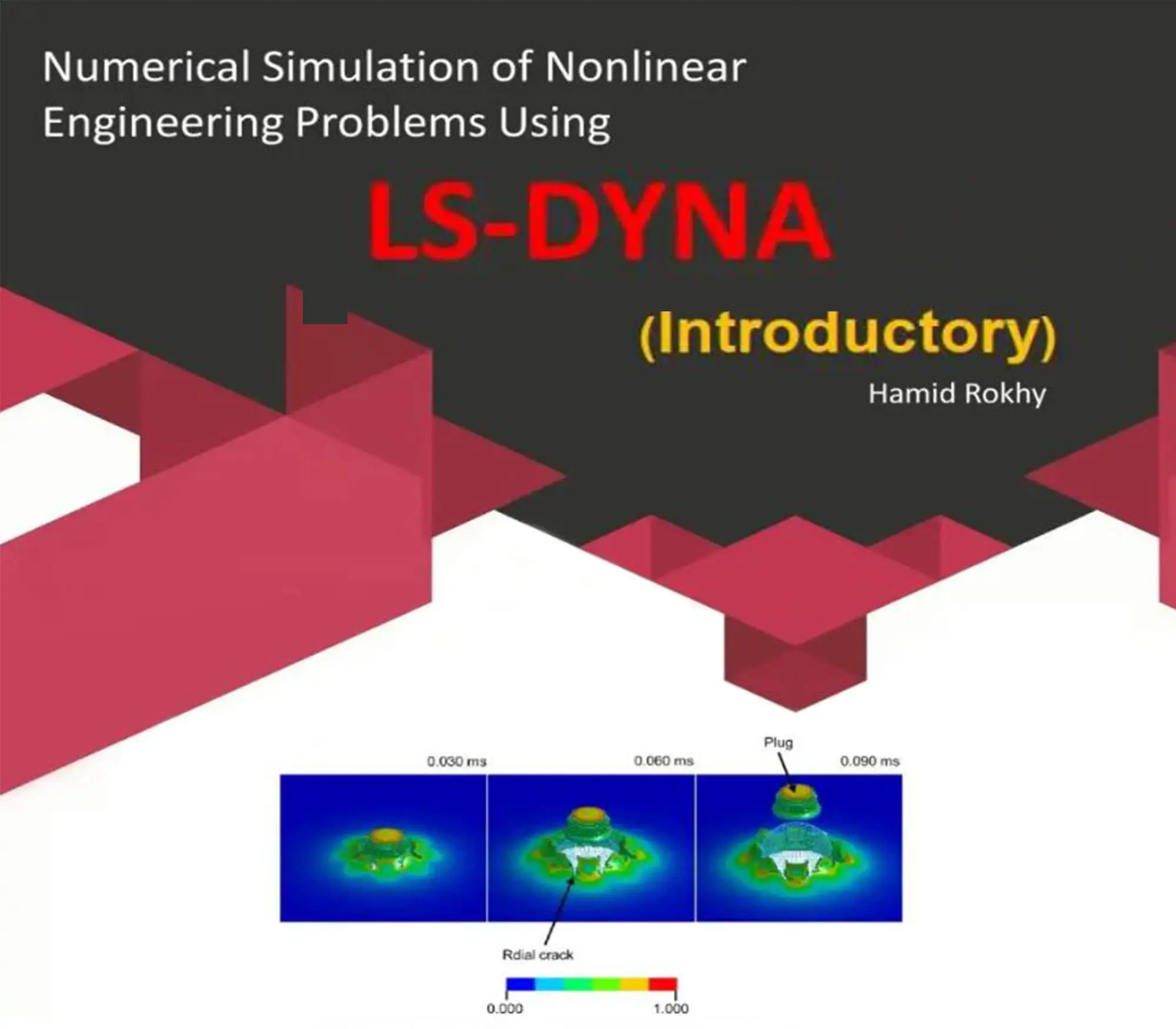
Numerical Simulation of Nonlinear Engineering Problems Using LS-DYNA book by Hamid Rokhi Banumusa
Click to enlarge

LS-DYNA Book: Numerical Simulation of Nonlinear Engineering Problems Using LS-DYNA

€ 410.00

This LS-Dyna book provides advanced training in LS-DYNA, focusing on the accurate simulation of nonlinear engineering problems. It covers eight experimental case studies, validating simulation results with real-world data to ensure reliability. Engineers and researchers can apply these methods to tackle complex challenges in fields like automotive, aerospace, and heavy industry.

Book (Hard Copy)
LS-Dyna files (*.k)
LS-Dyna workshop files

If you want to pay in a way other than Tether/Tron, contact us.
somdn_product_page
Compare
Add to wishlist
SKU: 2024-20 Categories: LS-Dyna, Tutorial
Share
Facebook Twitter Email Pinterest linkedin Odnoklassniki WhatsApp WhatsApp VK Telegram
close
You may also like…
  • Micromechanics Plugin for Abaqus
    Micromechanics Plugin for Abaqus € 0.00
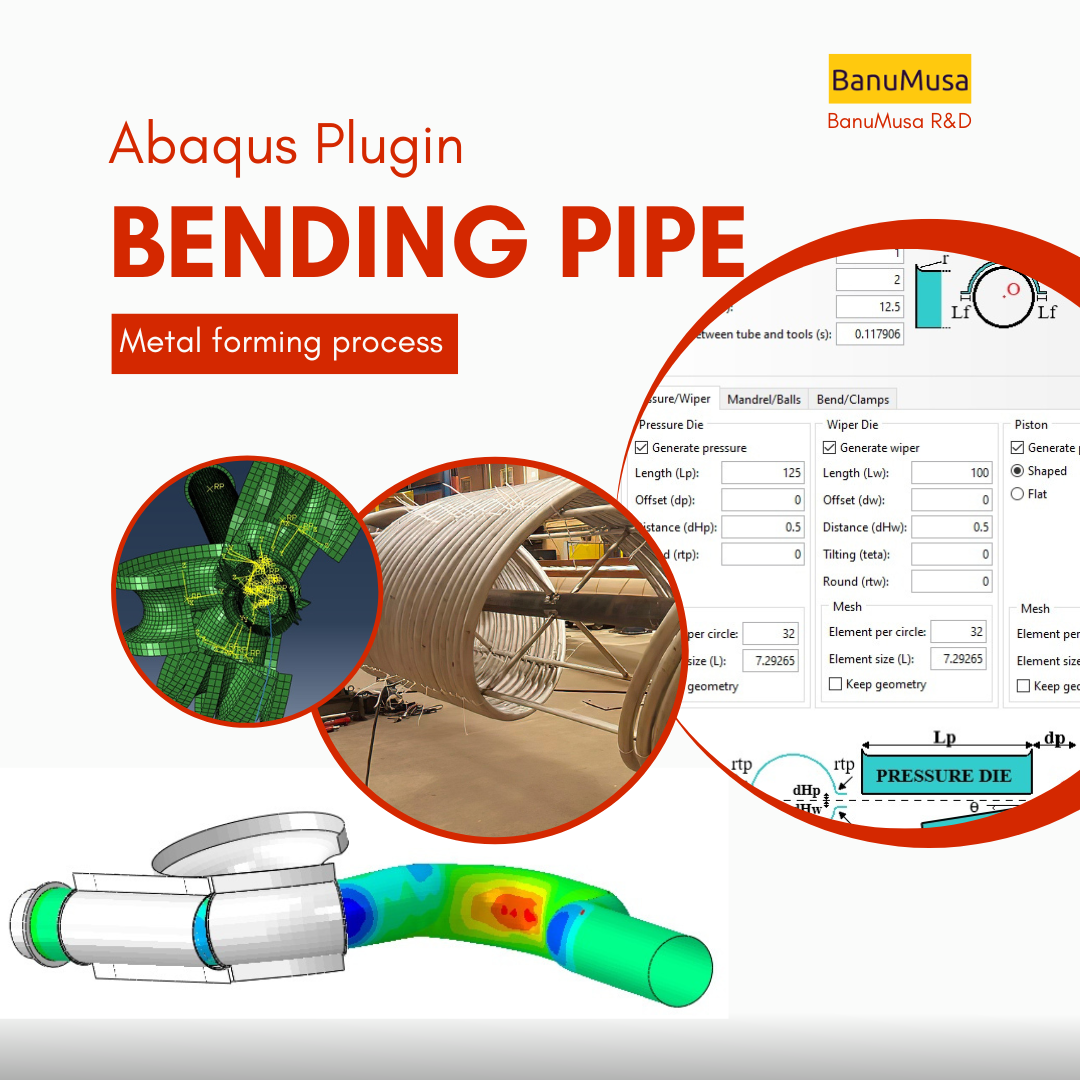
  • Bending Pipe plugin interface acting as an advanced pipeline modeling software in Abaqus
    Bending Pipe Plugin for Abaqus € 1,365.79 Original price was: € 1,365.79.€ 685.00Current price is: € 685.00.
  • larc05-abaqus-failure-criteria-composite-analysis
    Abaqus Tutorial: LaRC05 Failure Criterion For Fiber-Reinforced Composites € 110.00 Original price was: € 110.00.€ 99.00Current price is: € 99.00.
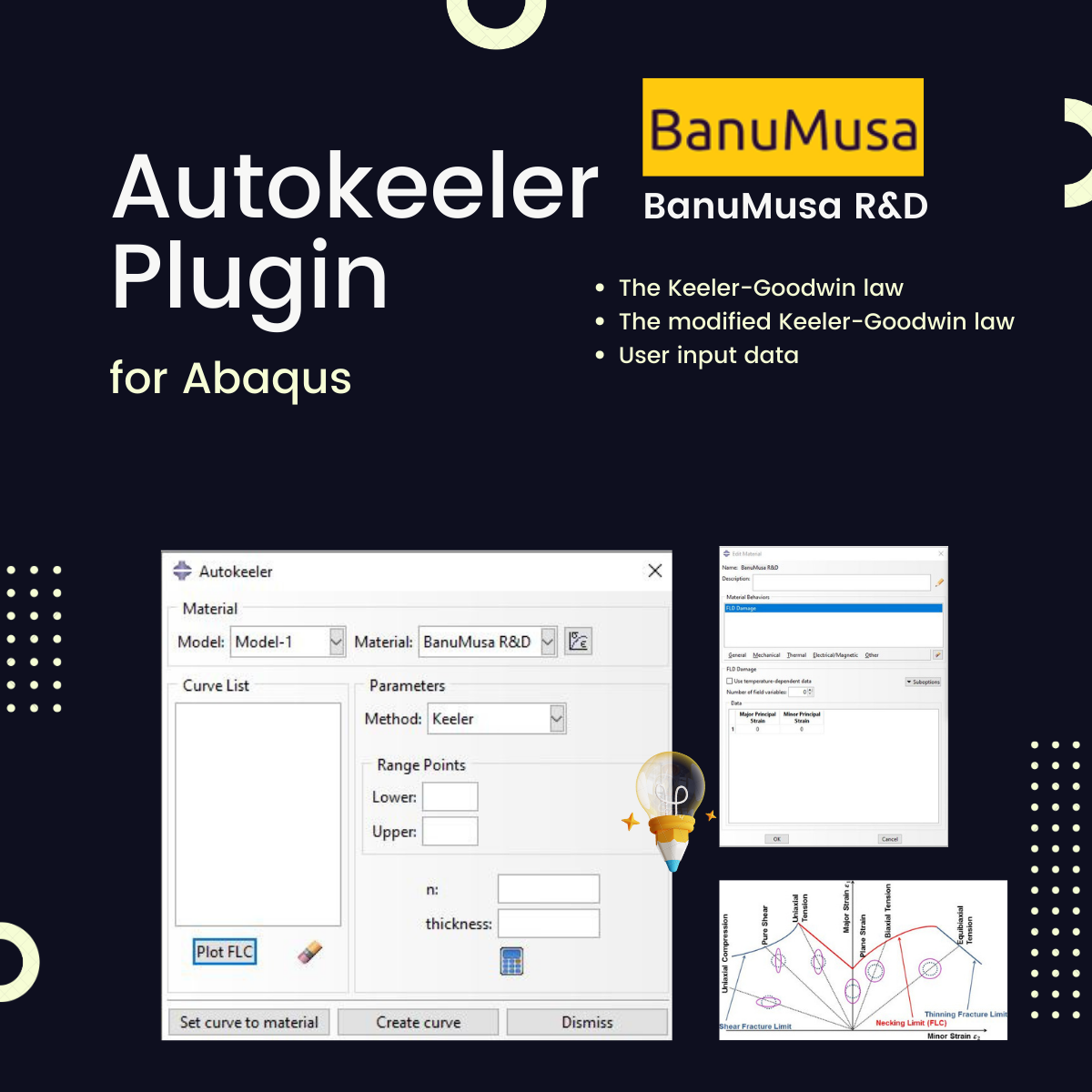
  • Autokeeler plugin generating Forming Limit Curves (FLC) and FLD in Abaqus
    Autokeeler Plugin for Abaqus: FLC & FLD Generator € 0.00
technical support by banumusa
We are ready to help you do CFD & FEA simulations.
Need help?
Get a consultation from our experts.
Email: info@banumusagr.com
Telegram: +98-915-55-20-388
WeChat: +98-915-55-20-388
WhatsApp: +98-915-55-20-388
Categories
  • Description
  • Additional information
  • Payment & Delivery
  • Content
Description

Numerical Simulation of Nonlinear Engineering Problems Using LS-DYNA Book

This advanced training LS-Dyna book introduces a higher level of working with LS-DYNA, moving beyond a basic overview of the software’s capabilities. Instead of merely listing software features, it assesses the accuracy of material behavior models and computational methods through experimental validation. The book presents eight different experimental case studies, each simulated and validated against real test data. The excellent correlation between simulation results and experimental data demonstrates that the methods in this book are reliable for simulating complex engineering problems.

Content of the LS-Dyna Book

Preface vi
Chapter 1: Introducing LS-DYNA software 1
1.1 Development history 1
1.2 Features and applications 2
1.3 System-compatible units in the software 5
Chapter 2: Getting Started (Constitutive material models) 6
2.1 Longitudinal impact of a rigid mass on the free end of an elastic bar 7
2.2 Johnson-Cook material model 20
2.3 Johnson Cook damage model 37
2.4 Penetration of a rigid projectile on an aluminum plate 51
2.5 Geomaterials 70
2.6 Impact response of reinforced concrete beam 86
Chapter 3: Lagrangian Formulation 108
3.1 The Taylor bar impact problem 110
3.2 Soil structure interaction 119
3.3 Rock cutting 144
3.4 Friction drilling 160
References 179


LS-Dyna Examples / Workshops

The book has 8 examples including:

  • Example: Longitudinal impact of a rigid mass on a free end of an elastic bar

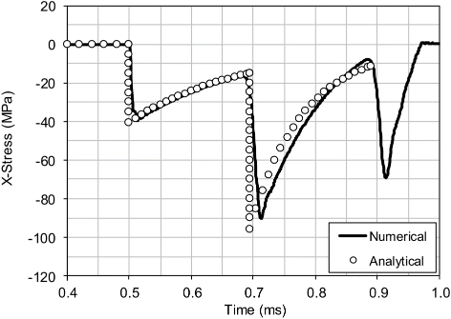
In this problem, a rigid striker of mass M1 with speed V1 hits the end of a long elastic bar which is perfectly fixed at its distal end. The purpose is to estimate the stress vs. time at the free end of the elastic rod where the rigid striker hits it and compare the numerical results with the analytical solution [1].
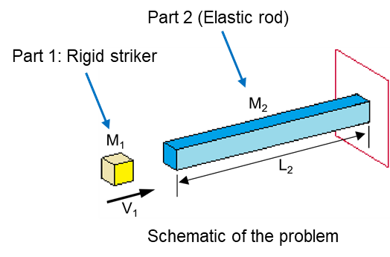
Longitudinal impact of a rigid mass on free end of an elastic bar lsdyna banumusa Longitudinal impact of a rigid mass on free end of an elastic bar lsdyna banumusa validation
  • Example: Single elements under various stress state

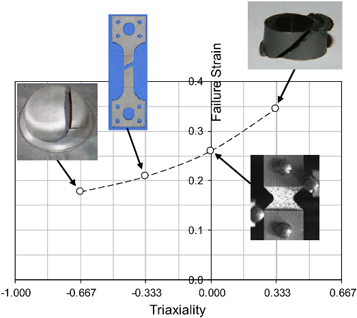
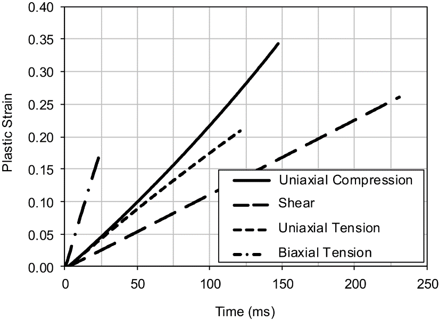
In this example, four single elements are simulated under various stress states (uniaxial compression, shear, uniaxial, and biaxial tension) and the concept of the Johnson-Cook damage model will be described [2].
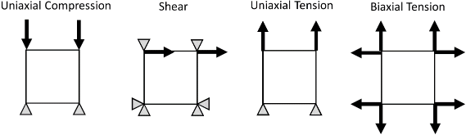
Single elements under various stress state Single elements under various stress state lsdyna Single elements under various stress state lsdyna validation


  • Example: Penetration of a rigid projectile on an aluminum plate

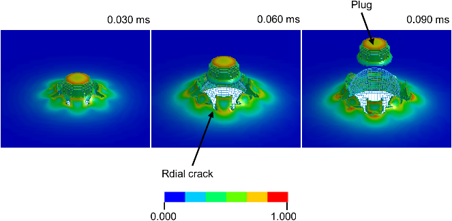
In this example, the ballistic limits of Al2024-T3/T351 plates are studied and numerical results (residual velocity and failure mode) are compared with the experiment [3].
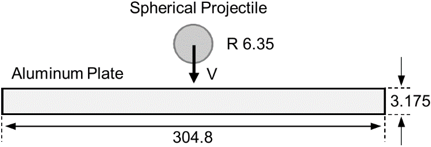
Penetration of a rigid projectile on an aluminum plate lsdyna Penetration of a rigid projectile on an aluminum plate lsdyna banumusa Penetration of a rigid projectile on an aluminum plate lsdyna banumusa validation


  • Example: Impact response of reinforced concrete beam

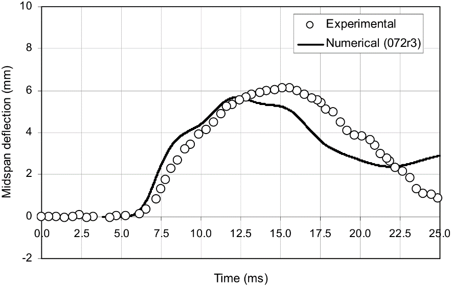
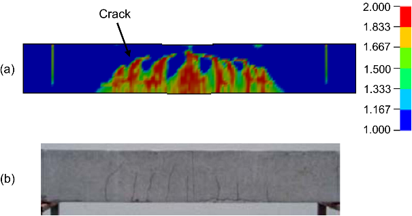
In this example, the accuracy of the geomaterials models includes the input parameter generation ability in estimating the impact response of reinforced concrete beam (contact force, mid-span deflection of RC beam, and failure mode) is studied and numerical results are compared with the experiment [4].
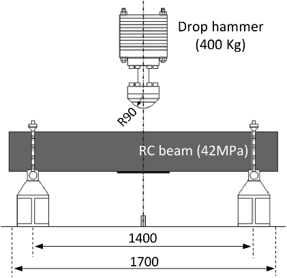
Impact response of reinforced concrete beam Impact response of reinforced concrete beam lsdyna validation banumusa Impact response of reinforced concrete beam lsdyna
  • Example: The Taylor bar impact problem

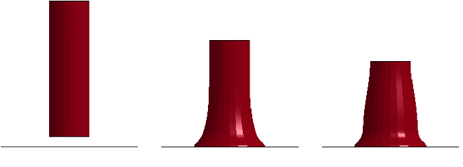
The Taylor bar impact problem is a benchmark problem for estimating the accuracy of constitutive material models for expressing the behavior of metals under high strain rate loading. The problem consists of a cylinder impacting a rigid wall. Here, a cylinder made of OFHC copper impacts a rigid wall with an impact velocity is 190 m/s. The purpose is to investigate the accuracy of the two material models considered in estimating the final shape of a cylinder and comparing the numerical results with the experiments [5].
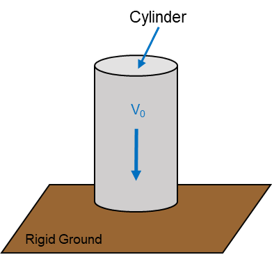
The Taylor bar impact problem
The Taylor bar impact problem lsdyna
The Taylor bar impact problem lsdyna banumusa validation
  • Example: Soil structure interaction

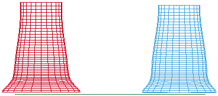
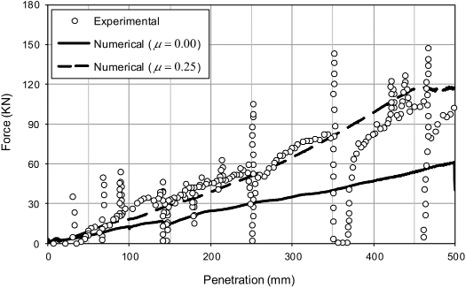
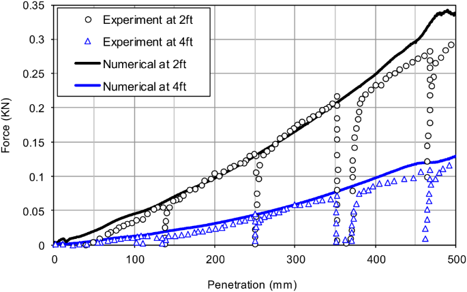
In this example, quasi-static large-scale soil penetration tests using Lagrangian formulations are investigated and numerical results are compared with the experiment [6].
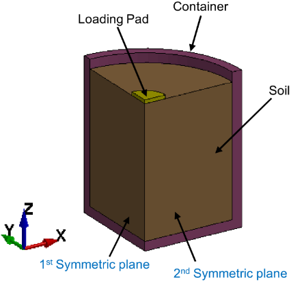
Soil structure interaction lsdyna
Soil structure interaction lsdyna validation
Soil structure interaction lsdyna banumusa validation book
  • Example: Rock Cutting

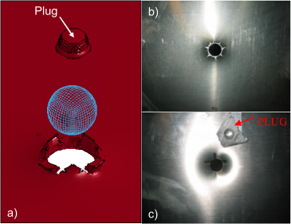
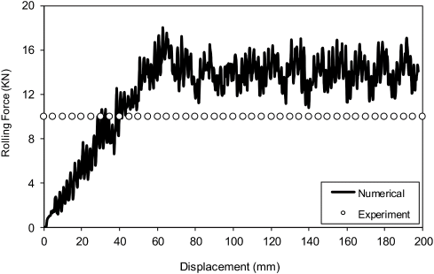
In this example, the rock failure process induced by a single disk cutter of a tunnel boring machine is simulated, and numerical results are compared with experimental data. The simulation is performed for the case in which the rock Indiana Limestone [7].
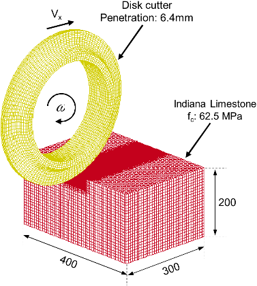
Rock Cutting book example lsdyna
Rock Cutting book example lsdyna validation
Rock Cutting book example lsdyna validation banumusa
  • Example: Friction Drilling

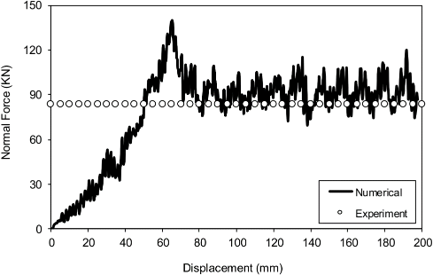
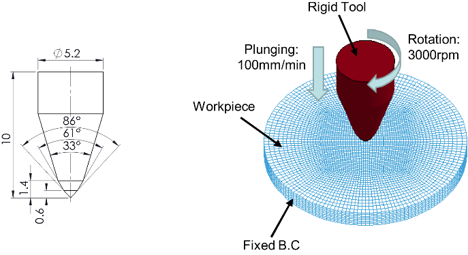
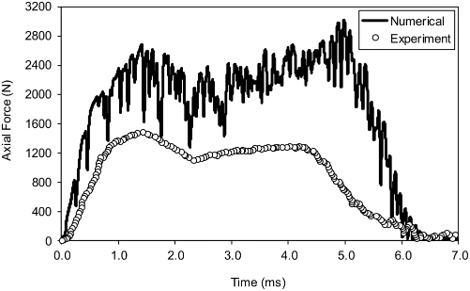
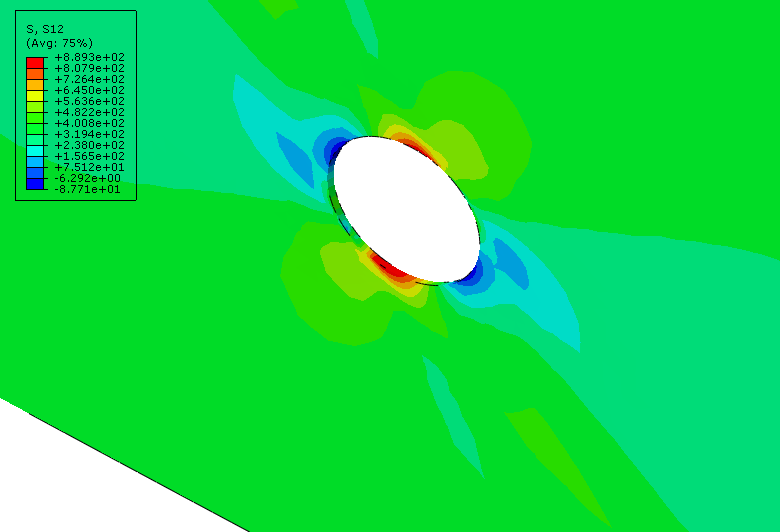
In this example, we simulate the experiment presented in Krasauskas et al. which proposes the drilling experiments of AISI 304 steel to obtain drilling parameters and to compare numerical results with the experimental data. The drilling experiment was performed using AISI 304 steel sheet strips with 1.5 mm in thickness. During the experiment, the spindle rotation speed was set to 3000 rpm and the drilling feed rate of 100 mm/min was assigned [8].

Friction Drilling book example lsdyna validation


Friction Drilling book example lsdyna validation

References

[1]. W. Johnson, Impact strength off materials, Edward Arnold publisher, 1972.

[2]. G.R. Johnson & W. H. Cook, Fracture characteristics of three metals subjected to various strains, strain rates, temperatures and pressures, Engineering Fracture Mechanics, vol. 21, no. 1, pp. 31-48, 1985.

[3]. S. Kelly & G. Johnson, Statistical testing of aircraft materials for transport- airplane rotor burst fragment shielding, Federal Aviation Administration, Report #DOT/FAA/AR-06/9 2006.

[4]. K. Fujikake et al., Impact response of reinforced concrete beam and its analytical evaluation. Journal of Structural Engineering, Vol. 135, No. 8, 2009.

[5]. T. J. Holmquist & G. R. Johnson, Determination of constants and comparison of results for various constitutive models. Journal de physique III, vol. 1, october 1991

[6]. C. Bojanowski. Numerical modeling of large deformations in soil structure interaction problems using FE, EFG, SPH, and MMALE formulations. Arch Appl Mech (2014) 84:743–755. DOI 10.1007/s00419-014-0830-5.

[7]. J. Rostami, Development of a force estimation model for rock fragmentation with disc cutters through theoretical modeling and physical measurement of crushed zone pressure, PhD thesis; Department of Mining Engineering, Colorado School of Mines, USA; (1997).

[8]. P. Krasauskas, S. Kilikevičius, R. Česnavičius, D. Pačenga, Experimental analysis and numerical simulation of the stainless AISI 304 steel friction drilling process, Mechanika. 20 (6) (2014) 590−595.

Updates

Version 2024

Who this book is for:

  • Engineers and Simulation Analysts: Professionals involved in nonlinear engineering simulations who want to advance their skills in using LS-DYNA for complex, real-world problems.
  • Researchers and Academics: Individuals in academia or research roles focusing on material behavior, computational mechanics, and validation techniques for nonlinear problems.
  • Graduate Students: Especially those in fields like mechanical, civil, or aerospace engineering, who need practical and validated methods for simulating challenging engineering problems.
  • Industry Professionals in High-Stress Sectors: Practitioners in automotive, aerospace, defense, and heavy industry, where accurate simulation of nonlinear dynamics is critical to safety, performance, and design optimization.
  • LS-DYNA Users Seeking Advanced Training: Those already familiar with LS-DYNA looking to deepen their understanding of the software’s advanced features, validation techniques, and application to complex case studies.

What you’ll gain

  • By studying this book, readers will acquire advanced skills in simulating nonlinear engineering problems using LS-DYNA. Key learning outcomes include:

    1. Selecting Appropriate Material Models: Readers learn to choose suitable material behavior models for various nonlinear problems and understand which models are best suited for different scenarios.
    2. Validation Methods for Simulation Results: The book teaches how to validate simulation results against experimental data, allowing readers to assess and confirm the accuracy of their simulations.
    3. Applying LS-DYNA to Complex Problems: Through practical examples of nonlinear problems like impacts, large deformations, and thermal transfer, readers gain the knowledge to apply these techniques to real-world projects.
    4. Analyzing and Optimizing Numerical Models: Readers learn to analyze and optimize simulation parameters to improve model accuracy.
    5. LS-DYNA Applications Across Industries: With case studies from industries such as automotive, aerospace, and construction, the book helps readers apply simulation techniques across various fields.
We are ready to help you do CFD & FEA simulations.

Need help? Get a consultation from our experts.

Abaqus E-learning technical FEA & CFD consulting by banumusa FEA & CFD Consultancy Services Abaqus Ansys LS-Dyna user subroutine plugin FEA and CFD consultancy Abaqus consultancy services Technical Abaqus mentoring fluent cfd services ls-dyna consultancy services ansys consultancy services comsol consultancy services
Email us: info@banumusagr.com
Telegram: +98-915-55-20-388
WhatsApp: +98-915-55-20-388

Find Us on WeChat

wechat banumusa company ویچت

Download

Download Tutorial 1 of the book for free

Download
Additional information
Software

Ansys LS-Dyna

Type

LS-Dyna book

Level

Introductory

Files

LS-Dyna files: *.rar
Workshops: PDF/ *.rar

Language

English

Category

Tutorials

Solver

Explicit, Standard

Material

All

Payment & Delivery
All products available on the website come with a guarantee of customer satisfaction. The products can be used immediately after purchase through the download link. There is also online consulting/mentoring for all customer reassurance products.
Before buying, you can also talk to our experts in BanuMusa R&D and buy from the Shop according to your needs.

Note:

Please pay attention to the following points when you pay.

1. Tether / Tron The easiest way to pay is through the Tether portal in the BanuMusa shop. You can easily pay with your wallet.

• How to pay for a product using USDT TRC-20 with ADVCash https://www.youtube.com/watch?v=DYyHsdcLxhk

• Tron TRC20 Wallet for USDT Tutorial (Send USDT for Lowest Fees!!) https://www.youtube.com/watch?v=lBQMkEBf7W4

For other wallets just search on YouTube!

The download link automatically will be sent to you.

2. Payoneer:

If you have Payoneer, you can pay simply through the following ID.

fro458nk@gmail.com

After your payment is processed, you will receive the download links.

Let me know if you need any further adjustments!

3. PAYEER

Send us a message/ email to help you how to pay for this method, please. (info@banumusagr.com)

4. WebMoney

We will send you the wallet if you request this method. Email us.

5. PayPal Payment Instructions:

Please email us to send your PayPal Account.

After your payment is processed, you will receive the download links.

Let me know if you need any further adjustments!

6. SWIFT/IBAN

Another way is to pay via SWIFT or IBAN, contact us to learn more.

We will do our best to make sure you have a good shopping experience.


If it is not possible for you to buy through the Tether gateway, send us the link to the product using email (info@banumusagr.com) or social networks (WhatsApp, WeChat, Telegram). After that, the PayPal account will be sent to you.

Another way is to pay via SWIFT, contact us to learn more.


Ways to Contact Us:

WhatsApp / Telegram / WeChat: +98-915-5520-388
E-mail: info[at]banumusagr.com
Phone: +98-51-35424520

Payment Methods:

You can buy the product through Tether, Tron, Payoneer, PAYEER, WebMoney, PayPal, and SWIFT.

Content

Contents

  • LS-Dyna files: *.rar
  • LS-Dyna workshop files: -
  • Book: PDF/Hard copy

Reviews

There are no reviews yet.

Be the first to review “LS-DYNA Book: Numerical Simulation of Nonlinear Engineering Problems Using LS-DYNA” Cancel reply

You must be logged in to post a review.

Related products

Coupled thermal stress analysis
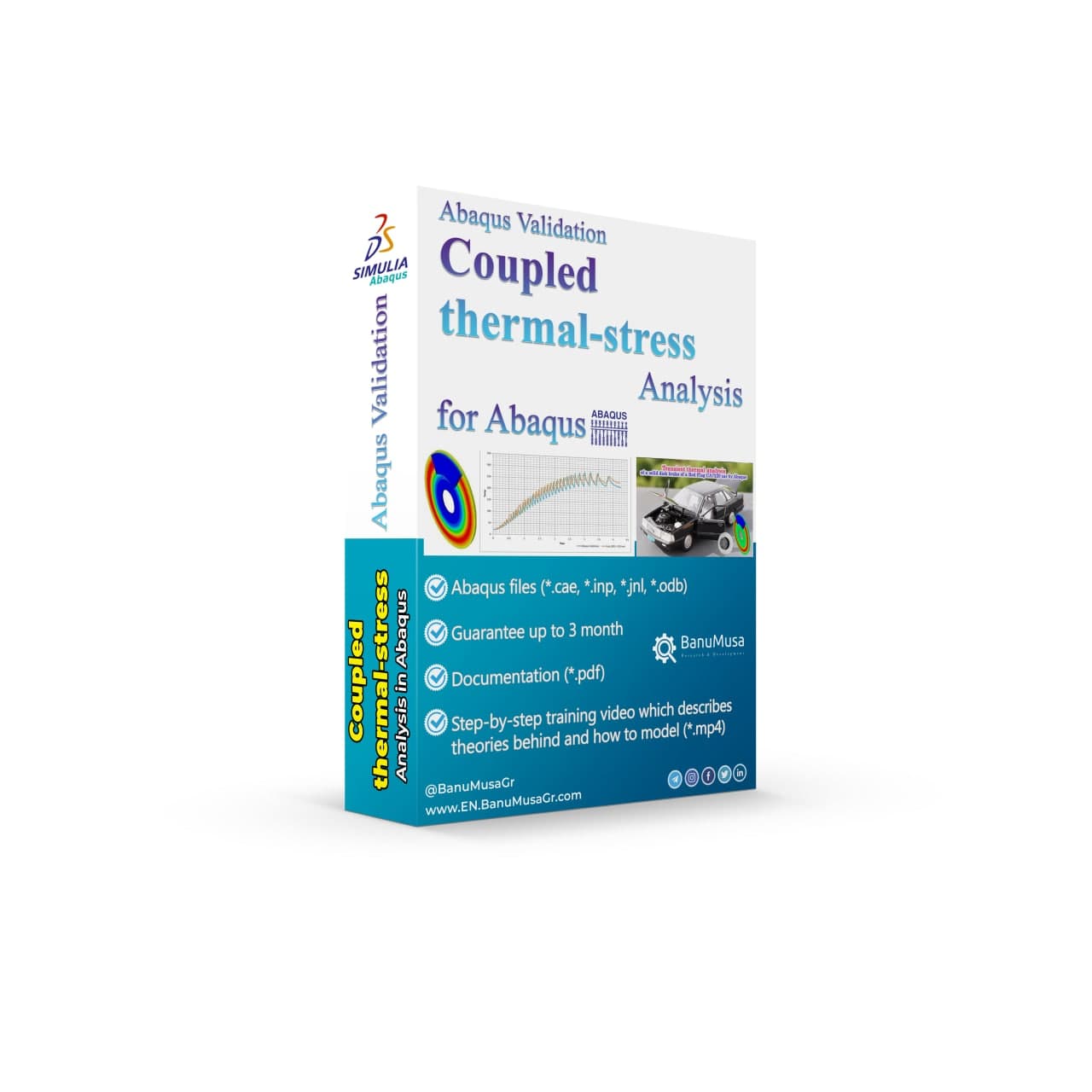
Hongqi-CA7220-AE_abaqus-Coupled Thermal Stress Analysis of Automotive Disc Brake Validation Tutorial
Compare
Close

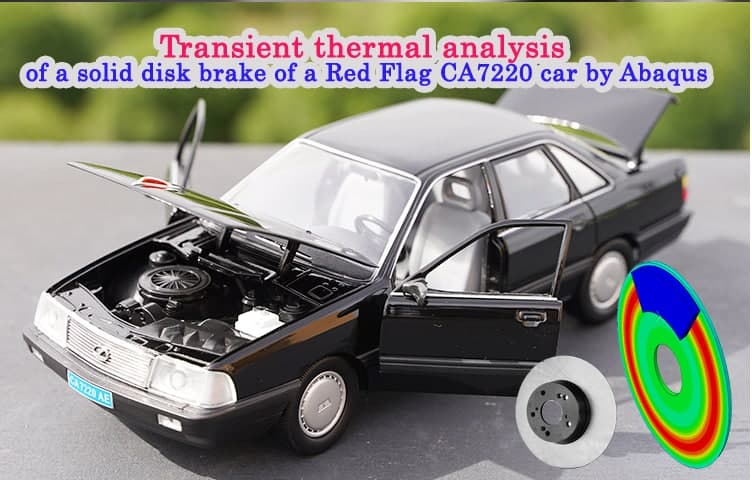
Coupled Thermal Stress Analysis of Automotive Disc Brake: A Complete Validation Tutorial

€ 175.00
In Coupled Thermal Stress Analysis of Automotive Disc Brake: A Complete Validation Tutorial, a solid disk brake of a CA7220 car with initial rotational velocity will contact a disk pad. The effects of friction will be an increase in disk temperature due to heat generated by energy dissipation and the reduction of rotational velocity. The numerical results were validated by the Gao & Lin, (2002) paper. Abaqus tutorial video (*.mp4)  Abaqus files (*.cae, *.inp, *.jnl, *.odb) 15-day money-back guarantee   Free 24/7 online mentoring
Add to wishlist
Add to cart
Quick view
Introduction to Abaqus course
Introduction to Abaqus Training Course - abaqus for students. abaqus for beginners
Compare
Close

Introduction to Abaqus Training Course

€ 410.00
The Introduction to Abaqus Training Course provides a thorough and cohesive overview of Abaqus' modeling and analysis capabilities. Participants will learn how to address linear and nonlinear problems, manage analysis tasks, and examine simulation outcomes within Abaqus' interactive interface. The course will encompass instruction on the following products: Abaqus/CAE, Abaqus Standard, and Abaqus Explicit. Abaqus tutorial video (*.mp4) Lecture notes (PDF) Abaqus workshop files (*.cae, *.inp, *.jnl, *.odb) 15-day money-back guarantee   Free 24/7 online mentoring
Add to wishlist
Add to cart
Quick view
Low-Velocity Impact FRP Laminate damage finite element (fea) analysis on frp composite plate validation - lsdyna tutorial video
low velocity impact damage finite element fea analysis on frp composite plate validation - lsdyna tutorial video
Compare
Close

LS-Dyna Tutorial: 3D modeling techniques for low-velocity impact analysis of FRP composite laminate

€ 239.00
In this LS-Dyna tutorial video, we have tried to cover all the tips and tricks that are required by the user when modeling low-velocity impact FRP laminates FEA analysis with LS-Dyna. Material models for FRP composite & cohesive materials are available in the LS-Dyna and its parameters are described. Also, the modeling methods of geometry, FRP material, cohesive, contacts &, etc. are explained one by one. Finally, in a comprehensive example, the LS-Dyna finite element model is validated by Guo et al. (2013) paper. All the modeling & results files, as well as the LS-Dyna tutorial video, are included in this package. LS-Dyna tutorial video (*.mp4) Lecture notes (PDF) LS-Dyna workshop files (*.k, d3plot) 15-day money-back guarantee   Free 24/7 online mentoring
Add to wishlist
Add to cart
Quick view
API 579-1/ASME FFS-1 Fitness-For-Service Evaluation Course
Compare
Close

API 579-1/ASME FFS-1 Fitness-For-Service Evaluation Course

€ 250.00
API 579-1/ASME FFS-1 Fitness-For-Service Evaluation Course offers both theoretical knowledge and practical skills in utilizing API-579/ASME FFS-1 techniques to evaluate the suitability of equipment containing different types of defects. The Fitness-for-Service training course gives guidance on conducting FFS assessments using methods tailored for pressure vessels, piping, and tanks. Gain expertise in advanced analyses for safe and efficient equipment operation. Course video (*.mp4) Lecture notes (PDF) API 579 / ASME FFS-1 Standards (PDF) 15-day money-back guarantee   Free 24/7 online mentoring
Add to wishlist
Add to cart
Quick view
Modeling Rubber and Viscoelasticity with Abaqus tutorial course
Modeling Rubber and Viscoelasticity with Abaqus course - abaqus tutorial
Compare
Close

Modeling Rubber and Viscoelasticity with Abaqus

€ 550.00
The Modeling Rubber and Viscoelasticity with Abaqus course delves into the intricacies of simulating rubber, foam, and viscoelastic materials using the Abaqus software. Throughout this training, participants will explore techniques for accurately modeling the behavior of rubber and viscoelastic substances, gaining valuable insights into material model, material data calibration, element selection, meshing, and simulation methodologies. This course equips learners with the knowledge and skills necessary to effectively model these complex materials in engineering simulations by focusing on practical applications and theoretical foundations. Course video (mp4) Lecture notes (PDF) Abaqus workshop files (CAE, INP, ODB) 15-day money-back guarantee   Free 24/7 online mentoring
Add to wishlist
Add to cart
Quick view
Introduction to umat subroutine
Introduction to umat subroutie abaqus tutorial video writing umat subroutine
Compare
Close

Introduction to UMAT Subroutine

€ 210.00
Introduction to UMAT Subroutine course helps you to learn the process of writing UMAT as quickly as possible with the help of practical examples. All the tips and details that you encounter to write the code are taught in this course and you can implement the material model in the subroutine. Because you may have questions while watching the course, an expert will answer your questions online. Abaqus tutorial video (*.mp4) Lecture notes (PDF) Abaqus workshop files (*.cae, *.inp, *.jnl, *.odb) Fortran subroutines 15-day money-back guarantee   Free 24/7 online mentoring
Add to wishlist
Add to cart
Quick view
Introduction to VUMAT Subroutine Abaqus Mentoring Abaqus tutorial video
Introduction to VUMAT Subroutine Abaqus Mentoring- tutorial
Compare
Close

Introduction to VUMAT Subroutine

€ 210.00
Introduction to VUMAT Subroutine course helps you to learn the process of writing VUMAT as quickly as possible with the help of practical examples. All the tips and details that you encounter to write the code are taught in this course and you can implement the material model in the subroutine. Because you may have questions while watching the course, an expert will answer your questions online. Abaqus tutorial video (*.mp4) Lecture notes (PDF) Abaqus workshop files (*.cae, *.inp, *.jnl, *.odb) Fortran subroutines 15-day money-back guarantee   Free 24/7 online mentoring
Add to wishlist
Add to cart
Quick view
Multiple Step Analysis in Abaqus -tutorial- banumusa-
Compare
Close

ABAQUS Tutorial: Multiple Step Analysis

Rated 5.00 out of 5
€ 65.00
In this training video, you will learn how to transfer the results of heat transfer analysis, such as thermal stress, from the Abaqus/standard to impact analysis in Abaqus/explicit as an initial condition. You will learn the limitations, and technical tips in modeling, as well as a practical example of low-velocity impact analysis on a composite plate. Lecture notes (PDF) Abaqus tutorial video (*.mp4) 15-day money-back guarantee   Free 24/7 online mentoring
Add to wishlist
Add to cart
Quick view
University of Warwick
NBJX
MultiFat
kitech
kims
EnginSoft
Techinco
NIGC
Mobarakeh Steel Co.
Lincoln University
ISOICO Shipbuilding Company
IRISL Company
Ferdows Marine Tech
AQR Company

Founded in 2016, BanuMusa R&D is an established engineering consultancy specializing in advanced Finite Element Analysis (FEA), Computational Fluid Dynamics (CFD), and simulation-driven product development.

Facebook Youtube Linkedin Instagram

Products

  • 3D Hashin VUMAT Subroutine for Abaqus with Exponential Damage Evolution
  • VUMAT Subroutine: Shear Anisotropic Modified GTN Damage Model
  • MatLib Abaqus Material Library

Company


  • Contact us
  • Our team
  • Our partners
  • Careers

Our WeChat 

abaqus ansys lsdyna banumusa wechat

Copyright BanuMusa 2026
payments

Shopping cart

close

Powered by WhatsApp Chat

  • Menu
  • Categories
  • Consulting Services
  • Products
  • Resources
    • Blog
    • Projects
  • About Us
    • Contact Us
    • Our Team
    • Our Partners
    • Careers
    • Payment Methods
    • Support & FAQ
  • Consulting Services
  • Products
  • Resources
    • Blog
    • Projects
  • About Us
    • Contact Us
    • Our Team
    • Our Partners
    • Careers
    • Payment Methods
    • Support & FAQ

Sign in

close


Lost your password?
No account yet? Create an Account
Sidebar