

Facebook Twitter Instagram YouTube linkedin
info@BanuMusaGr.com
Login / Register
0 Wishlist
0 Compare
0 items / € 0.00
Facebook Twitter Instagram YouTube linkedin
BanuMusa R&D BanuMusa R&D
  • Consulting Services
  • Products
  • Resources
    • Blog
    • Projects
  • About Us
    • Contact Us
    • Our Team
    • Our Partners
    • Careers
Free Mentoring
Menu
BanuMusa R&D
0 items / € 0.00
-10%
larc05-abaqus-failure-criteria-composite-analysis
damage-larc05-abaqus4
damage-larc05-abaqus-LaRC05 failure criterion
xfem-larc05-abaqus2
xfem-larc05 abaqus failure criterion
Watch video
HomeShopAbaqusAbaqus Tips and Tricks Abaqus Tutorial: LaRC05 Failure Criterion For Fiber-Reinforced Composites
Previous product
abaqus material library
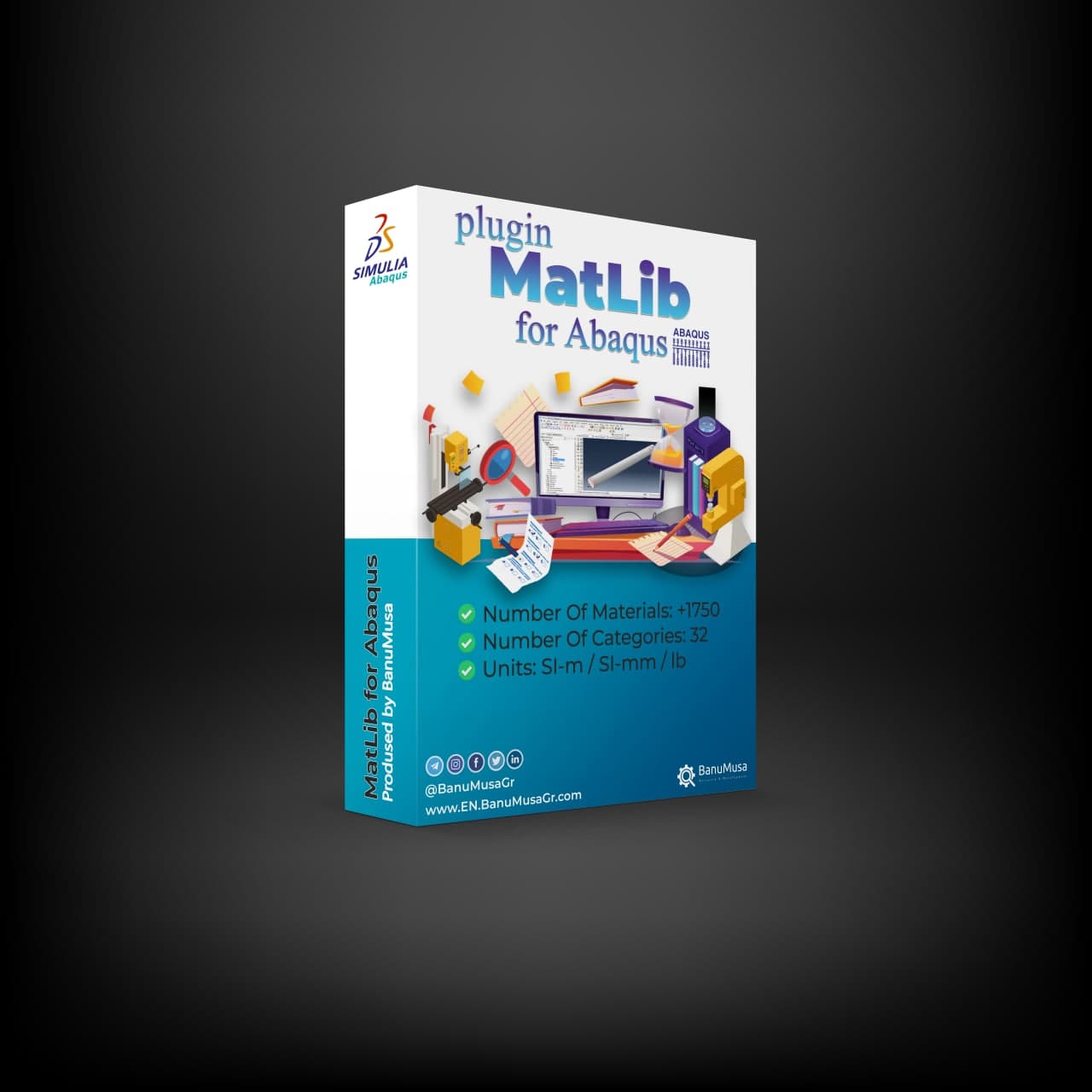
MatLib: The Ultimate Abaqus Material Library Plugin € 315.00
Back to products
Next product
Porous Elastomers Abaqus UHYPER Subroutine
Porous Elastomers Abaqus UHYPER Subroutine € 55.00

Abaqus Tutorial: LaRC05 Failure Criterion For Fiber-Reinforced Composites

Rated 5.00 out of 5 based on 3 customer ratings
(3 customer reviews)

€ 110.00 Original price was: € 110.00.€ 99.00Current price is: € 99.00.

This comprehensive course provides a thorough understanding of the LaRC05 failure criterion for fiber-reinforced composites. Participants will delve into the theory behind the LaRC05 criterion and its significance in predicting failure behavior in these materials. Through practical implementation using the Abaqus software, students will learn how to characterize material properties, validate and verify simulations, and apply the LaRC05 criterion to solve real-world engineering problems. By the end of the course, participants will have gained the knowledge and skills necessary to confidently utilize the LaRC05 failure criterion for accurate analysis and design of fiber-reinforced composites.

Abaqus tutorial video (*.mp4)
Lecture notes (PDF)
Abaqus workshop files (*.cae, *.inp, *.jnl, *.odb)
15-day money-back guarantee
  Free 24/7 online mentoring

somdn_product_page
Compare
Add to wishlist
SKU: 001 Categories: Abaqus, Abaqus Tips and Tricks, Features, Training courses, Tutorial
Share
Facebook Twitter Email Pinterest linkedin Odnoklassniki WhatsApp WhatsApp VK Telegram
close
Products
  • Placeholder ASME Sec. VIII, Div. 1 Pressure Vessel Design Course € 1,100.00
  • Step-By-Step Ansys Fluent Non Dimensional Laminar Flow Simulation Guide Step-By-Step Ansys Fluent Non Dimensional Laminar Flow Simulation Guide € 55.00
  • Description
  • Additional information
  • Reviews (3)
  • Payment & Support
  • Content
Description

LaRC05 Failure Criterion For Fiber-Reinforced Composites

This “Abaqus Tutorial: LaRC05 Failure Criterion For Fiber-Reinforced Composites” training course provides an overview of the LaRC05 failure criterion and its application to fiber-reinforced composites. Fiber-reinforced composites have become increasingly popular in engineering applications due to their high strength and stiffness-to-weight ratios. However, predicting the failure behavior of these materials can be challenging due to their anisotropic and heterogeneous nature.

The LaRC05 failure criterion is a widely used method for predicting failure in fiber-reinforced composites. This course will cover the theory behind the LaRC05 failure criterion, as well as its implementation in the Abaqus software package. Students will learn how to characterize material properties for use in the LaRC05 failure criterion, and how to validate and verify simulations using this method.

Throughout the course, students will work on examples and case studies to develop their understanding of the LaRC05 failure criterion and its application to engineering problems. By the end of the course, students will have a solid understanding of how to use the LaRC05 failure criterion in Abaqus simulations, and how to apply this knowledge to real-world engineering challenges.

What is the LaRC05 failure criterion?

LaRC05 failure criterion is almost the latest failure criterion that has been developed in the composite industry, and due to its characteristics, it has received more attention from design engineers than Puck, Hashin, Tsai-Wu, etc.

In this criteria, the nonlinear shear response is considered. The proposed criteria have four modes of failure: Crack matrix, fiber failure, fiber splitting, and Kinking. In LS-Dyna software from version R7.0, this criterion can also be used as * MAT_261 and * MAT_262. NASA has supported the development of this project.
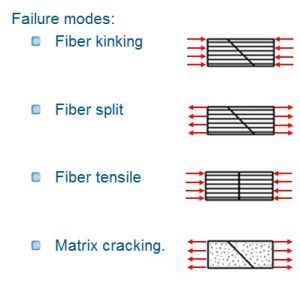
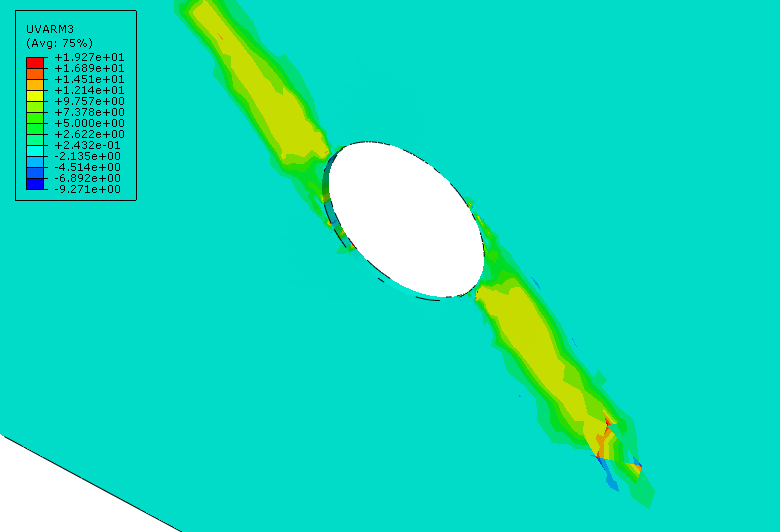
LaRC05 failure criterion modes in Abaqus


Overview of the course

  1. Introduction to Fiber-Reinforced Composites
    • Definition and properties of fiber-reinforced composites
    • Advantages and disadvantages of using fiber-reinforced composites in engineering applications
    • Overview of the LaRC05 failure criterion and its relevance to fiber-reinforced composites
  2. Theory of Failure Criteria
    • Overview of failure criteria and their importance in engineering design
    • Types of failure criteria and their applications
    • Derivation of the LaRC05 failure criterion and its assumptions
  3. Material Characterization for LaRC05
    • Overview of material testing for fiber-reinforced composites
    • Types of tests for determining material properties
    • Data reduction techniques for material testing data
  4. Implementation of LaRC05 in Abaqus
    • Overview of Abaqus software and its capabilities for simulating composite materials
    • Steps for implementing the LaRC05 failure criterion in Abaqus
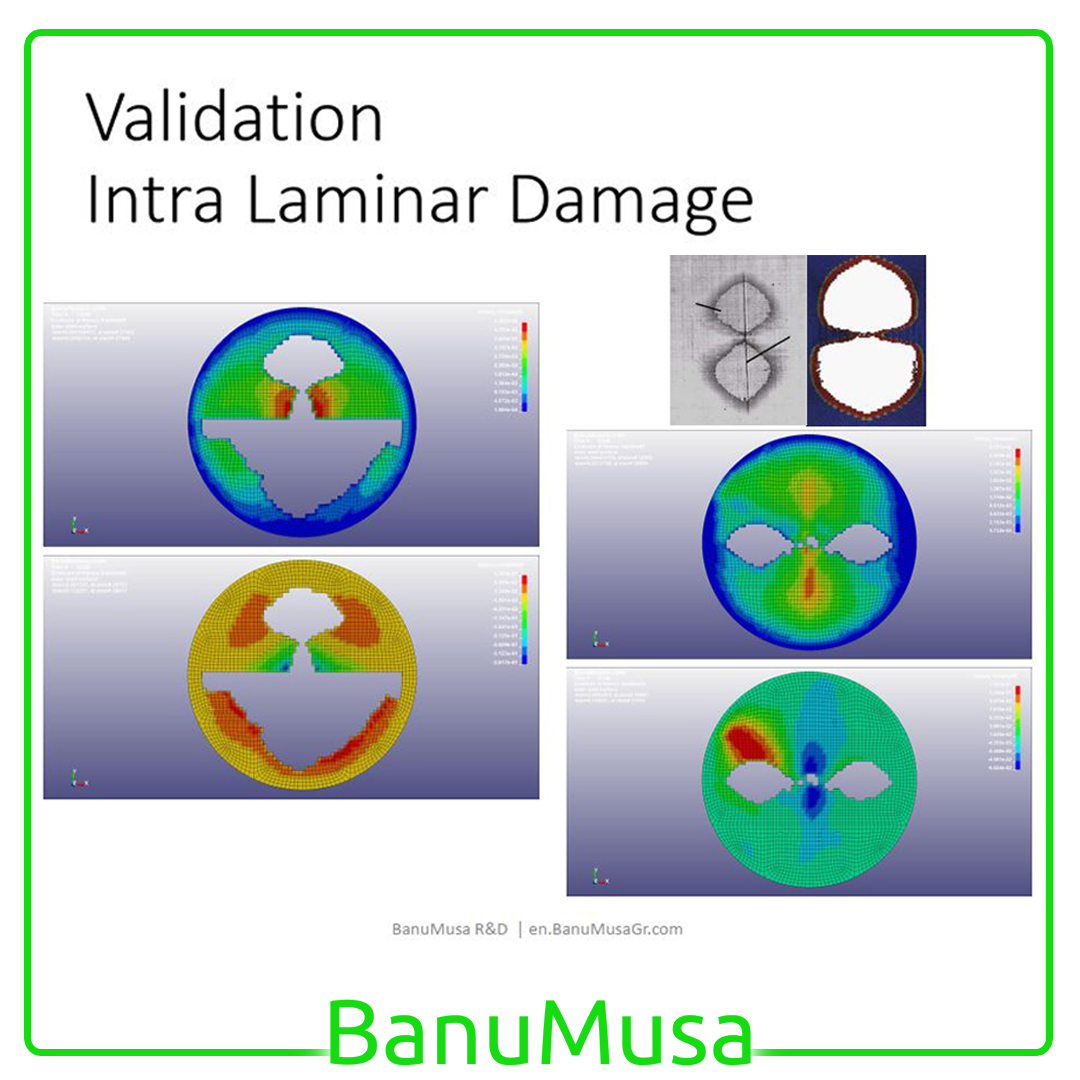
    • Examples of simulations using the LaRC05 failure criterion in Abaqus
  5. Validation and Verification of LaRC05
    • Overview of validation and verification techniques for numerical simulations
    • Methods for validating and verifying the LaRC05 failure criterion in Abaqus
    • Examples of validation and verification studies using the LaRC05 failure criterion in Abaqus
  6. Applications of LaRC05 to Engineering Problems
    • Overview of engineering problems that can be solved using the LaRC05 failure criterion in Abaqus
    • Examples of engineering applications using the LaRC05 failure criterion in Abaqus
    • Limitations and future directions for the use of the LaRC05 failure criterion in engineering design
damage-larc05-abaqus-LaRC05 failure criterionxfem-larc05 abaqus failure criterion

Demo

Money-Back Guarantee

15-Day

Money back gold guarantee - BanuMusaWe’re fully confident in the value and reliability of the product. If for any reason you are not completely satisfied, email us at info@BanuMusaGr.com within 48 hours of your purchase for a full refund.
Additional information
Software

Abaqus FEA

Type

Tutorial video + example/workshop

Files

pdf, video, cae, inp, odb, jnl

Language

English

Category

Damage, Failure & Fracture

Solver

Standard (2017-2024)

Material

Unidirectional/woven FRP composites

Reviews (3)

3 reviews for Abaqus Tutorial: LaRC05 Failure Criterion For Fiber-Reinforced Composites

  1. Rated 5 out of 5

    saber – 25 April 2021

    It was a useful and novel approach, although this theory only applies to unidirectional fibers, it is better to talk about other failure criteria in the future. thank you

  2. Rated 5 out of 5

    Hassani – 6 August 2021

    Valuable content and very good delivery for using Larc05 failure criterion for Unidirectional Fiber-Reinforced Composites , I recommend banumusa services to students and academic researchers for reliable simulation

  3. Rated 5 out of 5

    Pedram Gholami – 11 December 2022

    Thanks to all… hope enjoy the product 😉

Add a review Cancel reply

You must be logged in to post a review.

Payment & Support

Satisfaction Guarantee & Instant Access

All products available on the BanuMusa R&D website come with a guarantee of customer satisfaction. You will receive an automated download link immediately after your purchase is processed. We also provide online consulting and mentoring to ensure you get the absolute most out of our engineering products.

Before buying, you can consult with our technical experts to ensure the product perfectly aligns with your project requirements.

Secure Payment Methods

Cryptocurrency (Fastest)

The easiest way to pay is through the Tether portal in our shop using your wallet. The download link will be generated automatically.

  • Tether (USDT) - TRC20
  • Tron (TRX)
Video Tutorials:
  • How to pay using USDT TRC-20
  • Tron TRC20 Wallet Tutorial

International e-Wallets

We support major digital wallets. Once your manual payment is verified, we will email you the download links.

  • Payoneer: Contact us to receive the payment address.
  • PayPal: Contact us for our official account.
  • PAYEER: Contact us for instructions.
  • WebMoney: Contact us for our WMZ wallet address.

Bank Transfer (SWIFT)

For corporate clients or large engineering software orders, we accept direct wire transfers.

Please contact our support team to receive our official SWIFT/IBAN banking details and a Proforma Invoice.

Need Help with Payment? Contact Us

If you cannot use the direct Tether gateway or need our payment details (PayPal, Payoneer, SWIFT, etc.), simply send us the product link via email or our social networks.

  • +98-915-5520-388 (WhatsApp, Telegram, WeChat)
  • info@banumusagr.com
  • +98-51-35424520
Content
Abaqus tutorial video (*.mp4) Lecture notes (PDF) Abaqus workshop files (*.cae, *.inp, *.jnl, *.odb) 15-day money-back guarantee   Free 24/7 online mentoring

Topics covered in LaRC05 Abaqus tutorial

  • Types of failure criteria in composite materials
  • Introduction of LaRC05 failure criterion
  • Mathematical and theory
  • LaRC05 failure modes
  • LaRC05 applications
  • Review and comparison of * MAT_261, * MAT-262 models in LS Dyna and the model used in Abaqus
  • Comparison of Hashin criteria and LaRC05 criteria in Abaqus
  • Material inputs and outputs
  • How to set and use the material damage model
  • Application of LaRC05 failure criterion in the XFEM method
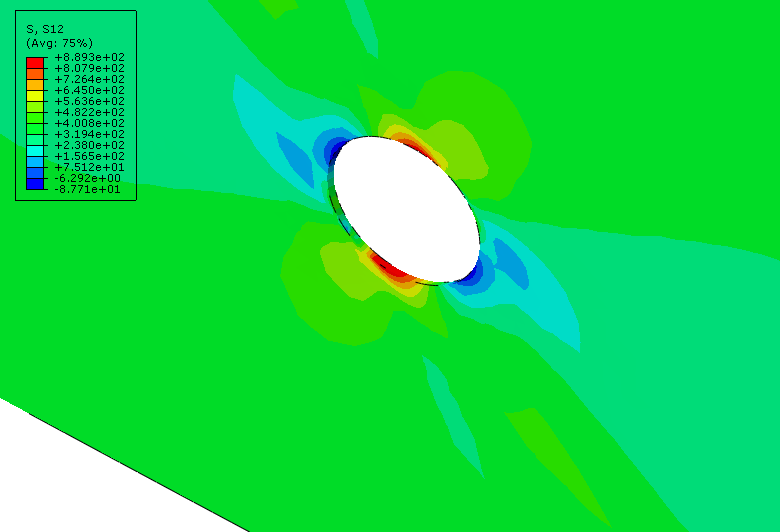
  • Example 1: Damage prediction in the tensile test of a perforated composite sheet
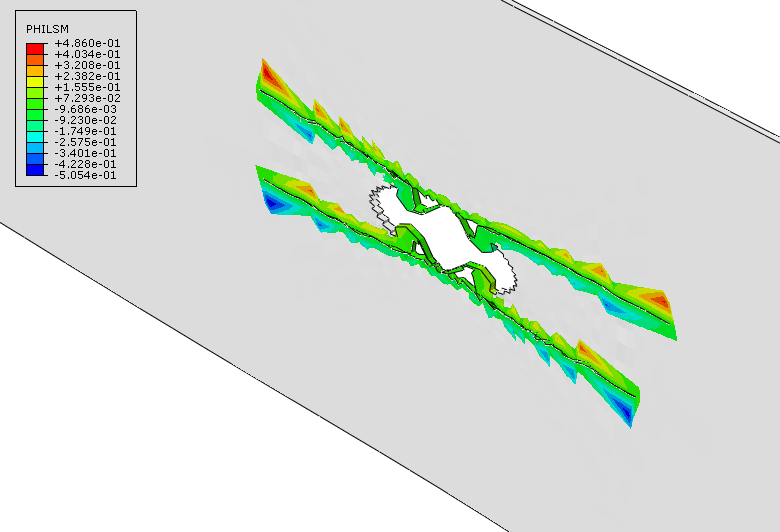
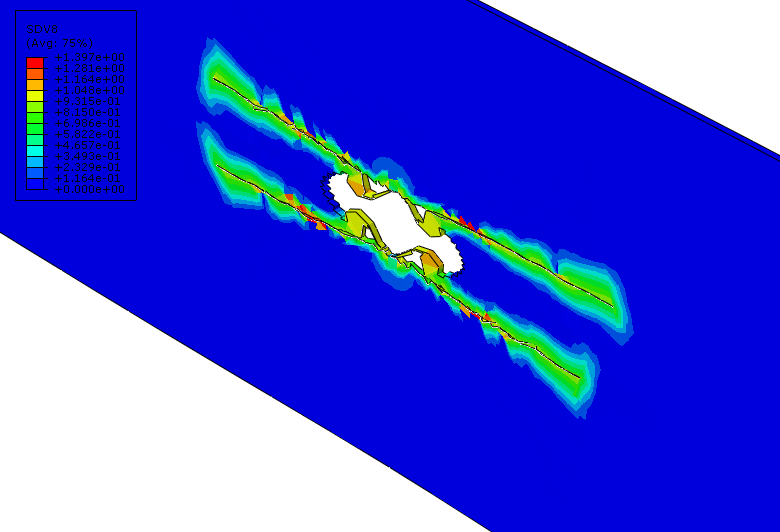
  • Example 2: Predicting crack growth in the tensile test of a perforated composite sheet by the XFEM method

You may also like…

-8%Hot
umat-vumat-subroutine-gtn-damage-model-abaqus GTN damage model Abaqus Shear-Modified GTN VUMAT Gurson-Tvergaard-Needleman plasticity ductile failure simulation void coalescence Abaqus
Compare
Close

VUMAT Subroutine: Shear Anisotropic Modified GTN Damage Model

€ 535.00 Original price was: € 535.00.€ 490.00Current price is: € 490.00.
In this product, the modified GTN damage Abaqus VUMAT subroutine material model proposed by Gatea et al. (2017) was developed. In this material model, in addition to the original GTN model, the effects of plastic anisotropy and shear loading conditions have been added to increase the accuracy of solving the original GTN damage model. Also, the results have been verified and validated (V&V) with valid papers, and at the end, the extended damage model is compared with the Abaqus built-in GTN model known as the porous metal plasticity model. Lecture notes (PDF) Abaqus workshop files (*.cae, *.inp, *.jnl, *.odb) Fortran Abaqus subroutines run on Windows or Linux GTN material data (*.xls) 15-day money-back guarantee   Free 24/7 online mentoring
Add to wishlist
Add to cart
Quick view
-4%
USDFLD Subroutine 3D Hashin
Compare
Close

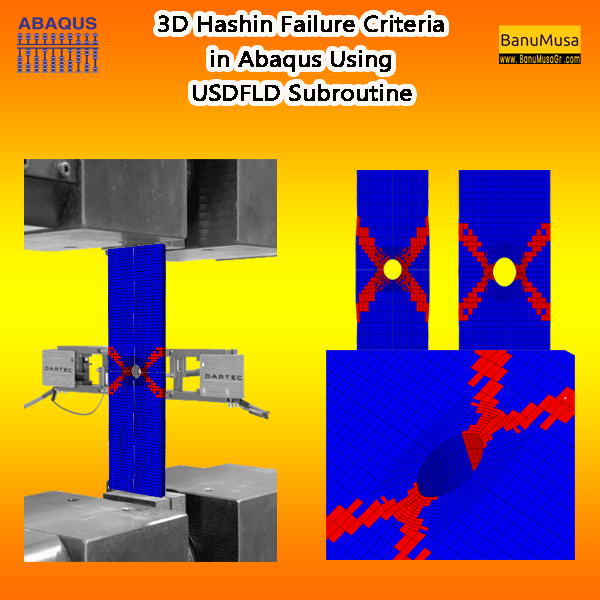
3D Hashin USDFLD Subroutine Failure Criteria for Abaqus

€ 124.00 Original price was: € 124.00.€ 119.00Current price is: € 119.00.
The 3D Hashin USDFLD subroutine is used in Abaqus to define failure criteria for composite materials based on the Hashin failure criteria and field variables (FV) for softening behavior. It allows you to specify the failure criteria for each ply of composite material in three dimensions (3D). This subroutine is particularly useful for analyzing the failure behavior of composite structures under various loading conditions in Abaqus simulations. It is a functionally validated USDFLD subroutine that compares results with the Chang & Lessard failure criterion available in Abaqus documentation. This code identifies four damage modes including matrix tension, matrix compression, fiber tension, and fiber compression using the elastic constants. Abaqus tutorial video (*.mp4) Lecture notes (PDF) Abaqus workshop files (*.cae, *.inp, *.jnl, *.odb) Fortran Abaqus subroutines run on Windows or Linux 15-day money-back guarantee   Free 24/7 online mentoring
Add to wishlist
Add to cart
Quick view
Hot
abaqus material library
Compare
Close

MatLib: The Ultimate Abaqus Material Library Plugin

Rated 4.75 out of 5
€ 315.00
Stop wasting hours on manual material calibration and unit conversions. MatLib is the ultimate Abaqus Material Library plugin, designed to accelerate your FEA simulations.

✅ 1,400+ Validated Materials (Metals, Polymers, Composites, etc.) ✅ 32 Engineering Categories ✅ 3 Consistent Unit Systems (SI-m, SI-mm, English/lb)

🎓 Student or Researcher? Apply for our 40% Academic Discount!

Add to wishlist
Add to cart
Quick view
Hot
abaqus explicit - 3d hashin
Compare
Close

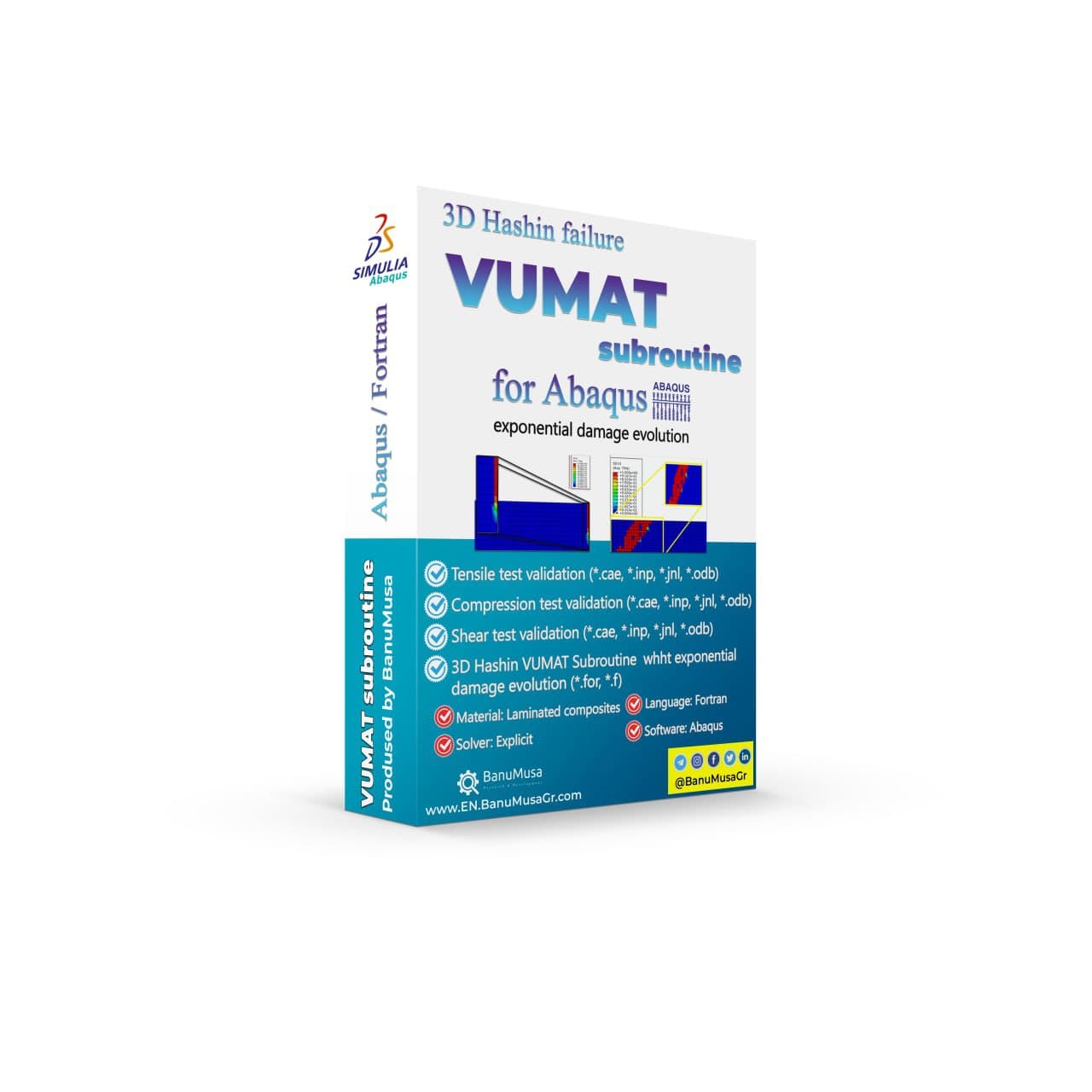
3D Hashin VUMAT Subroutine for Abaqus with Exponential Damage Evolution

Rated 5.00 out of 5
€ 455.00
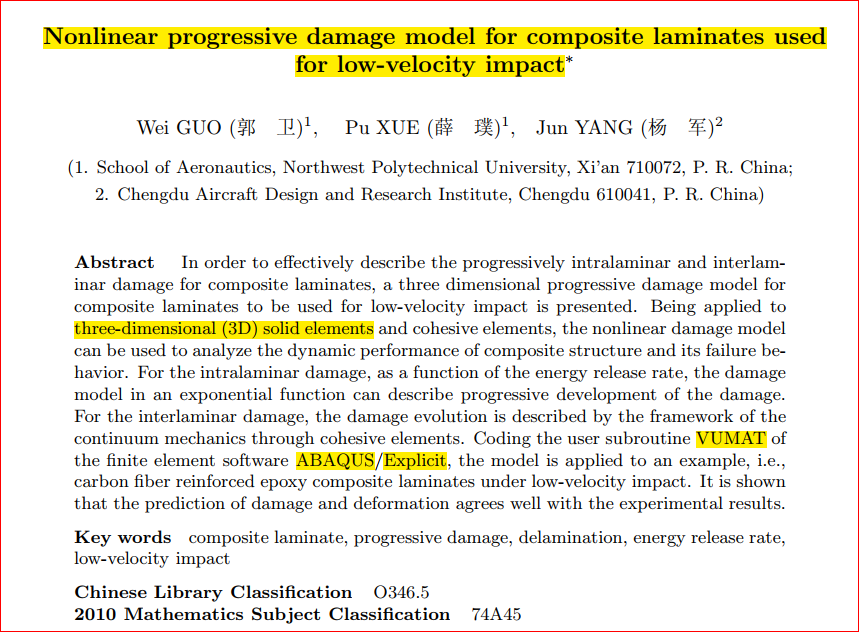
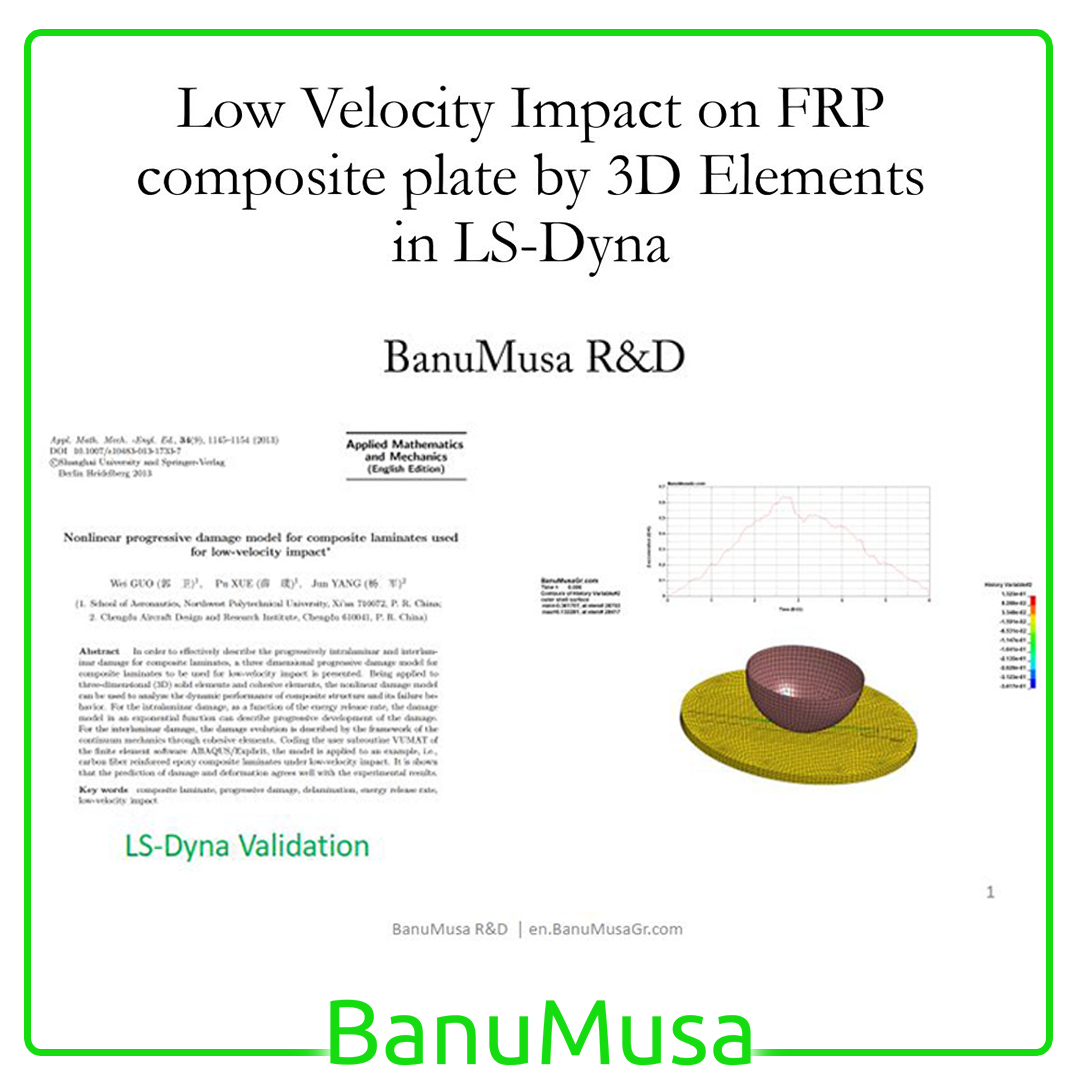
BanuMusa R&D presents a 3D Hashin VUMAT Subroutine for Abaqus with Exponential Damage Evolution. Effectively describe progressive intralaminar and interlaminar damage for FRP composite laminates using this three-dimensional progressive damage model based on continuum damage mechanics (CDM). Analyze dynamic performance and failure behavior of composite structures with this nonlinear damage model. Validated by well-known papers, this VUMAT subroutine can be used in any simulation. User manual (PDF) Abaqus workshop/validation files (*.cae, *.inp, *.jnl, *.odb) Fortran Abaqus subroutines run on Windows or Linux 15-day money-back guarantee   Free 24/7 online mentoring
Add to wishlist
Add to cart
Quick view
VUMAT JHB JH-2 ceramic model- Implementing Johnson-Holmquist model in Abaqus - JH-2 damage model VUMAT
Compare
Close

Abaqus VUMAT JHB and JH-2 Ceramic Model

€ 199.00
In Abaqus VUMAT JHB and JH-2 Ceramic Model tutorial course, you will learn how to use Built-in VUMAT subroutines in Abaqus to predict brittle materials (e.g. ceramic materials) damage using Johnson, Holmquist, and Beissel (JHB) and Johnson-Holmquist (JH-2) ceramic model. Also, 5 practical workshops show you how to define and use the subroutine, how to configure the model in Abaqus CAE, and how to visualize the results. There is also a JH-2 VUMAT subroutine Fortran file in this CAE package. In addition to the tutorial video, the Abaqus workshop files, & JH-2 VUMAT subroutine will be provided to you so that nothing will remain unclear. Also, all course includes free online 24/7 online tutoring after purchase. Abaqus tutorial video (*.mp4) Lecture notes (PDF) Abaqus workshop files (*.cae, *.inp, *.jnl, *.odb)  JH-2 Fortran VUMAT subroutine run on Windows or Linux 15-day money-back guarantee   Free 24/7 online mentoring
Add to wishlist
Add to cart
Quick view

Related products

metal forming with abaqus cae fea workshop course nafems
Compare
Close

Metal Forming with Abaqus

€ 380.00
The "Metal Forming with Abaqus" course provides a comprehensive understanding of using the Abaqus finite element analysis software for modeling and simulating metal forming processes. The course is designed for engineers, researchers, and professionals working in the field of metal forming and manufacturing. It provides a solid foundation in the application of Abaqus for simulating and optimizing metal forming processes, enabling participants to enhance their modeling and analysis capabilities. Course video (mp4) Lecture notes (PDF) Abaqus workshop files (CAE, INP, ODB) 15-day money-back guarantee   Free 24/7 online mentoring
Add to wishlist
Add to cart
Quick view
Design and Analysis of Composite Overwrapped Pressure Vessels Course banumusa wcm plugin
Design and Analysis of Composite Overwrapped Pressure Vessels Course banumusa wound composite modeler plugin abaqus
Compare
Close

Design and Analysis of Composite Overwrapped Pressure Vessels Course

€ 425.00
The "Design and Analysis of Composite Overwrapped Pressure Vessels (COPV)" course provides a comprehensive overview of the principles, processes, and considerations involved in designing and analyzing COPVs. Participants will delve into topics such as material models, structural design, manufacturing modeling, and FEA analysis guidelines specific to COPVs. The course aims to equip attendees with the knowledge and skills necessary to understand the complexities of COPV design, ensuring safety, reliability, and efficiency in aerospace and other industries. Abaqus tutorial video (mp4) Lecture notes (PDF) Abaqus workshop files (cae, jnl, inp, odb) API 579 / BPVC ASME section X standard (PDF) 15-day money-back guarantee   Free 24/7 online mentoring
Add to wishlist
Add to cart
Quick view
-50%
Bending Pipe plugin interface acting as an advanced pipeline modeling software in Abaqus
Compare
Close

Bending Pipe Plugin for Abaqus

€ 1,365.79 Original price was: € 1,365.79.€ 685.00Current price is: € 685.00.
The Bending Pipe Plugin allows an Abaqus/CAE user to create and execute bending pipe analysis with little effort. Using a simple wizard approach, the plugin guides the user to define different bending methods. The methods included in the Abaqus plugin are: 1- Classical Bending, 2- Compression Bending, 3- Roll Bending, 4- Press Bending, 5- Stretch Bending, & 6- One Step (currently this option only creates both meshes undeformed and deformed) Documentation (PDF + HTML) Abaqus plugin files (*.RAR) 15-day money-back guarantee   Free 24/7 online mentoring
Add to wishlist
Add to cart
Quick view
concrete modeling in abaqus tutorial video
Compare
Close

Mastering Concrete Modeling in Abaqus: A Comprehensive Course

€ 425.00
In the "Concrete Modeling in Abaqus" tutorial video course, we have tried to cover all the tips and tricks the user requires when modeling concrete structures. Material models are available in the Abaqus and their parameters are described. Also, the modeling methods of rebars and reinforcements are expressed one by one and the strengths and weaknesses of each are examined. Finally, in 3 comprehensive examples in the field of explosion, fire, and connections, these cases are used in practice. Abaqus tutorial video (*.mp4) Lecture notes (PDF) Abaqus workshop files (*.cae, *.inp, *.jnl, *.odb) Concrete Damage Plasticity Calculator Tool (*.xls) 15-day money-back guarantee   Free 24/7 online mentoring
Add to wishlist
Add to cart
Quick view
Blast and Explosion Modeling with LS-DYNA
Compare
Close

Blast and Explosion Modeling with LS-DYNA

€ 480.00
LS-DYNA provides a unique range of solver options for simulating high-energy events like explosions. Blast and Explosion Modeling with LS-DYNA course focuses on applying LS-DYNA for high-energy event simulation, emphasizing modeling techniques, selection guidelines, and associated mathematical theory. It is tailored for LS-DYNA analysts familiar with typical Lagrange analyses, covering defense, protective structures, vehicle vulnerability, and terrorist threat mitigation topics. The class includes practical examples and modeling tricks that benefit all LS-DYNA users. Course video (mp4) Lecture notes (PDF) LS-Dyna workshop files (CAE, INP, ODB) 15-day money-back guarantee   Free 24/7 online mentoring
Add to wishlist
Add to cart
Quick view
Machining Simulation with Abaqus - chip formation with water jet -coupled eulerian lagrangian model cel - turning drilling milling adaptive meshing abaqus tutorial
Machining Simulation with Abaqus - chip formation with water jet -coupled eulerian lagrangian model cel - turning drilling milling
Compare
Close

Machining Simulation with Abaqus

€ 280.00
Machining Simulation with Abaqus course provides a comprehensive introduction to the use of the Abaqus finite element analysis software for simulating machining processes. Participants will learn how to set up, run, and analyze machining simulations, including turning, milling, and drilling operations. The course covers material modeling, contact mechanics, adaptive meshing, and post-processing techniques specific to machining applications. Through hands-on exercises and case studies, attendees will gain the skills needed to effectively leverage Abaqus for their own machining analysis and optimization requirements. Course video (mp4) Lecture notes (PDF) Abaqus workshop files (CAE, JNL, INP, ODB) 15-day money-back guarantee   Free 24/7 online mentoring
Add to wishlist
Add to cart
Quick view
API 579-1/ASME FFS-1 Fitness-For-Service Evaluation Course Fitness-for-Service evaluation course API 579-1 / ASME FFS-1 training Level 3 FFS assessment Abaqus Local Thin Area (LTA) evaluation Crack-like flaws assessment
Compare
Close

API 579-1/ASME FFS-1 Fitness-For-Service Evaluation Course

€ 259.00
API 579-1/ASME FFS-1 Fitness-For-Service Evaluation Course offers both theoretical knowledge and practical skills in utilizing API-579/ASME FFS-1 techniques to evaluate the suitability of equipment containing different types of defects. The Fitness-for-Service training course gives guidance on conducting FFS assessments using methods tailored for pressure vessels, piping, and tanks. Gain expertise in advanced analyses for safe and efficient equipment operation. Course video (*.mp4) Lecture notes (PDF) API 579 / ASME FFS-1 Standards (PDF) 15-day money-back guarantee   Free 24/7 online mentoring
Add to wishlist
Add to cart
Quick view
Fitness-for-Service Analysis with Abaqus Course - ffs abaqus - ffs analysis
Level 3 assessment abaqus ffs analysis banumusa
Compare
Close

Fitness-for-Service Analysis with Abaqus Course

€ 550.00
In the Fitness-for-Service Analysis with Abaqus Course, participants will gain an in-depth understanding of assessing pressure vessels and piping equipment in accordance with industry standards such as ASME/API-579 Fitness-for-Service (FFS). The course focuses on utilizing Finite Element Analysis (FEA), specifically Level-3 stress analysis assessments, to evaluate equipment with complex geometries and varying loading conditions. Participants will learn techniques for modeling common pressure vessels like distillation towers and storage vessels using Abaqus/CAE. Additionally, the course covers the application and validation of loads such as the weight of contents, internal pressure, and more using Abaqus/Standard, which is essential for Level-3 FFS evaluations. Furthermore, procedures for analyzing metal loss through the finite element method, including mapping thickness readings from scans, will be discussed. This course is designed to enhance participants' expertise in utilizing Abaqus FEA simulation technology for making fitness-for-service (FFS) decisions on assets in the Petrochemical, Refinery, Oil & Gas industries, including pipelines, pressure vessels, heat exchangers, and more. Abaqus tutorial video (*.mp4) Lecture notes (PDF) Abaqus workshop files (*.cae, *.inp, *.jnl, *.odb) FFS Abaqus Plugins API 579 / ASME FFS-1 Standard 15-day money-back guarantee   Free 24/7 online mentoring
Add to wishlist
Add to cart
Quick view

BanuMusa R&D Simulation Consultancy

Bridging the gap between theoretical engineering and manufacturing reality. We provide high-fidelity FEA, CFD, and specialized Abaqus plugins to eliminate trial-and-error in critical industrial sectors.

Capabilities

  • FEA Consultancy
  • CFD Simulation
  • API 579 FFS Assessment
  • ASME Design by Analysis
  • Composite & COPV

Flagship Utilities

  • MatLib Material Database
  • WCM Plugin (COPV)
  • 3D Hashin VUMAT
  • Autokeeler (Metal Forming)
  • Johnson-Cook Plugin

Support & Resources

  • 40% Academic Discount
  • 1-on-1 Abaqus Mentoring
  • Advanced CAE Courses
info@banumusagr.com
06-02 Park View condo, Changkat perak, off Lorong Perak, 50250, Kuala Lumpur, Selangor, Malaysia
Accepted Payments
© 2026 BanuMusa R&D. Engineering Simulation & Automation. All rights reserved.
Support & FAQ Payment Methods Privacy Policy Terms of Service

Shopping cart

close

Powered by WhatsApp Chat

  • Menu
  • Categories
  • Consulting Services
  • Products
  • Resources
    • Blog
    • Projects
  • About Us
    • Contact Us
    • Our Team
    • Our Partners
    • Careers
  • Consulting Services
  • Products
  • Resources
    • Blog
    • Projects
  • About Us
    • Contact Us
    • Our Team
    • Our Partners
    • Careers

Sign in

close


Lost your password?
No account yet? Create an Account
Sidebar Scroll To Top