Facebook Twitter Email Instagram YouTube linkedin WhatsApp WhatsApp VK Telegram
info@BanuMusaGr.com
Login / Register
0 Wishlist
0 Compare
0 items / € 0.00
Facebook Twitter Email Instagram YouTube linkedin WhatsApp WhatsApp VK Telegram
FEA & CFD Consultancy | BanuMusa R&D FEA & CFD Consultancy | BanuMusa R&D
  • Consulting Services
  • Products
  • Resources
    • Blog
    • Projects
  • About Us
    • Contact Us
    • Our Team
    • Our Partners
    • Careers
    • Payment Methods
    • Support & FAQ
Free Mentoring
Menu
FEA & CFD Consultancy | BanuMusa R&D
0 items / € 0.00
HomeShopAbaqusAbaqus Plug-ins Bending Pipe Plugin for Abaqus
Previous product
Fortran for Abaqus Subroutine - writing user subroutines udhard umat film uload
Fortran for Abaqus Subroutine € 255.00
Back to products
Next product
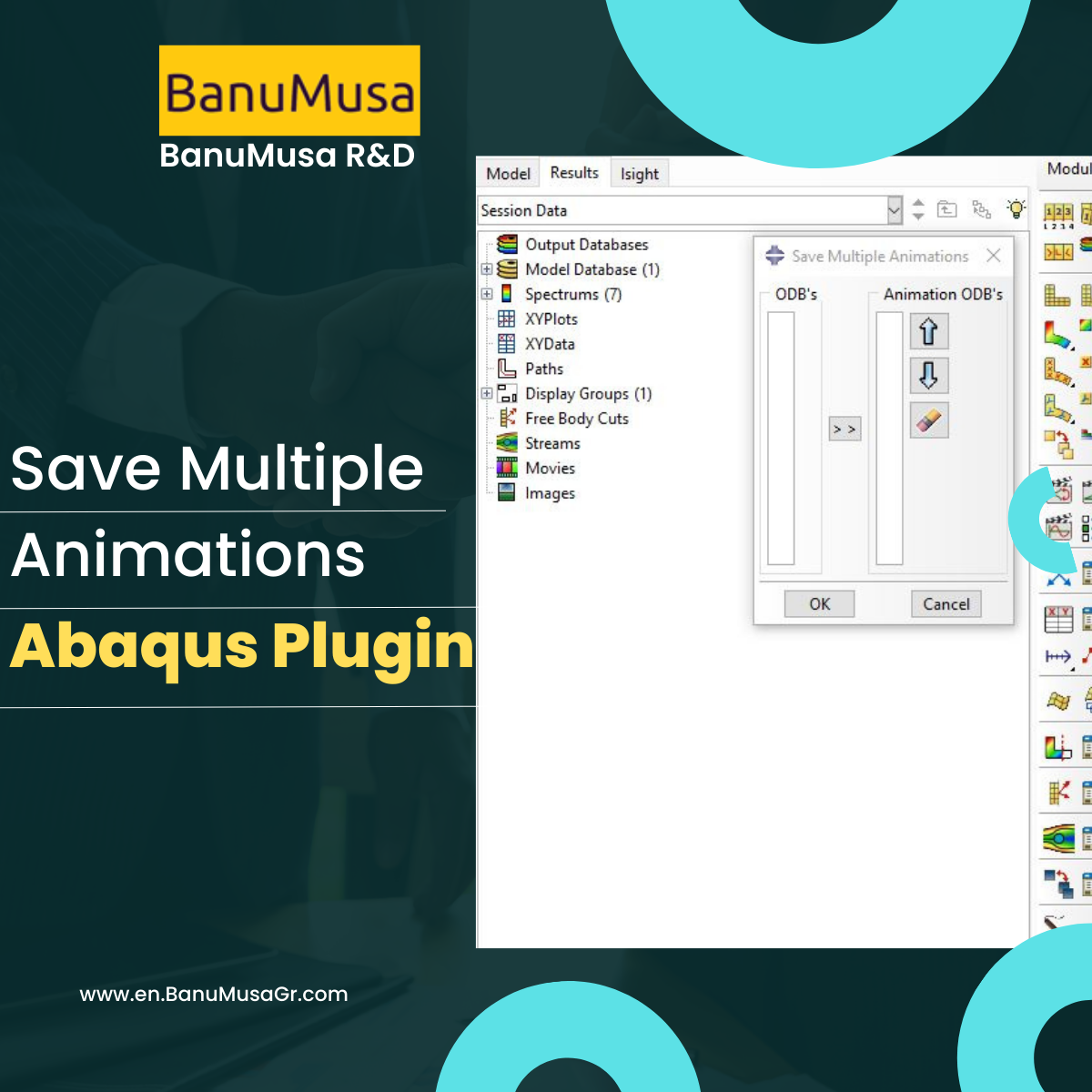
Save Multiple Animations Plugin for Abaqus
Save Multiple Animations Plugin for Abaqus € 0.00
-50%
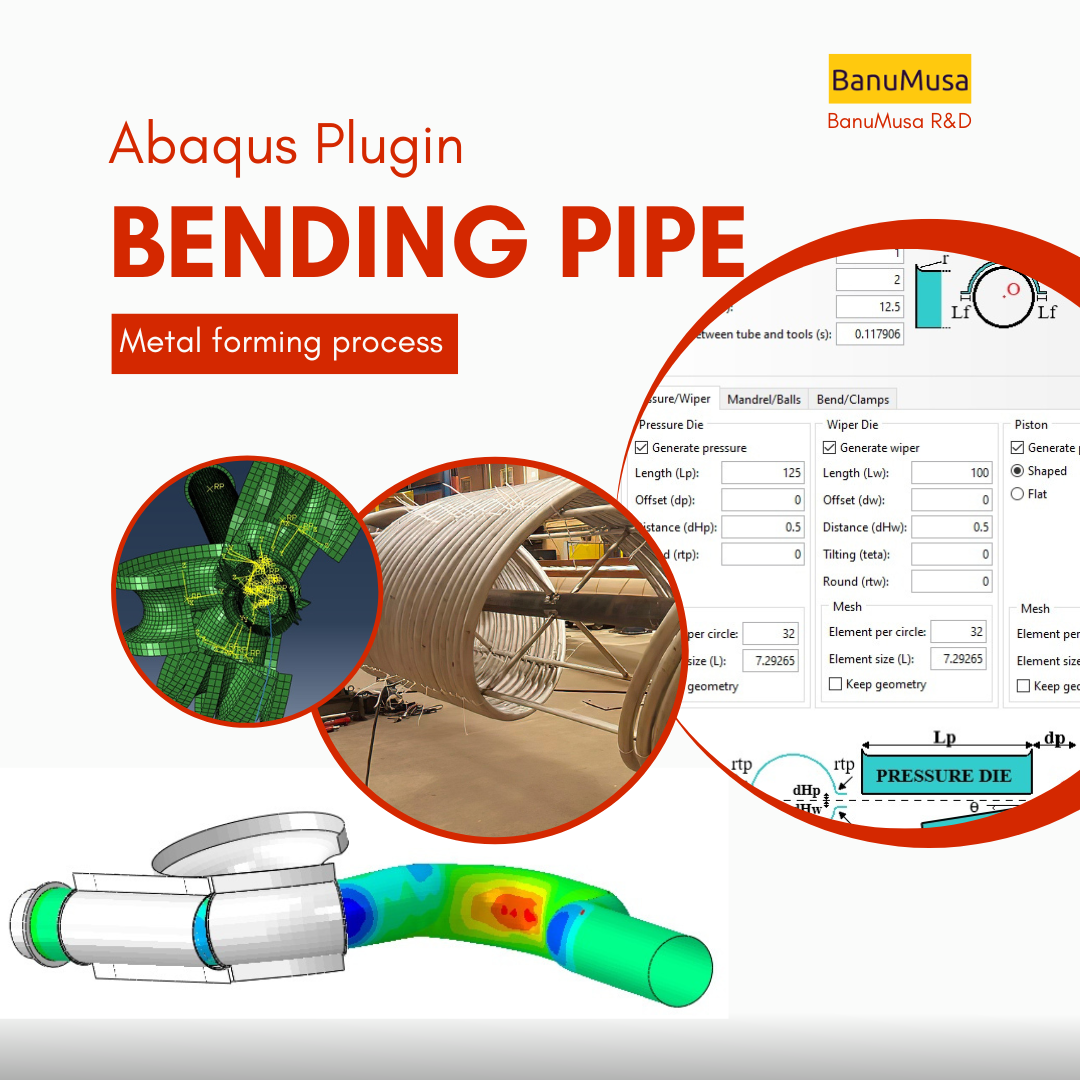
Bending Pipe plugin interface acting as an advanced pipeline modeling software in Abaqus
Watch video
Click to enlarge

Bending Pipe Plugin for Abaqus

€ 1,365.79 Original price was: € 1,365.79.€ 685.00Current price is: € 685.00.

The Bending Pipe Plugin allows an Abaqus/CAE user to create and execute bending pipe analysis with little effort. Using a simple wizard approach, the plugin guides the user to define different bending methods. The methods included in the Abaqus plugin are: 1- Classical Bending, 2- Compression Bending, 3- Roll Bending, 4- Press Bending, 5- Stretch Bending, & 6- One Step (currently this option only creates both meshes undeformed and deformed)

Documentation (PDF + HTML)
Abaqus plugin files (*.RAR)
15-day money-back guarantee
  Free 24/7 online mentoring

If you want to pay in a way other than Tether/Tron, contact us.
somdn_product_page
Compare
Add to wishlist
SKU: 1000 Categories: Abaqus, Abaqus Plug-ins
Share
Facebook Twitter Email Pinterest linkedin Odnoklassniki WhatsApp WhatsApp VK Telegram
close
You may also like…
  • rolling contact fatigue rail
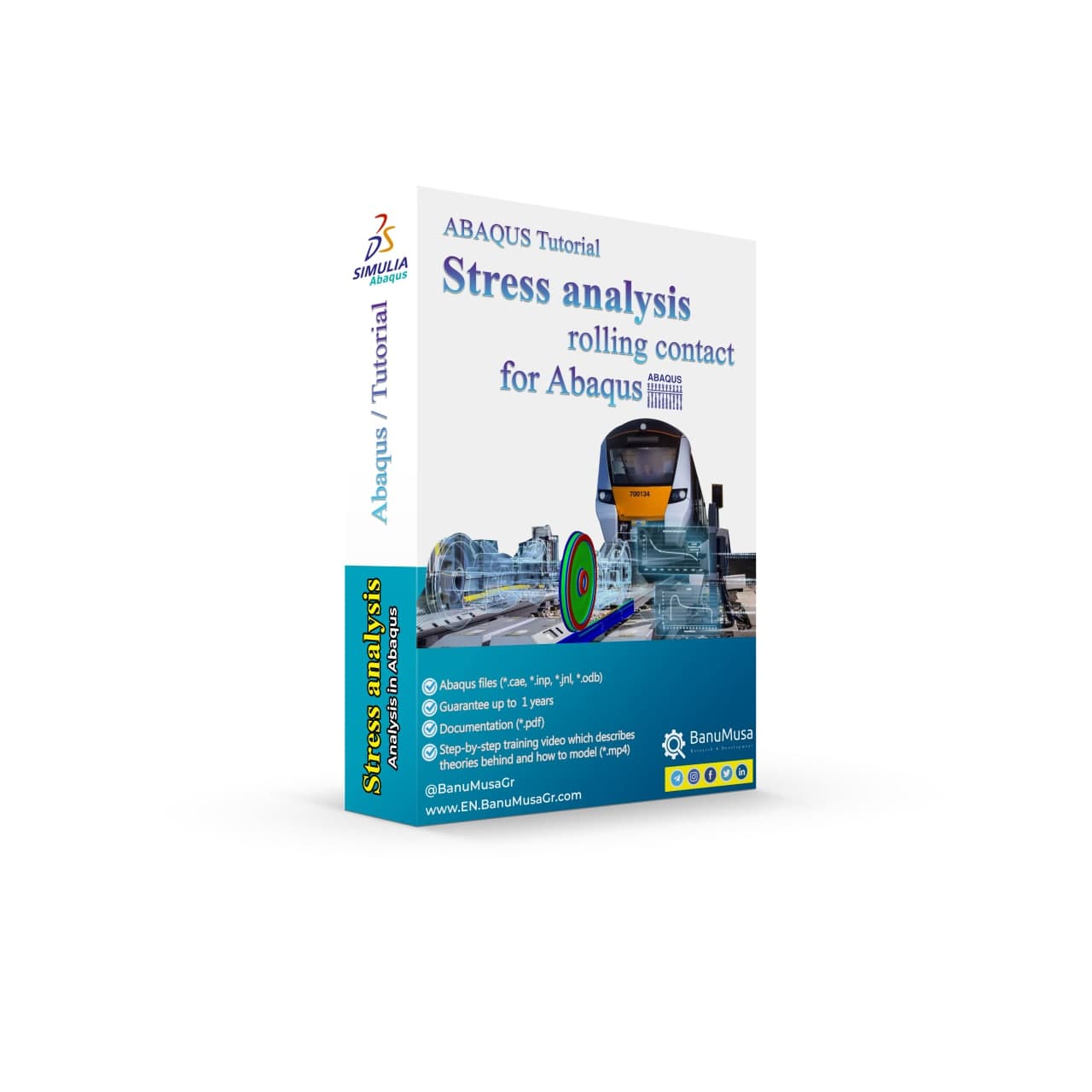
    Rolling Contact Fatigue Analysis of UIC60 Rail Wheels € 99.00
  • umat-vumat-subroutine-gtn-damage-model-abaqus
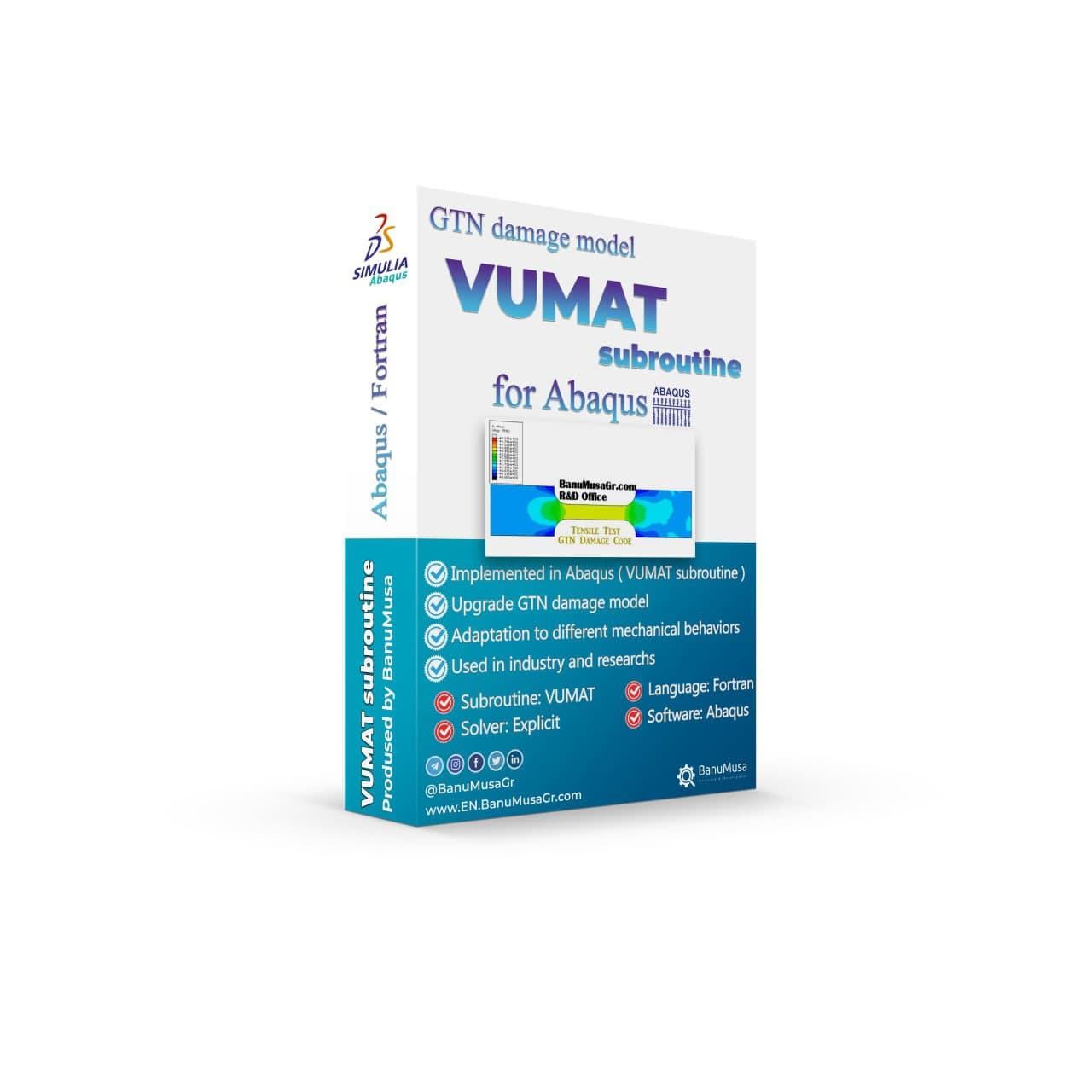
    VUMAT Subroutine: Shear Anisotropic Modified GTN Damage Model € 535.00 Original price was: € 535.00.€ 490.00Current price is: € 490.00.
  • abaqus material library
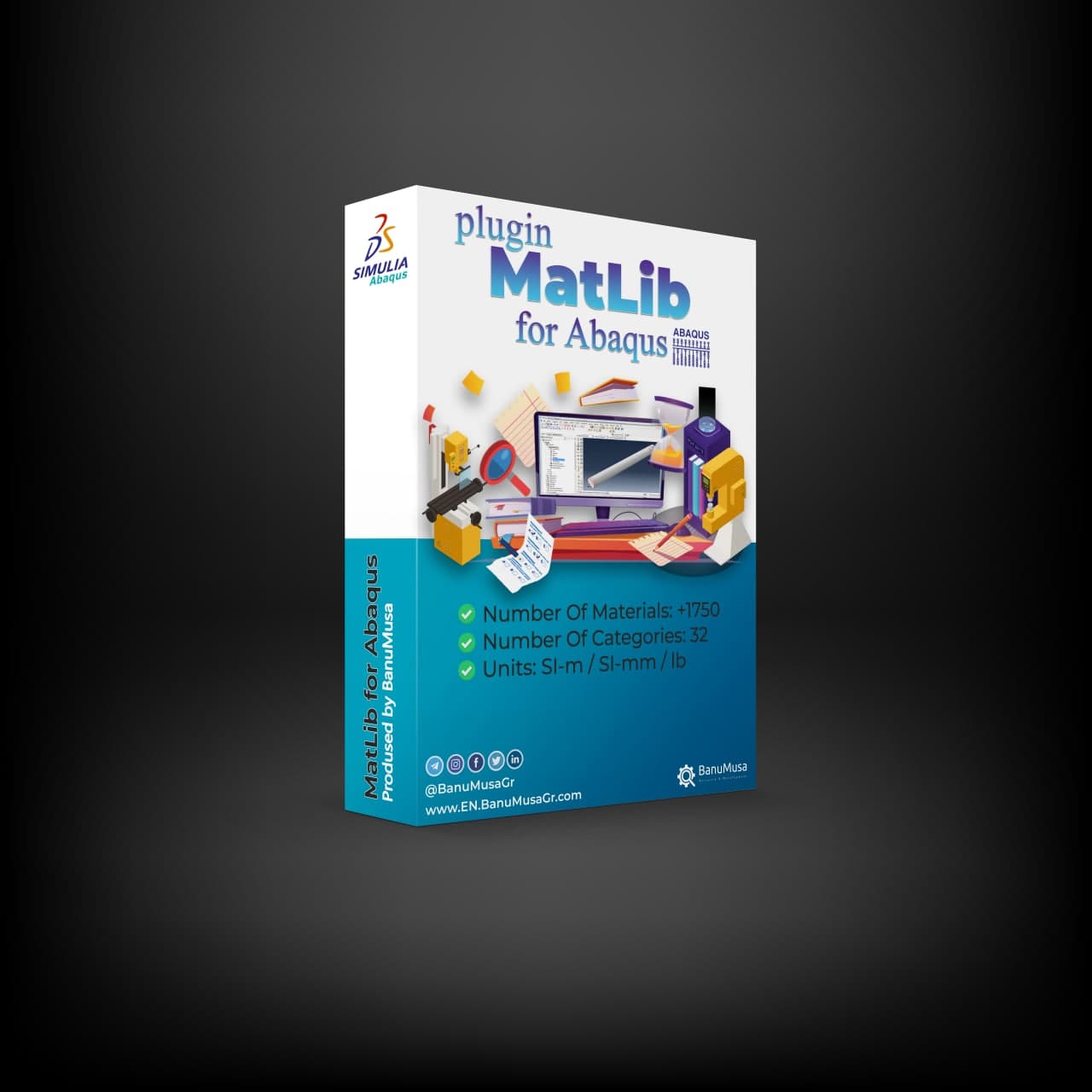
    MatLib: The Ultimate Abaqus Material Library Plugin € 315.00
  • Wound Composite Modeler Plugin for Abaqus
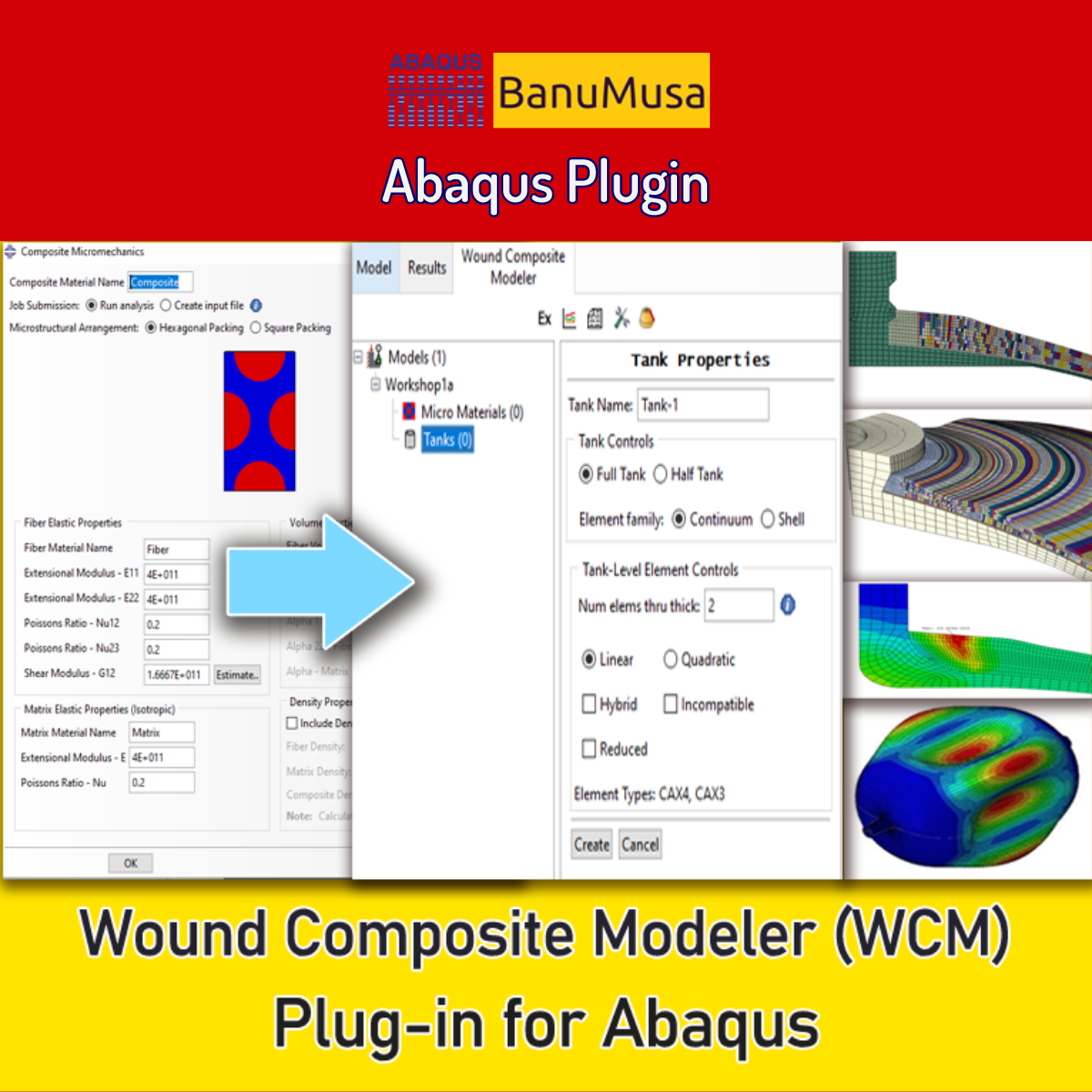
    Wound Composite Modeler Plugin for Abaqus € 210.00
Products
  • Introduction to umat subroutine Introduction to UMAT Subroutine € 210.00
  • Blast and Explosion Modeling with LS-DYNA Blast and Explosion Modeling with LS-DYNA € 480.00
  • Description
  • Additional information
  • Payment & Delivery
  • Content
Description
Metal forming simulation is now easier...

Bending Pipe Plugin for Abaqus

+ HTML & PDF documentation

Wherever you are, if you are working on the pipe bending process, the Bending Pipe Plugin allows you to speed up the modeling process, and easily analyze and improve it with parametric facilities.

What is the pipe bending process?

Pipe bending is a process of deforming a pipe into a specific shape or angle using specialized equipment and techniques. It is commonly used in industries such as construction, plumbing, and manufacturing. There are several different types of pipe bending processes, including:

  • Mandrel bending: This process involves inserting a mandrel (a solid rod) inside the pipe while it is being bent. The mandrel helps maintain the shape and prevents the pipe from collapsing or wrinkling during the bending process.


  • Rotary draw bending: In this method, the pipe is clamped at both ends and rotated while a die (a curved tool) is used to bend it. This process allows for precise and accurate bending.


  • Roll bending: In roll bending, the pipe is passed between three rolls – two bottom rolls and one top roll. The top roll applies pressure to bend the pipe as it passes through the bottom rolls. This process is commonly used for large-diameter pipes.


  • Heat induction bending: This process involves heating the pipe to a specific temperature using induction coils. Once heated, the pipe is bent using hydraulic or mechanical force. Heat induction bending is often used for pipes made of materials that are difficult to bend, such as stainless steel.


  • Ram bending: Also known as press bending, this method involves using a hydraulic ram to press the pipe against a die to achieve the desired bend. Ram bending is commonly used for large pipes or when a small number of bends are required.


The materials that can be used for pipe bending depend on the type of bending process and the desired outcome. Some of the commonly used materials for pipe bending include stainless steel, aluminum, copper, brass, carbon steel, and titanium. The selection of the material also depends on the application and the environment in which it will be used. For example, stainless steel is often used in applications where corrosion resistance is required, while aluminum is preferred for its lightweight properties. It is important to consult with a professional to determine the best material for your specific pipe bending needs.
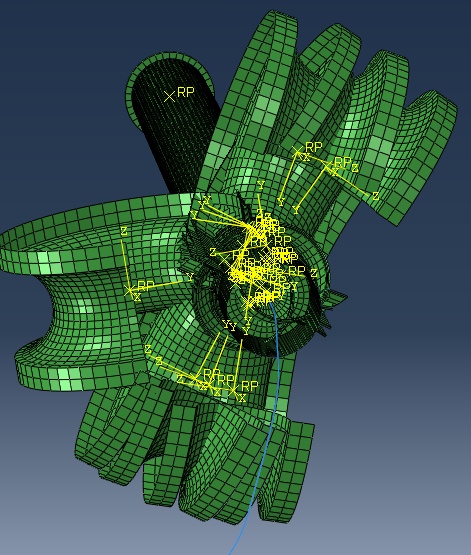
pipe bending plugin for abaqus Tube bending calculations abaqus plugin

Tube bending calculations

The factors to consider in tube bending calculations include the material properties of the tube, the radius of the bend, the wall thickness of the tube, and the degree of bend required.

The material of the tube can have a significant impact on tube bending calculations. The elasticity, strength, and ductility of the material can all affect the amount of force required to bend the tube and the degree of bending that can be achieved without causing cracking or deformation.

For example, a more ductile material such as aluminum may require less force to bend than a less ductile material such as stainless steel. Additionally, the thickness of the tube walls and the diameter of the tube can also impact the bending calculations.

Therefore, it is important to take into consideration the specific material properties when performing tube bending calculations to ensure accurate and safe results.

Abaqus Bending Pipe Plugin

During the development of a product, it is important to know the feasibility of the product before the manufacturing stage. One of the activities covered by the metal forming process is the bending pipe process and it is critical, to save costs and time, a feasible design.

The bending pipe plugin for Abaqus is intended to cover this necessity, allowing the designer to assess the bending process easily and quickly.
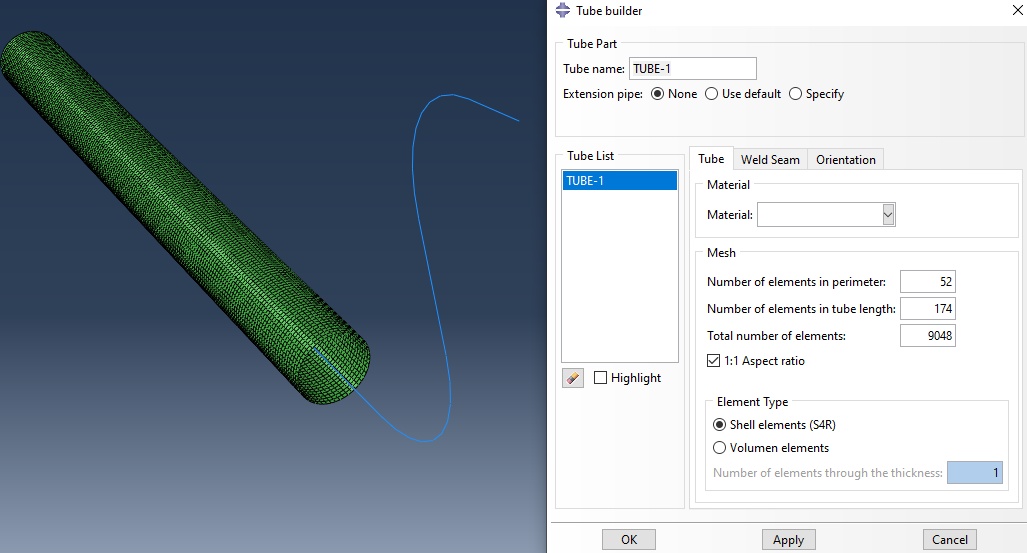
pipe bending plugin for abaqus Tube bending calculations

The bending pipe plugin is completely parametrized for the circular sections and does not need expert knowledge about the bending process. The user to confirm the material and dimensions of the tube and tools. The plugin is divided into different steps, which help the user through model performance. The bending pipe plugin also implemented different methods of bending such as:

Classical Bending

Also named Rotary Draw Bending. It is the most typical bending method when you need to keep the original section of the pipe and reach complex geometries.
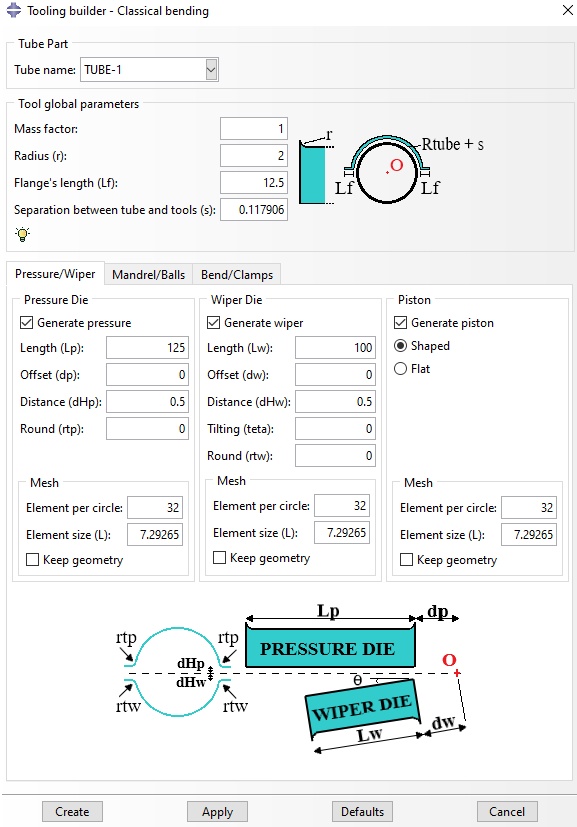
pipe bending plugin for abaqus Tube bending calculations

Compression Bending

It is similar to Classical Bending, but it is more simple and is not capable of making complex geometries.

Roll Bending

This method has roller components, which are continuously moving. It is suitable for long-bent radii.

Press Bending

The tooling in this method has the final shape of the pipe and is formed by press forces, like in the stamping process.

Stretch Bending

In this method, the pipe is subjected to tensile force, and the bent is done by rotating the pipe ends on a Die tool.

One Step

currently, this option only creates both meshes undeformed and deformed, which could be used with inverse analysis capability in Abaqus 2019 or higher.
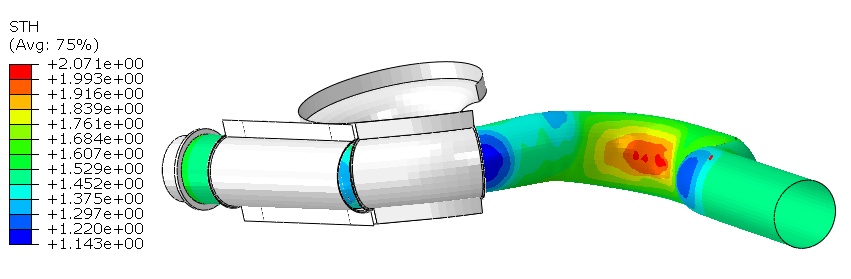

pipe bending plugin for abaqus Tube bending calculations

We are ready to help you do CFD & FEA simulations.

Need help? Get a consultation from our experts.

Email us: info@banumusagr.com
Telegram: +98-915-55-20-388
WhatsApp: +98-915-55-20-388

Find Us on WeChat

wechat banumusa company ویچت

Demo

Additional information
Software

Abaqus FEA

Type

Abaqus Plugin

Level

Elementary

Files

Abaqus files: *.rar

Documentation: HTML/PDF

Language

English

Category

Metal forming

Solver

Explicit, Standard

Material

Metals

Payment & Delivery
All products available on the website come with a guarantee of customer satisfaction. The products can be used immediately after purchase through the download link. There is also online consulting/mentoring for all customer reassurance products.
Before buying, you can also talk to our experts in BanuMusa R&D and buy from the Shop according to your needs.

Note:

Please pay attention to the following points when you pay.

1. Tether / Tron The easiest way to pay is through the Tether portal in the BanuMusa shop. You can easily pay with your wallet.

• How to pay for a product using USDT TRC-20 with ADVCash https://www.youtube.com/watch?v=DYyHsdcLxhk

• Tron TRC20 Wallet for USDT Tutorial (Send USDT for Lowest Fees!!) https://www.youtube.com/watch?v=lBQMkEBf7W4

For other wallets just search on YouTube!

The download link automatically will be sent to you.

2. Payoneer:

If you have Payoneer, you can pay simply through the following ID.

fro458nk@gmail.com

After your payment is processed, you will receive the download links.

Let me know if you need any further adjustments!

3. PAYEER

Send us a message/ email to help you how to pay for this method, please. (info@banumusagr.com)

4. WebMoney

We will send you the wallet if you request this method. Email us.

5. PayPal Payment Instructions:

Please email us to send your PayPal Account.

After your payment is processed, you will receive the download links.

Let me know if you need any further adjustments!

6. SWIFT/IBAN

Another way is to pay via SWIFT or IBAN, contact us to learn more.

We will do our best to make sure you have a good shopping experience.


If it is not possible for you to buy through the Tether gateway, send us the link to the product using email (info@banumusagr.com) or social networks (WhatsApp, WeChat, Telegram). After that, the PayPal account will be sent to you.

Another way is to pay via SWIFT, contact us to learn more.


Ways to Contact Us:

WhatsApp / Telegram / WeChat: +98-915-5520-388
E-mail: info[at]banumusagr.com
Phone: +98-51-35424520

Payment Methods:

You can buy the product through Tether, Tron, Payoneer, PAYEER, WebMoney, PayPal, and SWIFT.

Content
  • Documentation (PDF + HTML)
  • Abaqus plugin files (*.RAR)
  • 15-day money-back guarantee
  •   Free 24/7 online mentoring

Reviews

There are no reviews yet.

Be the first to review “Bending Pipe Plugin for Abaqus” Cancel reply

You must be logged in to post a review.

Related products

Johnson-Cook plugin for Abaqus
Compare
Close

Johnson-Cook Plugin for Abaqus

€ 0.00
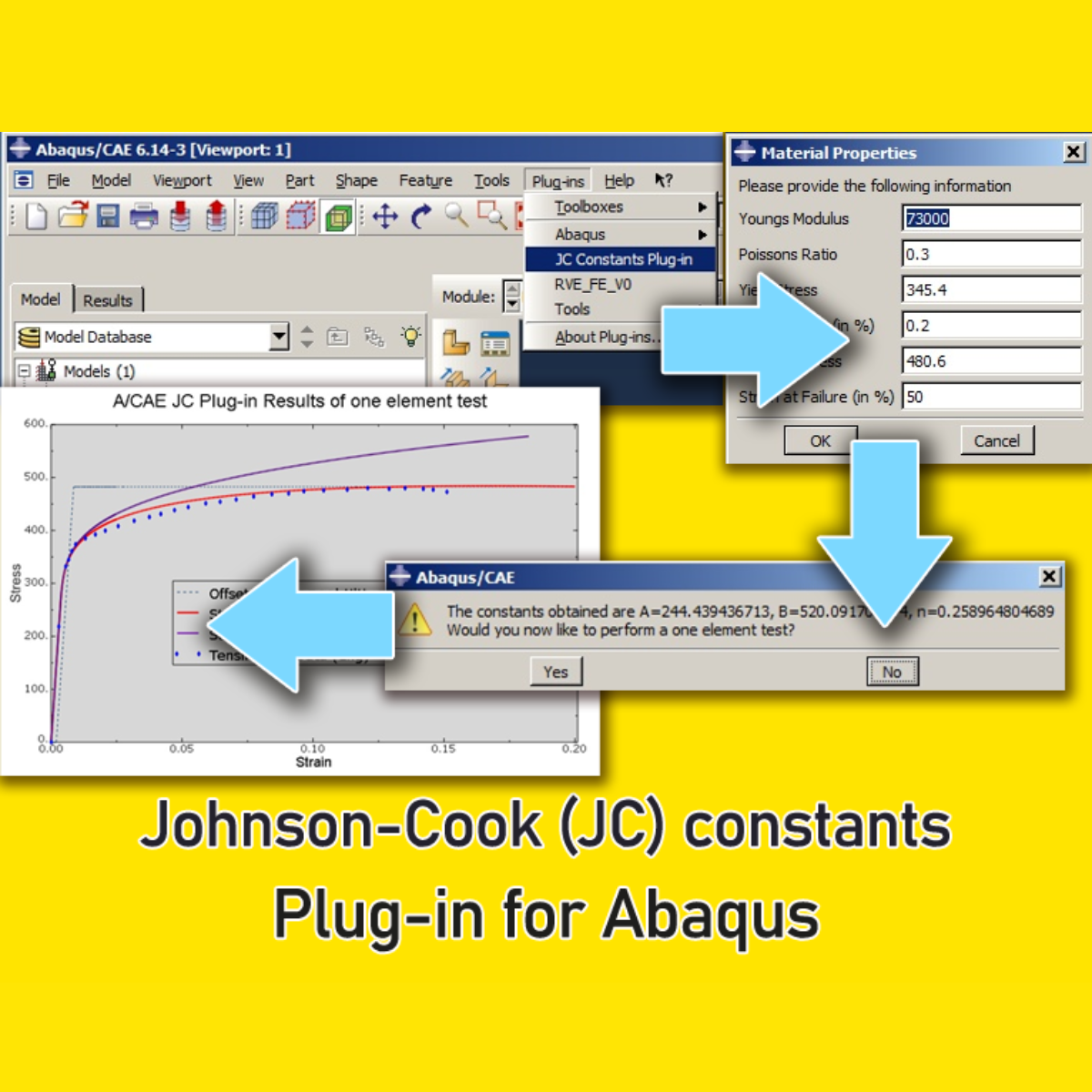
By Johnson-Cook Plugin for Abaqus, standard handbook data is used to determine Johnson-Cook parameters. Just enter the relevant values of Young's modulus, Poisson's ratio, yield stress, offset strain, ultimate stress, and strain at the failure to calculate Johnson-Cook constants of A, B, and n.
Add to wishlist
View
Quick view
Multiple Step Analysis in Abaqus -tutorial- banumusa-
Compare
Close

ABAQUS Tutorial: Multiple Step Analysis

Rated 5.00 out of 5
€ 65.00
In this training video, you will learn how to transfer the results of heat transfer analysis, such as thermal stress, from the Abaqus/standard to impact analysis in Abaqus/explicit as an initial condition. You will learn the limitations, and technical tips in modeling, as well as a practical example of low-velocity impact analysis on a composite plate. Lecture notes (PDF) Abaqus tutorial video (*.mp4) 15-day money-back guarantee   Free 24/7 online mentoring
Add to wishlist
Add to cart
Quick view
Fortran for Abaqus Subroutine - writing user subroutines udhard umat film uload
Compare
Close

Fortran for Abaqus Subroutine

€ 255.00
If you are familiar with user subroutines in Abaqus, you must know that Fortran, C, and C# are languages that can be used to write subroutines in Abaqus. What is common among Abaqus users now is using Fortran in writing user subroutines. In the "Fortran for Abaqus Subroutine" training package, zero-to-one writing user subroutine tips are taught using Fortran in Abaqus. Abaqus tutorial video (*.mp4) Lecture notes (PDF) Abaqus workshop files (*.cae, *.inp, *.jnl, *.odb) Fortran Abaqus subroutines run on Windows or Linux 15-day money-back guarantee   Free 24/7 online mentoring
Add to wishlist
Add to cart
Quick view
SlopeSR plugin for geotechnical Shear Strength Reduction and slope stability in Abaqus
Compare
Close

SlopeSR Plugin for Abaqus

€ 55.00
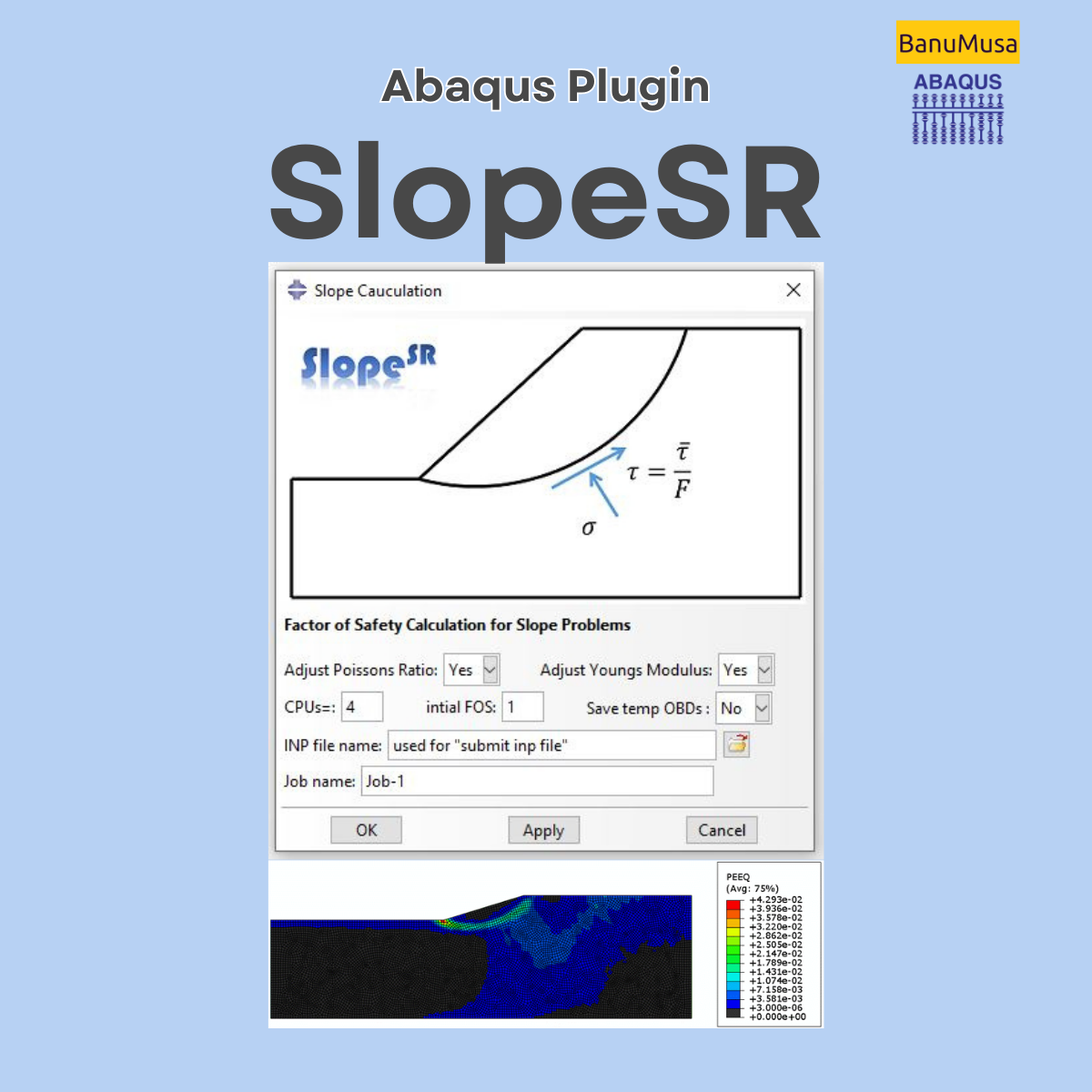
The SlopeSR Plugin for Abaqus is a GUI plug-in that uses the strength reduction method (SRM) to calculate the factor of safety (FoS) and critical slip surfaces for 2D and 3D slopes. It is designed for slope stability analysis in geomechanics and geotechnical engineering. The plugin allows users to solve a series of elastic-perfectly plastic problems with the strength parameters and the Mohr-Coulomb criterion in ABAQUS/CAE. Documentation (PDF ) Abaqus plugin files (*.RAR) Abaqus workshop files 15-day money-back guarantee   Free 24/7 online mentoring
Add to wishlist
Add to cart
Quick view
Fitness-for-Service Analysis with Abaqus Course - ffs abaqus - ffs analysis
Level 3 assessment abaqus ffs analysis banumusa
Compare
Close

Fitness-for-Service Analysis with Abaqus Course

€ 550.00
In the Fitness-for-Service Analysis with Abaqus Course, participants will gain an in-depth understanding of assessing pressure vessels and piping equipment in accordance with industry standards such as ASME/API-579 Fitness-for-Service (FFS). The course focuses on utilizing Finite Element Analysis (FEA), specifically Level-3 stress analysis assessments, to evaluate equipment with complex geometries and varying loading conditions. Participants will learn techniques for modeling common pressure vessels like distillation towers and storage vessels using Abaqus/CAE. Additionally, the course covers the application and validation of loads such as the weight of contents, internal pressure, and more using Abaqus/Standard, which is essential for Level-3 FFS evaluations. Furthermore, procedures for analyzing metal loss through the finite element method, including mapping thickness readings from scans, will be discussed. This course is designed to enhance participants' expertise in utilizing Abaqus FEA simulation technology for making fitness-for-service (FFS) decisions on assets in the Petrochemical, Refinery, Oil & Gas industries, including pipelines, pressure vessels, heat exchangers, and more. Abaqus tutorial video (*.mp4) Lecture notes (PDF) Abaqus workshop files (*.cae, *.inp, *.jnl, *.odb) FFS Abaqus Plugins API 579 / ASME FFS-1 Standard 15-day money-back guarantee   Free 24/7 online mentoring
Add to wishlist
Add to cart
Quick view
-9%
Advanced Failure Analysis of Composite Materials Abaqus -helius
Compare
Close

Advanced Failure Analysis of Composite Materials with Abaqus and Autodesk Helius PFA: A Comprehensive Guide

€ 550.00 Original price was: € 550.00.€ 499.00Current price is: € 499.00.
The "Advanced Failure Analysis of Composite Materials with Abaqus and Autodesk Helius PFA: A Comprehensive Guide" online course is designed to teach engineers, technicians, and researchers advanced analysis techniques for composite materials. The course covers a range of topics, including material modeling, failure criteria, damage mechanics, progressive failure analysis of composites, and fatigue. Participants will learn how to use Abaqus and Autodesk Helius PFA software to model, simulate, and analyze composite materials under different loading conditions. The course is divided into several modules, each covering a different aspect of composite material analysis. The course provides an excellent opportunity for engineers and researchers to expand their knowledge of advanced analysis techniques for composite materials and gain hands-on experience with industry-standard software tools. Abaqus tutorial video (*.mp4) Lecture notes (PDF) Abaqus workshop files (*.k, d3plot) 15-day money-back guarantee   Free 24/7 online mentoring
Add to wishlist
Add to cart
Quick view
Additive Manufacturing Simulation with Abaqus
Compare
Close

Additive Manufacturing Simulation with Abaqus

€ 410.00
Throughout Additive Manufacturing Simulation with Abaqus course, you will gain a deep understanding of the principles and techniques involved in additive manufacturing simulation using Abaqus software. You will learn how to simulate the complex processes involved in additive manufacturing, such as material deposition, thermal management, and residual stress analysis. By the end of the course, you will be equipped with the knowledge and skills to effectively utilize Abaqus for additive manufacturing simulation, making you a valuable asset in the field of advanced manufacturing. Abaqus tutorial video (*.mp4) Lecture notes (PDF) Abaqus workshop files (*.cae, *.inp, *.jnl, *.odb) 15-day money-back guarantee   Free 24/7 online mentoring
Add to wishlist
Add to cart
Quick view
Porous Elastomers Abaqus UHYPER Subroutine
Compare
Close

Porous Elastomers Abaqus UHYPER Subroutine

€ 55.00
The " Porous Elastomers Abaqus UHYPER Subroutine " product implements the hyperelastic energy density derived for the macroscopic elastic response of non-Gaussian elastomers weakened by an isotropic and non-percolative distribution of equiaxed pores. This result is valid for any choice of I1-based incompressible energy density characterizing the non-Gaussian isotropic elastic response of the underlying elastomer. Lecture notes (PDF)   5 Abaqus example files (cae, inp, jnl, odb) FORTRAN UHYPER subroutine run on Windows or Linux 15-day money-back guarantee Free 24/7 online mentoring
Add to wishlist
Add to cart
Quick view
University of Warwick
NBJX
MultiFat
kitech
kims
EnginSoft
Techinco
NIGC
Mobarakeh Steel Co.
Lincoln University
ISOICO Shipbuilding Company
IRISL Company
Ferdows Marine Tech
AQR Company

Founded in 2016, BanuMusa R&D is an established engineering consultancy specializing in advanced Finite Element Analysis (FEA), Computational Fluid Dynamics (CFD), and simulation-driven product development.

Facebook Youtube Linkedin Instagram

Products

  • 3D Hashin VUMAT Subroutine for Abaqus with Exponential Damage Evolution
  • VUMAT Subroutine: Shear Anisotropic Modified GTN Damage Model
  • MatLib Abaqus Material Library

Company

  • Contact us
  • Our team
  • Our partners
  • Careers
Start Project

Our WeChat 

Copyright BanuMusa 2026
payments

Shopping cart

close

Powered by WhatsApp Chat

  • Menu
  • Categories
  • Consulting Services
  • Products
  • Resources
    • Blog
    • Projects
  • About Us
    • Contact Us
    • Our Team
    • Our Partners
    • Careers
    • Payment Methods
    • Support & FAQ
  • Consulting Services
  • Products
  • Resources
    • Blog
    • Projects
  • About Us
    • Contact Us
    • Our Team
    • Our Partners
    • Careers
    • Payment Methods
    • Support & FAQ

Sign in

close

Lost your password?
No account yet? Create an Account
Sidebar